In today’s competitive food manufacturing industry, protecting product quality, reducing waste, and building consumer trust are critical for sustainable growth. Smart packaging solutions have become a practical strategy to improve efficiency, ensure food safety, and enhance brand value.
As a professional food packaging line solution provider, chlbgroup offers complete, customized packaging systems and automation solutions to help food manufacturers upgrade production lines, improve quality control, and stay competitive in a fast-changing market.
The Rise of Intelligence in Packaging Systems
Intelligent packaging systems integrate sensors, edge computing, and micro-actuators directly into materials for real-time monitoring and autonomous response, moving beyond passive tracking to actively manage product conditions and enhance supply chain visibility.
Defining Intelligent Packaging: Core Components and Purpose
Intelligent packaging involves the integration of edge computing devices with suites of sensors (p.ej., radiation, thermal, gas) directly into packaging materials for real-time monitoring capabilities.
Micro actuators are embedded within these packaging systems to react to anomalies, such as moisture excursions or chemical reactions, by actively neutralizing them.
Advanced Technologies Driving Smart Packaging Solutions
Wireless sensing capabilities, often utilizing RFID readers or network-enabled sensors, enable remote reporting of essential parameters such as location, temperature, gas concentration (p.ej., oxygen, CO2), pH, and humidity.
The application of printed electronics on flexible substrates is crucial, employing electrically functional inks to create chemical sensors with molecular imprinting receptors for highly specific detection.
Visual indicators play a significant role, including technologies like ToxinGuard® which use antibody-based detection for pathogens (p.ej., Salmonella sp.), and redox dyes that visibly change color to indicate oxygen level changes.
Integration of 3D printing allows for customized form-factors, facilitating the embedding of sensors and microcontrollers directly into cargo containers, such as DOE Type-B packages, while meticulously maintaining structural integrity.
Active vs. Intelligent Packaging: Knowing the Difference
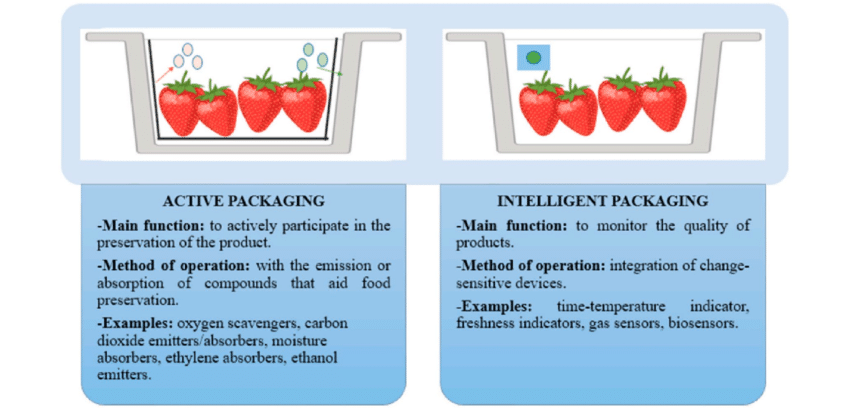
| Característica | Active Packaging | Intelligent Packaging |
|---|---|---|
| **Function** | Modifies internal environment to preserve product quality. | Monitors conditions and communicates information about the product. |
| **Interaction** | Directly interacts with food or its headspace to alter conditions. | No direct interaction with product contents; observes passively. |
| **Mechanisms** | Absorbs or releases substances (p.ej., oxygen, moisture, antimicrobials). | Utilizes sensors, indicators, and RFID for data collection and transmission. |
| **Goal** | Extends product shelf life and enhances preservation. | Provides real-time product status, traceability, and quality monitoring. |
| **Example Technologies** | Oxygen scavengers, moisture absorbers, ethylene scavengers, ethanol emitters. | RFID tags, freshness indicators, temperature sensors (p.ej., TiO2/methylene blue). |
| **Regulatory Framework** | EU Regulation (EC) No. 450/2009 requires premarket approval and declaration of compliance. | Generally falls under broader food contact material regulations, focusing on non-migration. |
Defining the Fundamental Distinction: Active vs. Intelligent
**Active Packaging:** Deliberately incorporates components that interact with the food or its headspace, modifying the internal environment to extend shelf life.
**Intelligent Packaging:** Monitors conditions (p.ej., product quality, environment) and communicates information without directly altering the package contents.
The primary difference lies in function: active *modifies* the environment (p.ej., absorbing moisture), while intelligent *observes* and *communicates* data (p.ej., temperature breach).
Key Technologies, Applications, and Regulatory Frameworks
**Active Technologies:** Include **oxygen scavengers**, **moisture absorbers**, **ethylene scavengers**, **ethanol emitters**, and **antimicrobial-releasing systems** that absorb or release substances.
**Intelligent Technologies:** Feature **RFID tags** (for traceability, works under extreme temperatures/pressures), **sensors** (external for temperature/humidity, internal for oxygen/microorganisms), and **indicators** (p.ej., UV-activated **TiO2**/methylene blue oxygen sensors).
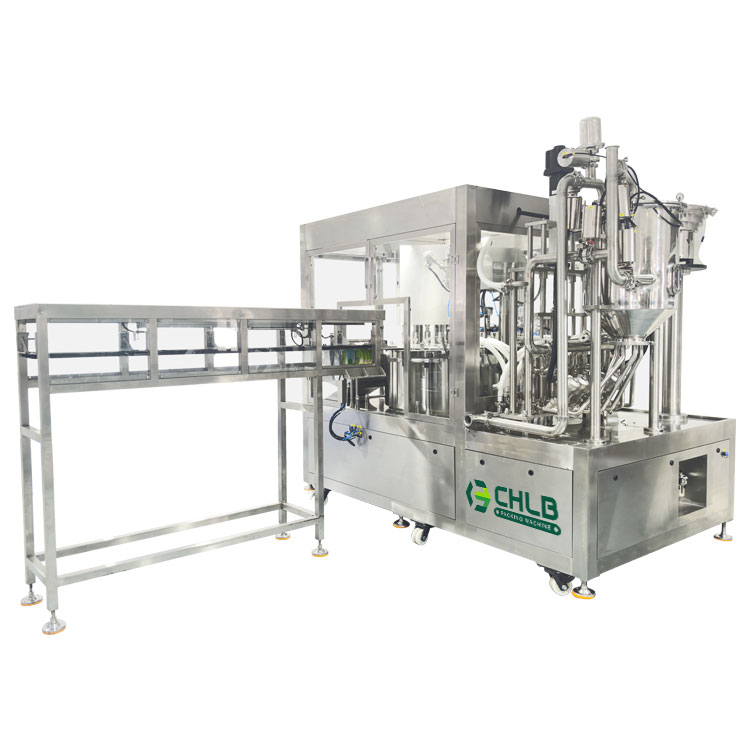
Smart Packaging Machinery: Precision & Productivity for Your Business.
Freshness Indicators: Sensors that Detect Spoilage
Freshness indicators are smart packaging sensors that detect spoilage biomarkers like volatile amines, TVB-N, and CO2, which signify microbial growth and pH changes in packaged foods. These indicators operate through chemical and optical detection, often integrated via printing or embedded systems, providing real-time, non-invasive monitoring of food quality and shelf life.
Principles and Biomarkers of Spoilage Detection
Freshness indicators function through chemical and optical detection of spoilage biomarkers.
They detect volatile amines (p.ej., ammonia, trimethylamine), TVB-N (Total Volatile Basic Nitrogen), and CO2, which rise with microbial growth and pH shifts.
These sensors enable non-invasive, real-time monitoring of food degradation without requiring package breach.
Advanced Sensor Technologies and Integration
CO2 detection utilizes optical sensors that measure changes in the refractive index of fluorescent indicator dyes, often for MAP (Embalaje de ambiente modificado) monitoring.
Gas sensors for spoilage, such as paper-based electrochemical types, detect volatile amines and CO2 via impedance changes from ion dissolution in hydrophilic media like cellulose.
Color-changing indicators are pH-responsive (p.ej., RC, BC, CPR indicators), correlating color shifts with microbial counts during storage (p.ej., at 4°C, in 80% O2 + 20% CO2 mix).
Integrated systems may combine RFID with embedded gas sensors, wireless modules, and stretchable resin bases for transmitting freshness values.
Printing technologies allow for food-safe ink application on flexible substrates, creating chemical sensors coupled with IC and antenna for wireless data transmission.
Improving Consumer Engagement through Smart Labels
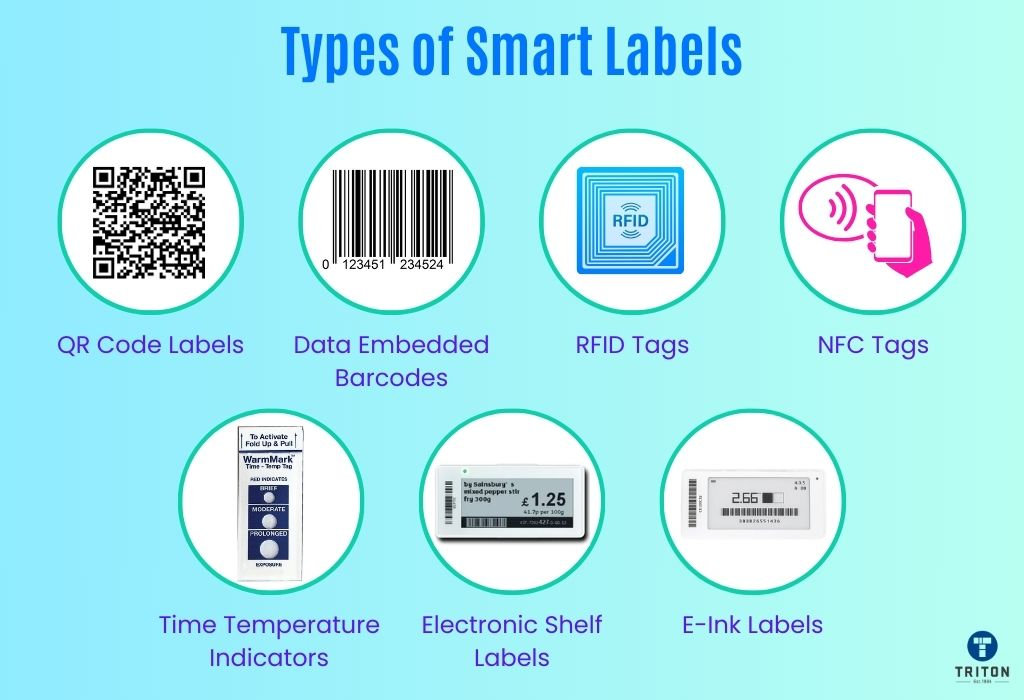
Smart labels integrate digital technologies like QR codes, NFC, and RFID directly into packaging, transforming static products into interactive platforms. Consumers can access real-time data, verify authenticity, or unlock exclusive content via smartphone scans. This reduces packaging clutter, offers dynamic updates via cloud connections, and builds stronger brand loyalty by providing immediate, valuable information and engaging experiences.
The Core Mechanics of Smart Label Engagement
Smart labels embed digital technologies (QR codes, NFC chips, RFID tags) into packaging to link physical products to digital interactions.
Consumers use smartphones to scan or tap labels, accessing real-time data such as nutrition facts, authenticity verification, and exclusive content.
This approach reduces physical packaging clutter while allowing dynamic updates through cloud connections, ensuring current information.
Facilitates product transparency and authenticity verification, building consumer trust and loyalty.
Leveraging Key Technologies for Dynamic Consumer Interaction
NFC (Near Field Communication) chips: Enable contactless interaction at very short distances (<4 cm read range) for instant access to brand content.
RFID (Radio Frequency Identification) tags: Beyond inventory, support item-level authentication and can connect consumers to loyalty programs or product history.
QR Code Labels: Direct consumers to webpages, promotions, product information (ingredients, origin, sustainability certifications) with real-time, cloud-based updates.
AR (Augmented Reality) Labels: Provide interactive digital content for immersive brand storytelling and unique user experiences.
Data stored for engagement includes product info (ingredients, expiry dates), tracking data (location updates), and promotional content (discounts, recipes).
The Impact of Smart Tech on Food Waste Reduction

Smart packaging significantly reduces food waste by physically extending product shelf life through active components (p.ej., oxygen scavengers) and by enabling data-driven inventory control. Intelligent sensors, digital IDs, and cloud platforms provide real-time freshness data, allowing for dynamic shelf-life management and optimized stock rotation, leading to substantial reductions in spoilage across the supply chain.
Dual Approach: Shelf-Life Extension & Data-Driven Management
Smart tech reduces food waste via physical shelf‑life extension and data‑driven inventory control.
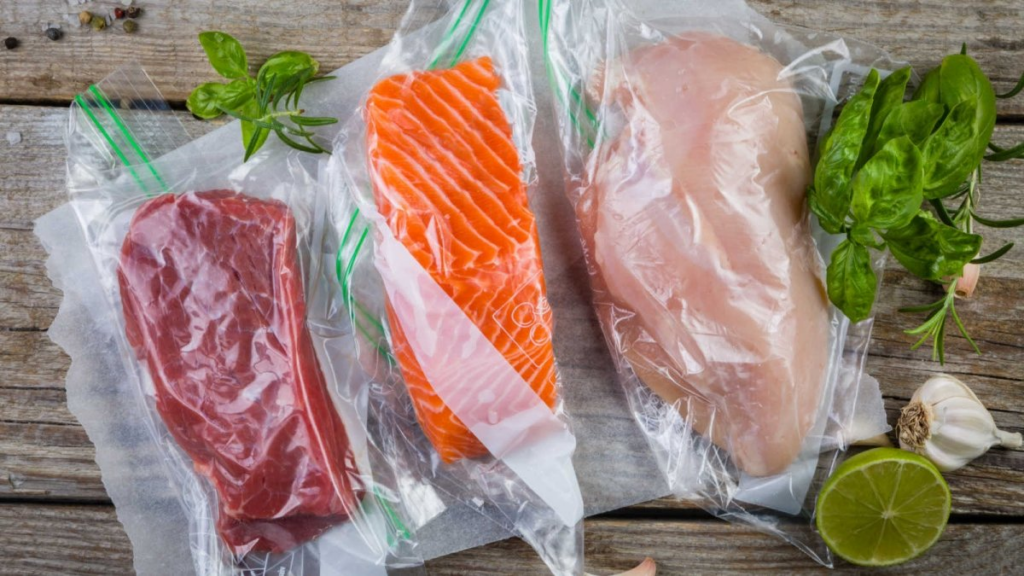
Active packaging systems (p.ej., oxygen scavengers, moisture regulators, MAP films, antimicrobial coatings) directly alter the micro-environment around food to slow microbial growth and oxidative spoilage.
These systems can extend shelf life by ~30–50% in high-waste categories like meat, dairy, and fresh produce.
Intelligent packaging embeds sensing and identification technologies (p.ej., printed gas sensors, time-temperature indicators, QR/NFC/RFID) to feed condition and identity data into cloud-based platforms.
Empowering Waste Reduction: Technologies & Market Data
A smart fish tray case study (battery-free printed gas sensor + freshness indicator) doubled shelf life from 7 to 14 days and reduced spoilage by 30%.
Shelf-life extension is the largest functionality segment, representing ~37% of smart food packaging market revenue in 2025.
The smart food packaging market is projected to grow from USD 28.5 billion (2025) to USD 53 billion (2035) at a CAGR of 6.4%, driven by demand to reduce food waste.
Cloud-connected digital twins aggregate sensor and packaging data to drive AI-based shelf-life and risk management, automating stock rotation and recall decisions.
Regulatory and sustainability goals are key drivers, with ~51.9% of connected-packaging survey respondents citing sustainability (including waste reduction) as primary drivers.
Future Outlook: AI-Driven Packaging Analytics
AI-driven packaging analytics is set to revolutionize the industry, with market growth projected to reach $10 billion by 2035. It integrates advanced algorithms across design, logistics, and quality control, enabling generative design for structural optimization, significantly reducing food waste, and ensuring rapid regulatory compliance.
Market Trajectory and Design Innovation
The global market for AI in packaging design is projected for substantial growth, reaching USD 10.0 billion by 2035, a significant increase from USD 3.2 billion in 2025, reflecting a Compound Annual Growth Rate (CAGR) of 12.2%. A key driver in this expansion is generative design AI, which is anticipated to constitute 37.2% of AI packaging design technologies by 2025. This technology enables sophisticated, parameter-driven structural optimization, leading to more efficient and innovative packaging solutions.
The food and beverage sector is expected to be a primary demand driver, representing 37.9% of AI in packaging design demand by 2025. This demand is fueled by the need for advanced shelf-life and barrier-property optimization to ensure product freshness and safety. Packaging design agencies are also emerging as early adopters, forecast to contribute 40% of the total AI in packaging design spend by 2025, leveraging AI analytics and automation to enhance their service offerings.
Operational Efficiencies and Sustainability Impact
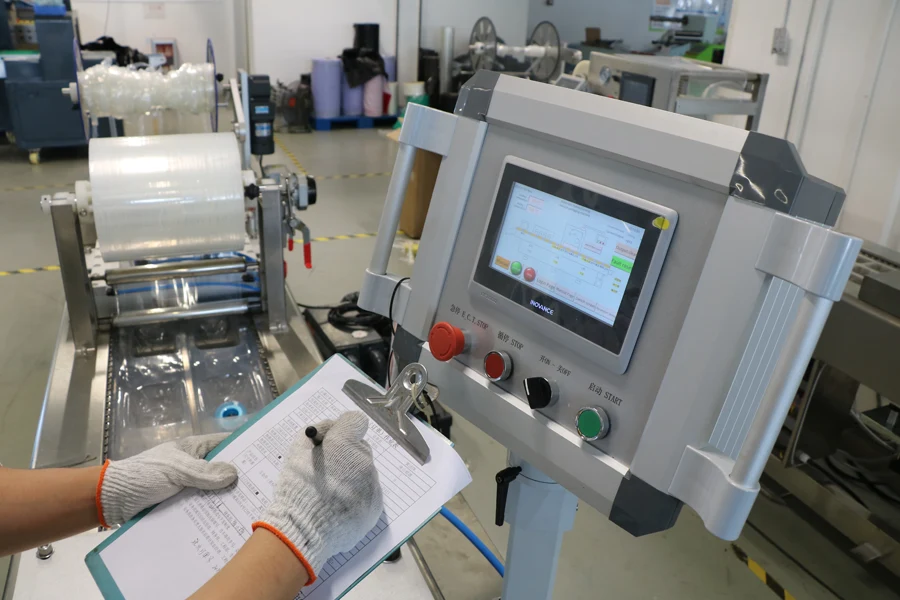
AI-driven inspection systems are significantly enhancing operational efficiencies, achieving 99.9% defect detection rates for both print and structural flaws through advanced deep-learning vision technology. In the realm of sustainability, AI-enabled smart food packaging pilots have demonstrated up to a 30% reduction in food waste, accomplished through real-time freshness monitoring and sophisticated analytics. Furthermore, AI tools are crucial for optimizing package right-sizing and structural layouts, which directly contributes to reduced material usage and lower shipping emissions.
Regulatory compliance is also being streamlined by AI, with specialized engines reducing verification cycles by up to 40% by automatically checking packaging against stringent FDA and EMA requirements. Beyond design and quality control, AI plays a pivotal role in sustainable packaging practices through predictive maintenance of packaging lines, dynamic inventory planning, and optimized load and route planning, all designed to minimize environmental impact and waste across the supply chain.
Pensamientos finales
Smart packaging is transforming food manufacturing from simple containment into a connected, data-driven system that improves safety, traceability, shelf life, and operational efficiency across the entire supply chain. With the rapid integration of sensors, digital tracking, and intelligent inspection technologies, food brands can reduce waste, strengthen quality control, and build stronger consumer trust.
Looking ahead, AI-driven analytics and smarter hardware will further accelerate this shift toward a more transparent and efficient food supply chain. For manufacturers planning to upgrade packaging lines or build automated smart packaging systems, chlbgroup provides complete food packaging line solutions and professional technical support to help you move from concept to scalable, future-ready production with confidence.
Preguntas frecuentes
What types of packaging machines are best suited for frozen food products?
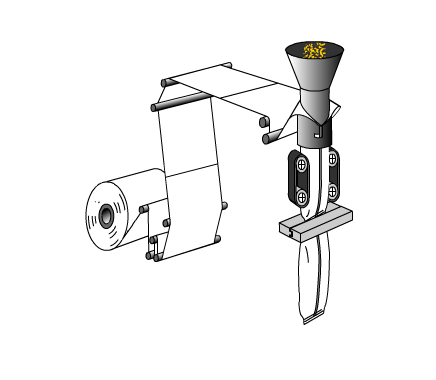
For frozen foods, the industry workhorses are vertical form‑fill‑seal (VFFS) baggers with multihead weighers for IQF items, horizontal flow‑wrappers (HFFS) for bars/patties/pizzas, pre‑made pouch or horizontal fill‑seal machines for stand‑up/zipper pouches, and vacuum/MAP tray sealers plus cartoners/case packers for ready meals and secondary packaging. Typical frozen‑food VFFS lines run at 20–100 bags/min with roll film thickness 0.04–0.09 mm, bag widths 50–350 mm, and require compressed air at 0.65–0.8 MPa (≈6.5–8 bar) and 2.2–3.0 kW power input.
How does product brittleness at low temperatures affect machine performance and film choice?
Product brittleness at low temperatures causes films and packaging materials to fracture under impact during machine handling (p.ej., forming, caza de focas, or conveying), leading to jams, tears, production downtime, and forcing selection of low-temperature-resistant films with brittleness points below -40°C to -70°C per ASTM D746, D2137 and ISO 812 standards. The standard testable brittleness temperature range for rubber/plastic films in packaging machinery is -70°C.
What is the ROI timeline for investing in automated frozen food packaging machinery?
The industry standard ROI timeline, expressed as payback period, for investing in automated packaging machinery is 1.6 to 3 años. This is based on examples from packaging equipment providers calculating labor savings, increased throughput, and reduced material/shipping costs against initial investments of $50,000 to $400,000. For instance, a 1.6-year payback period could be achieved with a $400,000 machine cost and $250,000 annual net benefit.