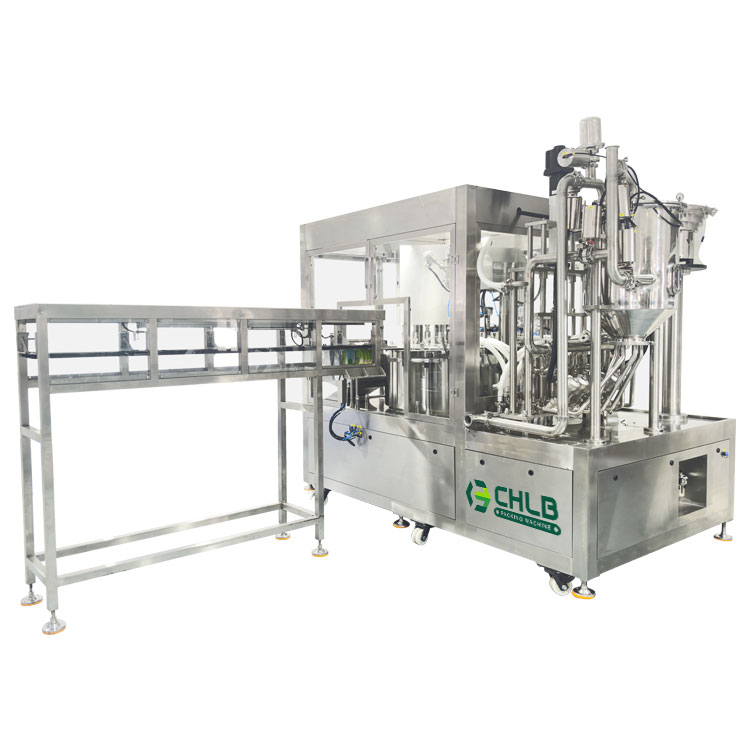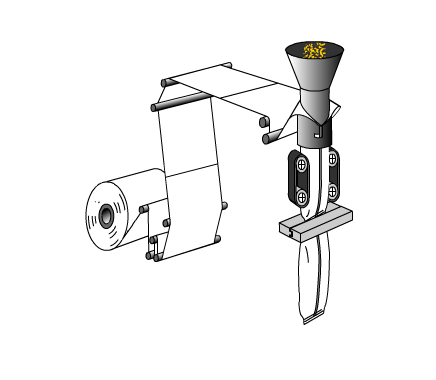
Choosing a food packaging machine supplier is a critical business decision that goes far beyond the initial equipment cost. Your production efficiency, product quality, and long-term operational stability depend heavily on selecting the right partner.
This guide helps you navigate the complex process of finding an ideal packaging machine supplier. We look at everything from engineering excellence and customization capabilities to essential after-sales support and warranty terms. You will learn about typical lead times, which can range from 8-16 weeks for standard machines to 16-52+ weeks for custom systems, and how a solid 1-3 year warranty can safeguard your investment.
Beyond the Price Tag: What Makes a Great Packaging Machine Supplier?
Engineering Excellence and Strategic Partnership
Strong mechanical, electrical, and controls engineering expertise, backed by proven experience in your specific product categories and packaging formats by 2026.
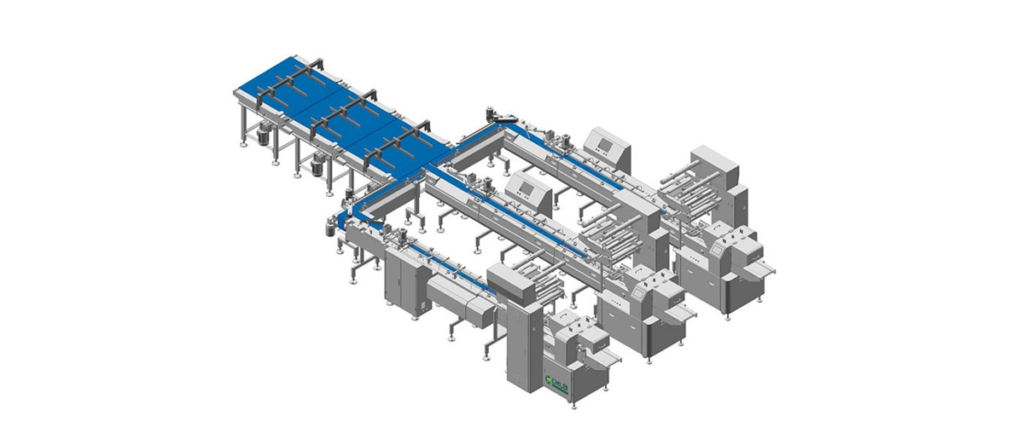
Ability to design or adapt complete lines, run simulations, and validate that machine specifications match throughput, footprint, and regulatory constraints, reducing integration risks.
A track record of successful installations, positive customer references, and financial/operational stability, essential for long-term partnerships.
Thorough line audits and detailed review of requirements, ensuring proposed solutions genuinely fit your layout, utilities, upstream/downstream equipment, and future expansion plans.
Capability to act as a systems integrator, coordinating various components into a cohesive line with structured project management, clear milestones, and FAT/SAT protocols.
Lifecycle Value, Advanced Support, and Future Readiness
Robust after-sales service, including preventive maintenance plans, rapid onsite/remote service, guaranteed spare parts availability, and comprehensive operator/maintenance training.
Focus on total cost of ownership (TCO) beyond initial purchase, quantifying energy use, consumables, changeover time, and maintenance burden to align with budget and payback targets.
Design principles emphasizing scalability, flexibility, and future-proof machines with modular tooling, quick changeover, and clear upgrade paths for adapting to new products and higher volumes.
Continuous investment in R&D, automation, and digital capabilities such as advanced HMIs, controls, diagnostics, and remote monitoring, ensuring compatibility with 2026 उद्योग 4.0 initiatives.
Adherence to relevant regulatory and safety standards (e.g., FDA, CE, UL, ISO) for global markets, providing complete documentation packages and minimizing compliance risks.
Assessing Technical Support and After-Sales Service
Evaluating a packaging machine supplier’s technical support and after-sales service means looking at their 24/7 remote and on-site technical support, including Industry 4.0 diagnostics. It also means reviewing warranty terms, structured reliability programs, spare parts availability, training, and lifecycle services like upgrades and refurbishments to ensure high uptime and long-term machine performance.
Evaluating Core Support Infrastructure
Assess suppliers offering 24/7 remote technical support. Verify specific hours, channels (phone, email, remote access), and guaranteed response times in service level agreements.
Examine the field service network for strategically located technicians, confirming their cross-training in mechanical, electrical, and programming, alongside essential diagnostic tools.
Investigate suppliers’ उद्योग 4.0 technical support services, including machine performance data analytics, real-time dashboards, and remote troubleshooting capabilities.
Analyzing Long-Term Service and Lifecycle Guarantees
Evaluate warranty terms, including lifetime coverage on base frames and multi-year guarantees on standard components. Also understand conditions that may void coverage.
Look for structured reliability assurance programs with defined visit frequencies, machine inspections, and performance analysis. Prioritize those using predictive indicators for proactive servicing.
Assess single-source parts programs for immediate OEM replacement part availability, expert advisory, and pre-assembled components to reduce mean time to repair.
Review formal technical machine training programs with hands-on courses, manuals, and multimedia content to improve operator skills and consistent performance across shifts.
Evaluate lifecycle support services like enhancement bulletins, technical tips, speed increases, control system upgrades, and full equipment refurbishments to extend machine useful life.
Unlock Peak Efficiency with Intelligent Packaging
On-Site Audits: What to Look for in a Manufacturer’s Facility
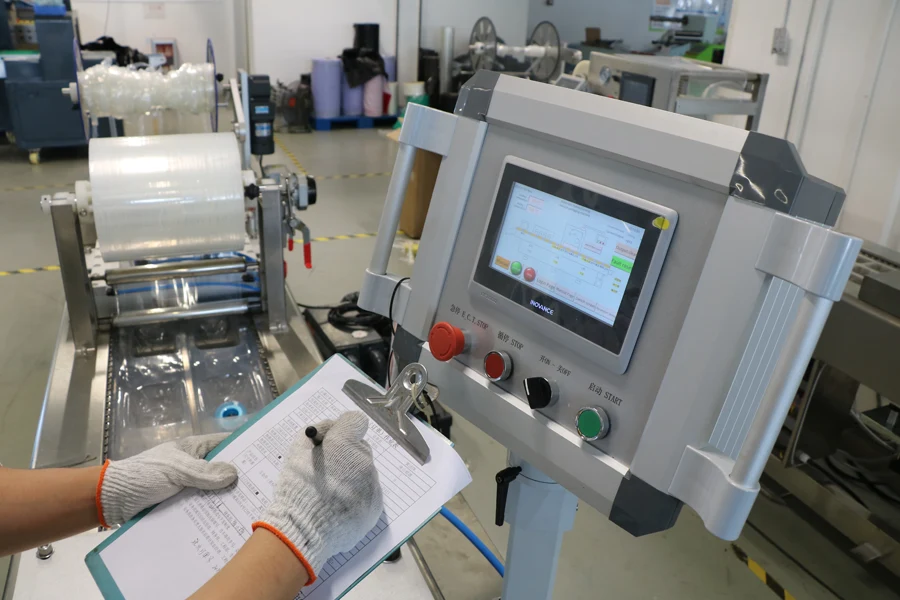
Quality Management Systems and Supply Chain Oversight
Verify a documented quality management system (QMS) is in place, conducting regular internal audits, and implementing corrective actions for non-conforming products.
Assess supplier management practices, including regular supplier audits, maintained supplier lists, and up-to-date certifications like ISO or CE.
Confirm robust traceability systems that track materials from suppliers to finished goods and assign lot numbers to product batches.
Production Process Controls and Product Quality Checks
Review incoming material inspection procedures, raw material tracking systems, and procedures for handling rejected materials.
Examine production process controls for documented and standardized procedures, work instructions at workstations, and monitored process parameters.
Check for in-process inspection points at key production stages, documented sampling plans, records of inspection results, and segregation of non-conforming parts.
Verify finished goods inspection, including documented test results, proper handling of non-compliant goods, and accuracy of packaging and labeling.
Equipment Condition and Operational Safety Protocols
Inspect equipment maintenance and calibration records, including preventative maintenance programs, calibration certificates for critical tools, and maintenance logs.
Perform a visual inspection of packaging machines for physical damage, wear, rust, or leaks on frames, belts, chains, motors, and seals.
Evaluate safety features such as functional emergency stop buttons, securely fitted machine guards and barriers, and clear, legible safety labels on equipment.
Customization Capabilities: Can They Tailor to Your Product?
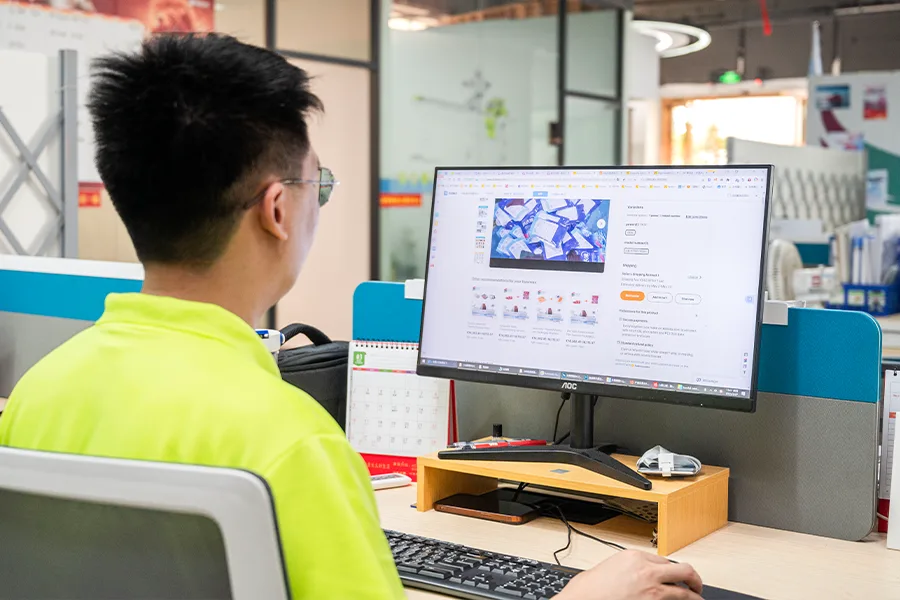
Adaptability for Product and Packaging Formats
Suppliers engineer machines to manage specific product dimensions, weights, and flow characteristics.
Machines support primary and secondary packaging formats, minimizing the need for extensive change parts.
They facilitate rapid changeovers between different SKUs, variable pack counts, and diverse packaging types (bags, pouches, bottles, trays).
Customization includes infeed, dosing/handling modules, and format parts to align with specific product geometry and packaging styles.
Quick-change mechanisms integrate to handle short runs and frequent SKU alterations efficiently.
Custom Engineering: Mechanics, Controls, and System Integration
Suppliers modify machine frames, conveyors, dosing systems, and motion/PLC programs to suit unique process requirements.
They design bespoke stations (filling, sealing, labeling, case packing) and integrate servo motion with programmable logic to meet target cycle times and accuracy.
HMI recipes, custom fault logic, and recipe management are tailored for various products and materials.
Critical integration is ensured by interfacing with existing processing, conveying, palletizing, coding, and IT systems.
Mechanical infeed/outfeed, line controls, communications (e.g., industrial Ethernet), and safety circuits are customized to unify OEM-mixed lines and legacy assets.
Future-Proofing and Process Validation
Customized designs should accommodate future formats, volumes, and automation upgrades, not just current needs.
Leading OEMs design modular frames and control architectures, allowing for later additions (e.g., extra heads, robotics, inspection).
This enables adaptation to new packaging materials or sustainability regulations without a complete system replacement.
Suppliers rigorously gather requirements and validate them through design reviews, simulations, Factory Acceptance Tests (FAT), and Site Acceptance Tests (SAT).
Higher customization can increase engineering hours, component uniqueness, and validation effort, impacting capital expenditure and lead times.
Understanding Lead Times and Shipping Logistics
Lead time for packaging machinery covers the full duration from purchase order to a production-ready line, typically 8-16 weeks for standard equipment and 16-52+ weeks for custom systems. This timeframe includes design, fabrication, and testing, not just shipping. Lead time estimates can fluctuate significantly due to factors like component shortages, port congestion, and labor gaps. Effective management involves considering the full project timeline, which can span 3 to 24 months for large systems, and using strategies like nearshoring and planning buffers to mitigate risks in shipping and delivery.
Lead Time Fundamentals and Business Impact in 2026
Lead time encompasses the entire duration from purchase order approval to a fully installed, production-ready packaging line. This includes all stages, not just the shipping leg. This total timeframe critically impacts project launch dates, inventory safety stock, and backup capacity planning for procurement teams.
As of 2026, standard off-the-shelf machines typically require 8-16 weeks. Custom or engineered-to-order systems often extend to 16-52+ weeks. Supplier lead time quotes serve as estimates. These estimates can fluctuate by 50-200% in dynamic market conditions.
Key Lead Time Components and Delay Drivers
Lead time adds up sequential stages. These stages include requirements confirmation, detailed engineering, fabrication, assembly, factory acceptance testing (FAT), shipping, installation, and site acceptance testing (SAT).
Major drivers of extended lead times include component shortages, such as electronics and steel. Container scarcity, port congestion, and trucking labor gaps also contribute to delays. For large industrial systems, overall project timelines frequently span 3 to 24 months, with these upstream factors influencing the duration.
Optimizing Shipping Logistics and Mitigating Delivery Risks
Shipping lead time depends on several factors: the transport mode, specific lane transit times, port and terminal congestion, and customs clearance efficiency. In 2026, average door-to-door ocean transit from East Asia to the U.S. East Coast can exceed 50 days, not counting inland drayage and warehouse handling.
Risk mitigation strategies include nearshoring, selecting suppliers with regional manufacturing or stocking hubs, and implementing vendor-managed inventory (VMI) programs. Implementing planning buffers and safety time is vital to offset lead time variability, especially for critical capital packaging projects.
Evaluating Warranty Terms and Spare Parts Availability
For procurement teams buying packaging machines, evaluating warranty terms and spare parts availability is crucial. It minimizes downtime and unexpected costs. Warranty periods usually run 1-3 years, covering manufacturing defects with free parts and labor, but often exclude misuse or wear. Spare parts availability depends on the supplier, though dedicated support is commonly promised.
Understanding Core Warranty Terms and Coverage
Packaging machine warranty periods typically range from 1 to 3 years. These warranties cover manufacturing defects but often do not include damage from misuse or regular wear. Coverage usually begins from the purchase or installation date, focusing on issues with materials, workmanship, and design under normal use.
Some suppliers offer specific terms. Haizhou Pack Machine, for instance, provides free replacement of defective parts and labor. GD Pack Machinery offers 24 months of component coverage. Longer warranties, such as the 3 years from New Tech Machinery, show supplier confidence and help lower total ownership costs.
Ensuring Critical Spare Parts Availability
Most suppliers commit to providing free defective parts during the warranty period. They focus on rapid replacement to minimize machine downtime. After the warranty, common wear items such as belts and seals are typically excluded from free replacement. Procurement teams should negotiate for extended terms or service contracts to cover these.
Teams can use metrics like warranty cost per unit (CPU) to evaluate supplier performance and help negotiate spare parts pricing. Spare parts availability depends on supplier networks. Requesting specific lead times for critical components becomes essential for effective procurement planning.
Strategic Procurement for Optimal Terms
Procurement teams must get all warranty details in writing. This includes verifying the start date (purchase versus installation), exactly what is covered (parts and labor), and specific exclusions. Negotiating for comprehensive post-warranty parts catalogs, clear pricing, and global stock availability helps prevent production halts.
Benchmarking risks, especially in industries with higher claims rates, highlights the importance of choosing suppliers that show low warranty volatility. Watch out for red flags, including vague warranty durations (e.g., “[X] years”), no on-site support, or missing crucial maintenance guidelines.
Frequently Asked Questions
What certifications and compliance standards should a food packaging machine supplier have?
When selecting a food packaging machine supplier in 2026, look for certifications and compliance standards that assure safety, quality, and operational excellence. Key certifications include:
- FSSC 22000: A comprehensive food safety management system based on ISO 22000, specifically for packaging manufacturing.
- SQF Food Safety Code: This code sets strict requirements for manufacturing safe, quality food packaging, including GMPs and food safety plans.
- IFS PACsecure: A standard that assesses packaging manufacturer processes for producing safe, legal, and compliant products, emphasizing traceability.
- BRCGS: A GFSI-recognized standard vital for HACCP-compliant packaging equipment, often required alongside other food safety certifications.
- NSF/ANSI Standards (e.g., NSF/ANSI 2): These certify food equipment for material safety, cleanable design, and performance to prevent bacterial harboring or chemical leaching.
- cGMP (Current Good Manufacturing Practices): Industry-wide standards for facility/equipment design, hygiene, and supply chain management to prevent contamination.
- ANSI/PMMI B155.1: Safety requirements specifically for packaging and processing machinery, covering design and use.
These certifications demonstrate a supplier’s commitment to delivering safe, reliable, and compliant packaging solutions.
What’s the typical lead time and installation timeline when ordering from a food packaging machine supplier?
The typical lead time and installation timeline for food packaging machines vary depending on complexity and customization. For standard equipment, lead times from a confirmed purchase order to shipment usually range from 8–16 weeks. However, engineered-to-order or highly customized lines can take 16–52 weeks or even longer, potentially 6–12+ months for complex, fully integrated systems in 2026. Simpler, in-stock units might be available quicker, within 2–4 weeks.
Once the equipment arrives, installation and commissioning at the customer’s site typically add another 1–3 weeks for a single machine, or 3–8 weeks for a complete production line. This timeline covers mechanical installation, system integration, debugging, thorough operator training, and final performance acceptance. These estimates assume the site is fully prepared and all necessary utilities are ready before the installation team arrives.
Final Thoughts
Selecting a food packaging machine supplier goes beyond the machine’s initial cost. It involves choosing a true partner who provides strong engineering expertise, proven integration capabilities, and a genuine commitment to your long-term success. The best suppliers offer thorough line audits, robust project management, and excellent after-sales support, including maintenance, spare parts, and training.
Focusing on these critical aspects—technical support, customization, lead times, and warranty—helps businesses choose a supplier who minimizes operational risks and drives efficiency. This strategic decision secures a packaging line with higher uptime, lower lifetime costs, and the flexibility to adapt to future market demands.
If you are looking for a reliable, experienced partner to support your packaging automation goals, CHLB Group provides integrated food packaging machine solutions tailored to diverse production needs. Learn more about how CHLB Group can help optimize your packaging line and improve operational efficiency at:
👉 https://chlbgroup.com/