Biscuits may look simple, but getting them safely from the production line to the consumer requires smart packaging, reliable materials, and efficient machinery. From maintaining crispness to preventing breakage during transport, the right biscuits packing solution plays a major role in product success.
At सीएचएलबी समूह, we specialize in complete packaging solutions for food manufacturers, including automated equipment and integrated systems. If your business is looking to improve efficiency, reduce waste, or upgrade your packaging process, you can explore our solutions here: https://chlbgroup.com/
In this guide, we’ll take a deeper look at the types of biscuit packaging used in the food industry, the materials behind them, and how manufacturers choose the most suitable packaging format for their production lines.
Why Biscuit Packaging Matters in the Food Industry
Packaging does much more than simply hold biscuits together. It protects product quality, supports branding, and ensures smooth logistics across the entire supply chain.
Protecting Product Quality
Biscuits are fragile and sensitive to environmental conditions, which means packaging must provide strong protection.
- Prevents breakage during transport
During shipping and handling, biscuits may experience vibration, pressure, and stacking. Proper packaging structures such as trays or rigid boxes help maintain the original shape and reduce product loss.
- Blocks moisture and humidity
Biscuits easily absorb moisture from the air, which can make them soft and affect taste. Barrier packaging materials help keep them crisp and fresh.
- Protects against contamination
Food safety is a top priority in modern manufacturing. Sealed packaging prevents exposure to dust, bacteria, and other external contaminants.
- Maintains product freshness for longer periods
High-quality packaging extends shelf life, allowing biscuits to be distributed across larger regions without compromising quality.
Enhancing Brand Visibility
Packaging is often the first thing consumers notice when browsing store shelves.
- Eye-catching design attracts attention
Colors, graphics, and structural design help products stand out in a competitive retail environment.
- Communicates brand identity
Packaging helps companies convey brand values such as premium quality, sustainability, or family-friendly snacks.
- Provides essential product information
Labels show ingredients, nutritional facts, certifications, and expiration dates that consumers rely on.
- Supports marketing strategies
Limited editions, seasonal packaging, and promotional designs can boost sales and strengthen brand recognition.
Types of Biscuit Packaging Used in the Food Industry
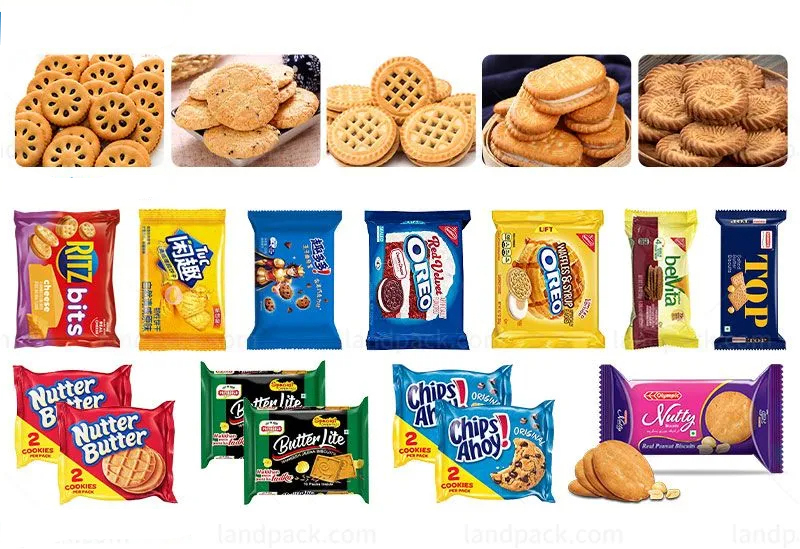
Different biscuit products require different packaging structures. Some prioritize speed and cost efficiency, while others focus on protection or premium presentation.
Below is a comparison of common packaging types used in modern biscuit manufacturing.
| Packaging Type | Description | Best For | Key Advantages |
| Flow Wrap Packaging | Individual or stacked biscuits wrapped in film using a horizontal flow wrap machine | Mass production biscuits | Fast speed, airtight sealing, cost efficient |
| Tray + Flow Wrap | Biscuits arranged in trays then sealed with film | Fragile cookies and premium biscuits | Prevents breakage, neat presentation |
| Pillow Pack | Simple film packaging sealed at both ends | Single servings and small snack packs | Low material cost, high production speed |
| Rigid Paper Box | Cardboard or paperboard outer packaging | Retail shelves and gift packs | Strong branding space and protection |
| Tin Box Packaging | Metal containers often used for premium products | Gift biscuits and holiday products | Durable, reusable, attractive |
| Flexible Laminated Packaging | Multi-layer plastic or foil packaging | Long shelf-life biscuits | Strong moisture and oxygen barrier |
What Are the Types of Packaging Materials Used in the Food Industry?
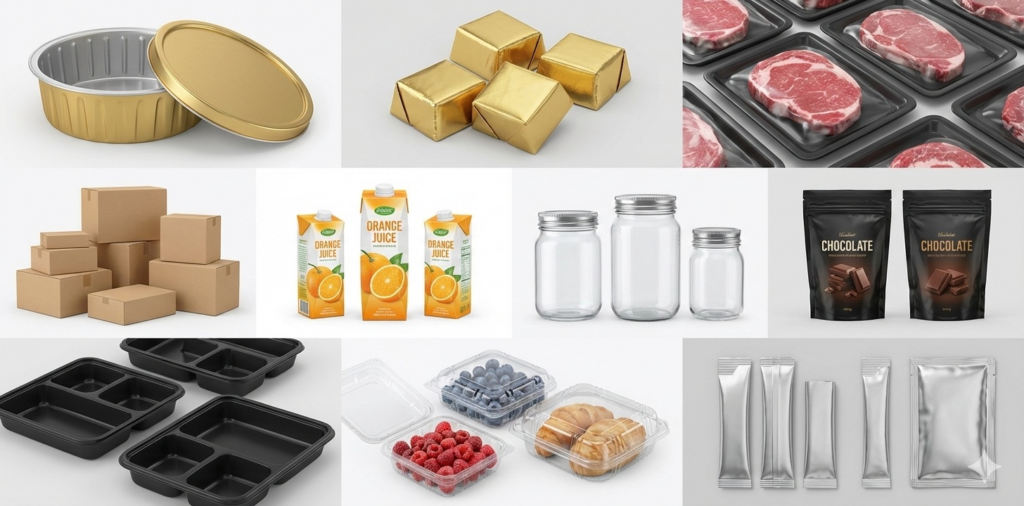
Food packaging materials are selected based on safety, shelf life requirements, and compatibility with automated production equipment.
Plastic Films
Plastic films are among the most widely used materials in biscuits packing due to their flexibility and protective properties.
- Excellent moisture resistance
Plastic films such as BOPP and polypropylene help keep biscuits crisp by blocking humidity from the outside environment.
- Lightweight and cost-effective
Compared with rigid packaging materials, plastic film reduces transportation costs and packaging weight.
- High compatibility with automation
These materials run smoothly on high-speed equipment such as a horizontal flow wrap machine, allowing manufacturers to maintain efficient production.
- Clear printing and branding opportunities
Plastic surfaces allow high-quality graphics that improve shelf appeal.
Paper and Paperboard
Paper-based materials are commonly used as secondary packaging for biscuits.
- Strong structural support
Paperboard boxes help protect inner packages during stacking and shipping. - Sustainability advantages
Many paper materials are recyclable and increasingly favored by environmentally conscious brands. - Large surface area for branding
Cartons provide space for product information, storytelling, and marketing design. - Versatile packaging formats
They can be used for family packs, multipacks, or premium product boxes.
Aluminum Foil and Laminates
Multi-layer packaging materials combine different materials to enhance protection.
- Superior barrier properties
Aluminum layers block oxygen, moisture, and light, helping extend product shelf life. - Maintains flavor and aroma
Laminated films prevent flavor loss and preserve product freshness. - Improved durability during shipping
These materials resist punctures and damage. - Ideal for automated food packaging lines
Laminated films are widely used in large-scale food packaging line प्रणाली.
How a Horizontal Flow Wrap Machine Is Used in Biscuit Packaging
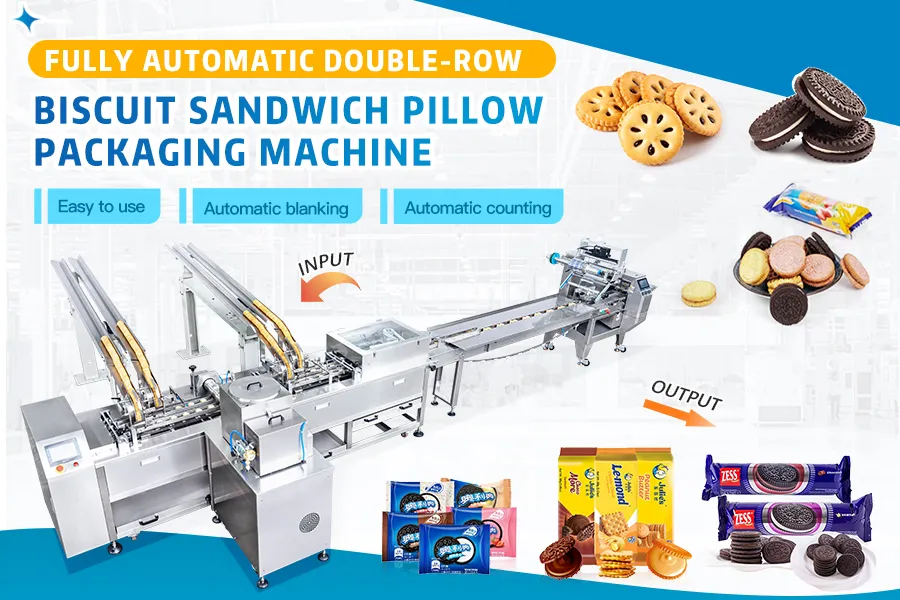
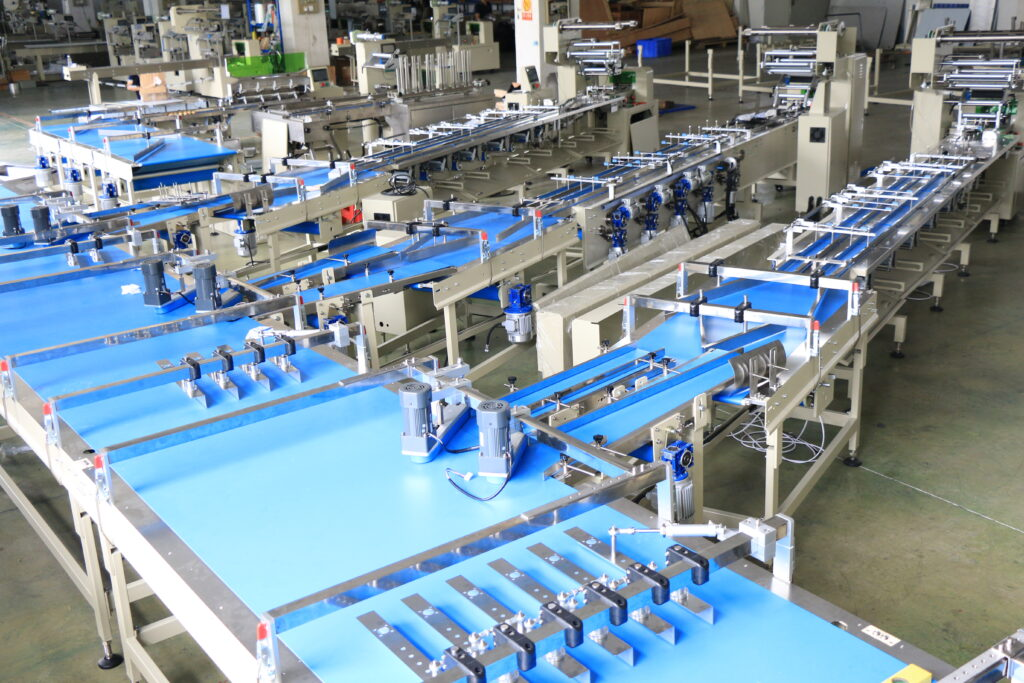
Modern biscuit factories rely heavily on automation to keep up with market demand.
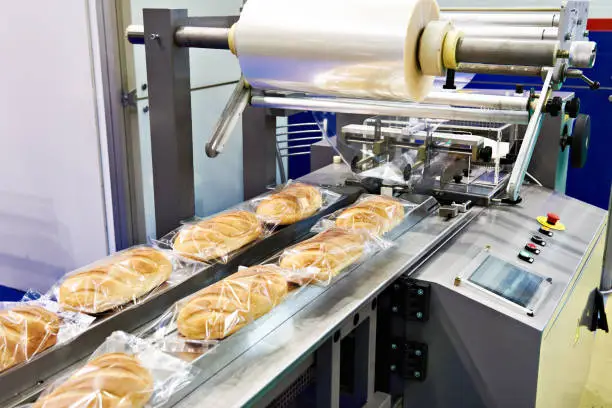
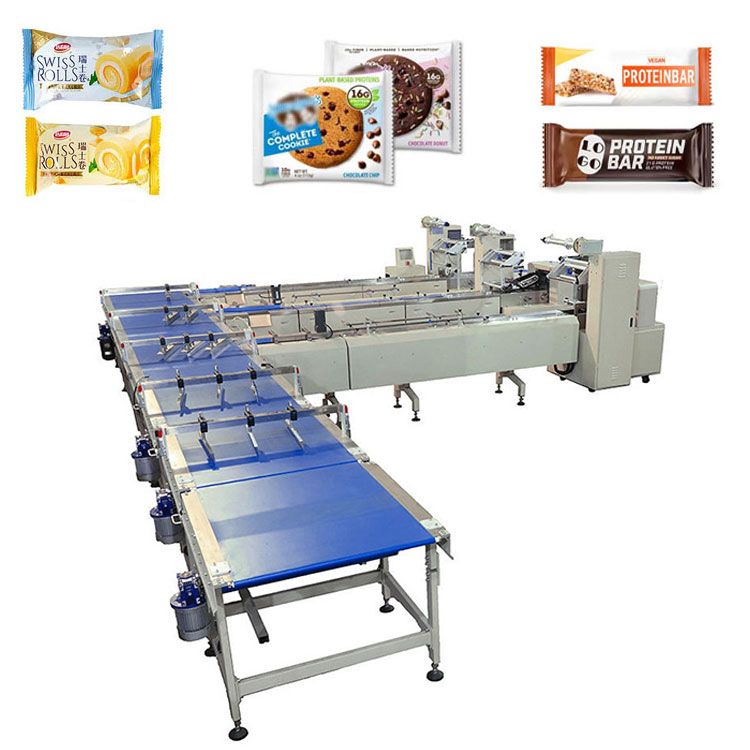
A horizontal flow wrap machine wraps products continuously as they move along a conveyor.
- Biscuits enter the machine in rows or stacks.
- Packaging film is formed around the product.
- Sealing jaws create airtight seams.
- Packs are cut into individual units.
This process enables fast and consistent biscuits packing for large production volumes.
Advantages for Biscuit Manufacturers
Automation significantly improves efficiency and product consistency.
- High production speed
Manufacturers can package thousands of biscuit packs per hour. - Reduced labor costs
Automated systems require fewer manual operations. - Consistent packaging quality
Machines ensure uniform sealing and accurate pack sizes. - Easy integration into a full food packaging line
Flow wrapping systems often connect with sorting, counting, and cartoning equipment.
How to Choose the Right Food Packaging Material for Biscuit Packaging
Selecting the right packaging solution requires balancing protection, cost, and production efficiency.
Consider the Biscuit Type
Different biscuits require different levels of protection.
- Fragile biscuits need structural support
Products such as butter cookies or sandwich biscuits often require trays or rigid boxes. - Hard biscuits are easier to package
Crackers or digestive biscuits may only require flexible wrapping. - Stacked vs single packaging formats
Some biscuits are packed in rows, while others are individually wrapped. - Product size and shape matter
Packaging must fit the product without excessive empty space.
Evaluate Shelf Life Requirements
Shelf life strongly influences packaging material choices.
- Moisture protection is critical
Even small amounts of humidity can affect texture. - Oxygen control prevents staleness
Barrier films help maintain product quality for longer periods. - Distribution distance matters
Export products usually require stronger packaging. - Storage conditions must be considered
Temperature changes during shipping may affect packaging performance.
Ensure Compatibility with Packaging Equipment
The packaging material must work smoothly with machinery.
- Film must run efficiently on a horizontal flow wrap machine
Poor film quality can slow production or cause sealing issues. - Materials must seal consistently
Reliable seals prevent air leaks and product spoilage. - Packaging speed should match production capacity
High-speed biscuit lines require materials designed for automation. - Integration with the food packaging line
Materials should support cartoning, labeling, and palletizing systems.
Future Trends in Biscuit Packaging
The biscuit industry continues evolving as technology and consumer expectations change.
Automation and Smart Factories
- Advanced sensors and AI inspection systems improve quality control.
- High-speed machines increase packaging efficiency.
- Integrated food packaging line systems reduce production downtime.
- Data tracking helps manufacturers optimize operations.
Sustainable Packaging Innovation
- Development of recyclable mono-material films.
- Increased use of biodegradable packaging.
- Reduction of unnecessary secondary packaging.
- Improved packaging designs that balance sustainability and protection.
Conclusion: CHLBGROUP Help You

Biscuit packaging is far more complex than it may appear at first glance. From choosing the right materials to integrating advanced automation equipment, manufacturers must consider product protection, shelf life, logistics, and branding all at once.
Modern technologies, such as the horizontal flow wrap machine and integrated food packaging line systems allow companies to achieve faster production while maintaining consistent quality. At the same time, the growing demand for sustainability is pushing the industry to innovate and adopt smarter packaging solutions.
For companies looking to upgrade their biscuits packing processes, investing in the right combination of materials, equipment, and packaging design can make a significant difference in both product quality and business growth.