Cheese packaging solutions need to protect product quality, Frische bewahren, and support efficient production from processing to distribution. Different cheese formats also create different packaging requirements, so manufacturers need to match the packaging approach to the product and production needs.
This guide covers common cheese packaging methods and key packaging technologies, explains how different cheese products are packaged, and outlines the main factors to consider when selecting a suitable packaging solution.
Challenges in Cheese Packaging
Cheese packaging must control oxygen and moisture while protecting the product during handling, Lagerung, und Vertrieb.
Cheese manufacturers need to balance several packaging requirements at the same time. The main challenges include:
- Freshness and shelf life: Exposure to oxygen and unsuitable storage conditions can affect flavor, Textur, und Aussehen. Packaging needs to maintain product quality throughout storage rather than simply contain the cheese.
- Contamination and moisture control: Packaging must create a reliable barrier during filling, Versiegelung, Transport, and storage. Moisture loss can affect texture and weight, while excess moisture can create quality problems inside the package.
- Product handling and consistency: Scheiben, Portionen, blocks, chunks, and shredded cheese behave differently during packaging. These differences can affect filling accuracy, portion control, Versiegelung, and production speed.
Common Cheese Packaging Methods
Packaging methods differ in how they contain, Form, and seal cheese, making product format a key factor in selecting the right approach.
Vakuumverpackung
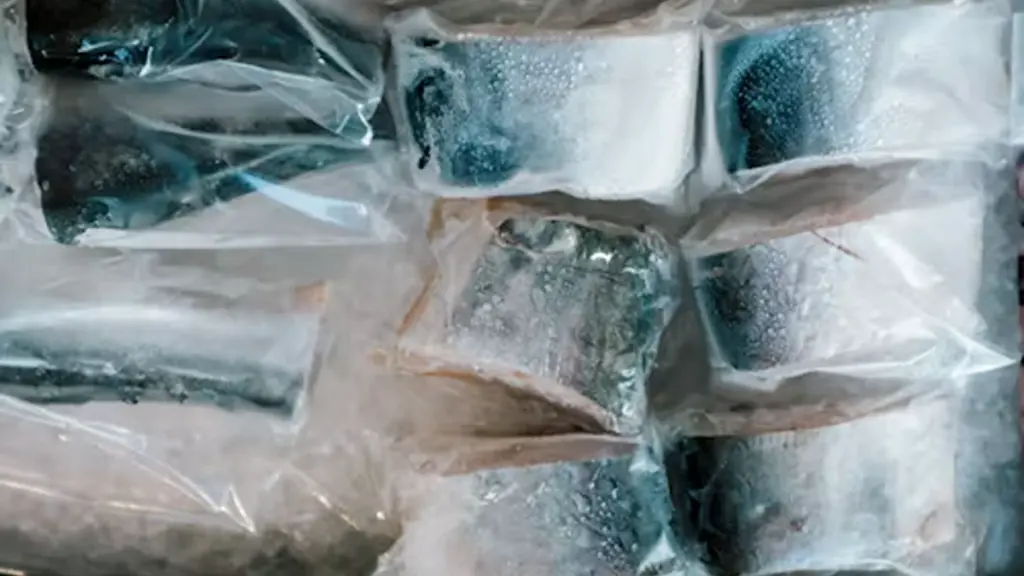
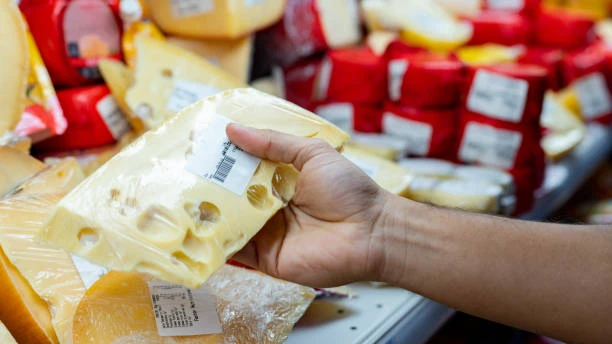
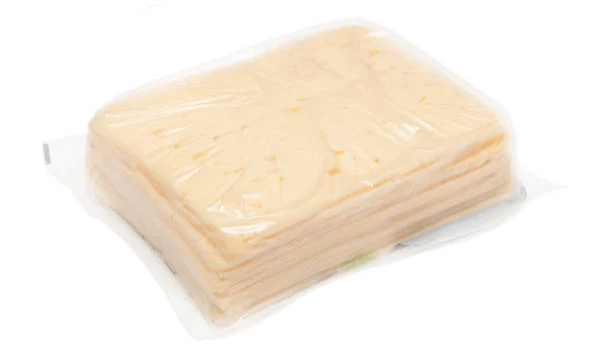
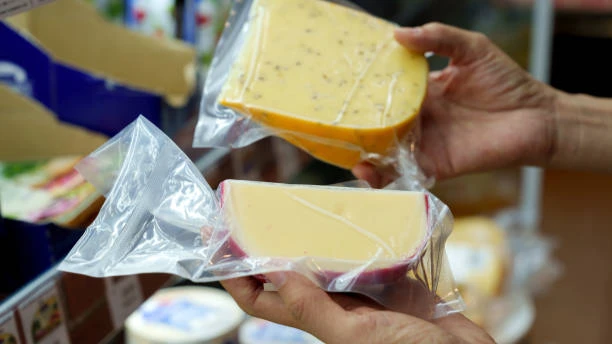
Vacuum packaging removes air before the package is sealed, allowing the film to fit closely around the cheese. This compact format works well for cheese blocks, Portionen, and other firm products that can keep their shape under vacuum pressure.
The close-fitting package also reduces empty space around the product, which can help with storage and transportation. Jedoch, manufacturers need to consider the texture and shape of the cheese because strong vacuum pressure may affect softer products or change their appearance.
Thermoformed and Tray Packaging
Thermoformed and tray packaging provide more structured package formats, with the main difference being how the package is formed and how the product is supported.
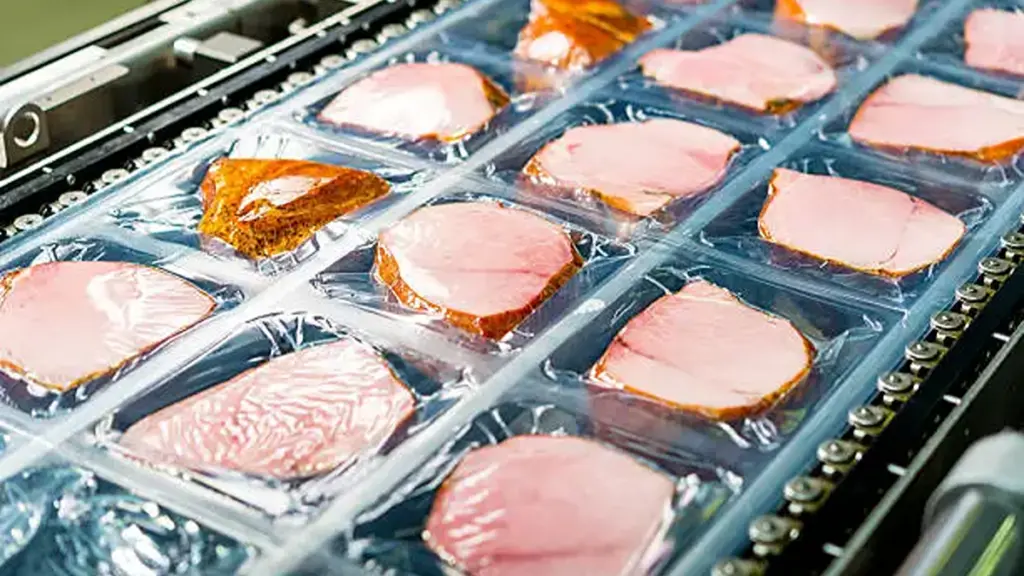
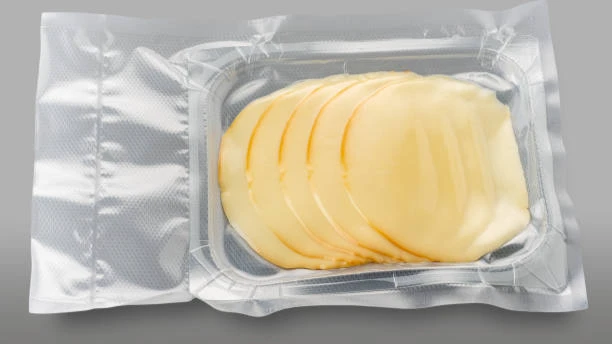
- Thermoformed packaging: A flexible film forms a cavity around the product before sealing. The process provides consistent package dimensions and works well for sliced cheese, Portionen, and other products with defined shapes.
- Tray packaging: A preformed container supports the cheese during packing and distribution. It provides more space around the product than close-fitting formats and can support retail presentation, Beschriftung, and products that need a stable package structure.
The choice between these formats depends on the cheese shape, Packungsgröße, presentation requirements, and production process.
Flow Wrapping and Bag Packaging
Flow wrapping forms film around individual cheese products and seals the package along its edges. Because the process handles products continuously, it suits regularly shaped items such as slices and portions where manufacturers need consistent package sizes and steady production.
Bag packaging provides a different approach for loose products such as shredded and grated cheese. The system fills a measured amount of cheese into each bag before sealing it, allowing manufacturers to adjust package weights and sizes for different product requirements. The filling and sealing stages also need to work together to maintain accurate weights and reliable package closure.
Cheese Packaging Technologies
Packaging technologies address different needs, from controlling the atmosphere inside a package to improving the consistency of the production process.
Modifizierte Atmosphäreverpackung
Modified atmosphere packaging (KARTE) focuses on controlling the environment inside the package. Instead of relying only on the physical package structure, MAP replaces the air around the cheese with a selected gas mixture before sealing.
Several factors work together to maintain the intended package environment:
- Gas composition: The selected gas mixture should suit the cheese type, product condition, and required shelf life rather than follow one standard formula.
- Barrier material: Packaging film or other materials need suitable barrier properties to limit gas exchange after sealing.
- Sealing quality: Reliable seals help prevent unwanted air from entering the package and maintain the intended atmosphere during storage.
MAP therefore works as a packaging technology that supports product protection through atmosphere control. Its effectiveness depends on how well the gas environment, Verpackungsmaterial, and sealing process work together.
Automated Packaging Systems
Automated packaging systems focus on controlling the packaging process rather than changing the atmosphere inside the package. They connect operations such as product feeding, Wiegen, Füllung, Versiegelung, Inspektion, and package handling into a coordinated workflow.
This approach can reduce repeated manual operations while improving consistency in package weight, Versiegelung, and production speed. It can also connect primary packaging with downstream processes, such as secondary packaging and palletizing, when the production line requires a higher level of integration.
The suitable level of automation depends on production volume, cheese formats, Verpackungsanforderungen, and investment needs. A highly automated system may suit a high-volume operation, while a simpler system can be more practical for lower volumes or products that require greater flexibility.
Build a Cheese Packaging Line That Fits Your Production
Cheese Packaging Methods for Different Products
Cheese format affects handling and packaging performance, so the packaging method should match the product’s physical characteristics and production needs.
| Cheese Format | Hauptmerkmale | Suitable Packaging Method | Main Requirements |
|---|---|---|---|
| Sliced and portion-cut cheese | Regular shape, different thicknesses, possible shifting during feeding | Thermoformed packaging | Stable positioning, consistent pack dimensions, product presentation |
| Shredded and grated cheese | Loose particles, different particle sizes, variable product flow | Bag packaging with automated weighing and filling | Flexible filling, accurate weights, efficient handling |
| Cheese chunks and blocks | Verschiedene Größen, Formen, and firmness; larger pieces need more space | Vakuumverpackung | Close product fit, Schutz, stable handling |
Sliced and Portion-Cut Cheese
Regular slices and portions are relatively easy to handle, but thickness and size can affect how they move through the packaging line.
- Regular shape: Makes automated positioning and feeding easier.
- Different thicknesses: May require different package depths and sealing conditions.
- Presentation needs: Retail portions often need stable positioning and consistent pack dimensions.
Für diese Produkte, thermoformed packaging is often a practical option because it creates a defined space for each portion. This helps keep slices in position during packing while maintaining consistent package dimensions. For higher-volume production, the same setup can also support automated feeding and sealing, making it suitable when both presentation and production efficiency matter.
Shredded and Grated Cheese
Loose cheese pieces behave differently during filling, so the packaging system needs to control product flow and filling weight.
- Loose structure: Shredded and grated cheese has no fixed shape, making accurate filling more dependent on product flow.
- Particle size: Fine and coarse pieces may move through the filling system at different rates.
- Variable pack sizes: Different filling weights may require flexible package sizes and filling settings.
Bag packaging with automated weighing and filling is often a suitable approach because flexible bags can accommodate loose cheese without requiring a fixed product shape. Automated weighing helps control the amount entering each pack, while the filling system can be adjusted for different weights and package sizes. This combination works well for operations that need consistent filling accuracy without limiting the product to one fixed pack format.
Cheese Chunks and Blocks
Solid cheese pieces offer more stable handling, but their size, Form, and firmness still affect the space and protection needed inside the package.
- Regular blocks: Standard dimensions make loading and packaging more predictable.
- Irregular chunks: Different shapes and sizes can require more flexible product handling.
- Larger pieces: Need enough package space and sealing area to avoid pressure on the product or seal.
For firm blocks and chunks, Vakuumverpackung is often a suitable method because the film can fit closely around the cheese and reduce the amount of air inside the package. It also works with different solid product shapes without requiring every piece to have exactly the same dimensions. For products that need a more structured retail presentation, thermoformed packs or trays may be considered instead, depending on the required package format and handling process.
How to Choose the Right Cheese Packaging Solution
The packaging setup should match the cheese format, package requirements, Produktionsvolumen, existing line, and future operating needs.
| Production Requirement | Suitable Equipment or Technology | Typische Anwendung |
|---|---|---|
| Sliced or portioned cheese | Slicing, portionieren, Wiegen, and automated feeding systems | Retail slices and fixed-weight portions |
| Shredded or minced cheese | Weighing and controlled feeding systems | Loose cheese packed by weight |
| Reduced oxygen exposure | Vacuum or MAP packaging | Products requiring stronger shelf-life protection |
| Preformed tray packaging | Tray sealing machines | Portioned cheese in rigid or semi-rigid trays |
| High-volume production | Thermoforming or integrated automated packaging lines | Continuous production with reduced manual handling |
Product and Packaging Requirements
Start with the cheese format and final package before deciding which machines the line needs.
- Cheese format: Scheiben, shredded cheese, chunks, and minced cheese require different handling and feeding methods.
- Paketanforderungen: Consider portion weight, Packungsgröße, sealing method, and shelf-life.
- Protection needs: Oxygen and moisture sensitivity may determine the required packaging technology.
Sliced and portioned cheese may need slicing, portionieren, and weighing equipment, while shredded or minced cheese typically requires accurate weighing and controlled feeding. For products that need reduced air exposure, Vakuumverpackung can be considered. Depending on the package format and production requirements, this may include a thermoforming vacuum skin packaging machine or a premade bag vacuum packing machine.
Production Volume and Machine Configuration
Production volume determines the required machine capacity and how much of the process should be automated.
- Lower output: Semi-automatic equipment can provide flexibility with lower production demands.
- Medium output: Automatic weighing, Füttern, and sealing can reduce manual handling.
- High output: Integrated lines can connect preparation, portionieren, Verpackung, und nachgelagerte Prozesse.
For higher-volume cheese production, thermoforming vacuum packaging can provide continuous forming, Füllung, and vacuum sealing in one process. A continuous thermoforming vacuum packaging machine can therefore be considered when production requires higher throughput and a more integrated packaging process.
Existing Equipment and Future Expansion
The new equipment should fit the existing production line and allow room for future changes.
Check floor space, conveyor direction, upstream equipment, Dienstprogramme, and downstream operations before finalizing the machine configuration. A modular packaging line can also make it easier to add inspection, Beschriftung, Kartonverpackung, or palletizing equipment as production requirements increase.
How to Evaluate a Cheese Packaging Machine Supplier
Once the equipment requirements are clear, evaluate whether the supplier can deliver and support the complete solution.
- Engineering capability: Can the supplier design the line around the product, package, output, und Fabriklayout?
- Line integration: Can different machines and automation modules work together as one system?
- Testing and commissioning: Does the supplier provide factory testing, Installation, Inbetriebnahme, und Ausbildung?
- After-sales support: Check spare parts, technische Unterstützung, Wartung, and troubleshooting.
- Food safety and quality: Review hygienic design, machine materials, quality systems, and relevant certifications.
A supplier should therefore be assessed on more than individual machine specifications. Geräteintegration, project engineering, Inbetriebnahme, and after-sales support can be just as important when the project involves a complete cheese packaging line.
Letzte Gedanken
Cheese packaging needs to match the product format, Anforderungen an die Haltbarkeit, Paketspezifikationen, and production volume. Slicing, Wiegen, Vakuumverpackung, Thermoformen, and automated feeding can be combined into a cheese packaging solution that fits the actual production process rather than relying on one standard setup.
Ein passendes cheese packaging machine should also work smoothly with existing equipment and future production needs. When evaluating suppliers, consider equipment integration, line customization, Inbetriebnahme, and after-sales support alongside machine performance. For a packaging solution built around your product and production goals, Kontakt CHLB-Gruppe to discuss your requirements.
Häufig gestellte Fragen
What type of cheese can be packed with an automated packaging machine?
Automated packaging systems can handle different cheese formats, including slices, shredded cheese, minced cheese, chunks, and portions. The required equipment depends on the product shape, Gewicht, feeding behavior, Paketformat, and production volume. A complete cheese packaging line can combine preparation, portionieren, Wiegen, Primärverpackung, and downstream automation to match different production requirements.
What packaging machine is suitable for sliced cheese?
Sliced cheese can be packed with systems that combine accurate feeding or stacking with automated sealing. Thermoforming can suit standardized slices and higher-volume production because it creates consistent package cavities, while tray sealing may suit different tray sizes and retail formats. The machine configuration should match slice dimensions, pack weight, Paketstil, and required output.
Is vacuum packaging or MAP better for cheese?
Vacuum packaging and MAP serve different packaging requirements, so the suitable option depends on the cheese type, Paketformat, Haltbarkeitsziel, and presentation needs. Vacuum packaging reduces air inside the package and can work well for solid cheese products, while MAP maintains a controlled atmosphere and can support certain retail formats. The packaging technology should be matched to the product and required storage conditions.
What should I consider when selecting a cheese packaging machine for high-volume production?
High-volume production requires more than a high machine speed. The complete line should maintain stable feeding, Wiegen, Verpackung, Versiegelung, Inspektion, and product handling at the required output. Thermoforming can be considered for standardized cheese products because forming, Füllung, Vakuumversiegelung, and cutting can be integrated into a continuous process. Changeover time, floor space, and downstream equipment should also be considered when configuring the line.
What should I ask a cheese packaging machine supplier before placing an order?
Ask the supplier to confirm whether the proposed system matches your cheese format, package dimensions, target weight, production output, Verpackungsmaterial, floor space, and existing equipment. It is also important to discuss machine testing, Installation, Bedienerschulung, Ersatzteile, Wartung, und technischer Support. A suitable supplier should be able to configure the equipment around your production process instead of recommending a standard machine based only on rated output.