Modified atmosphere packaging (MAPA) extends food shelf life by changing the gas composition inside a package to help preserve product quality. The appropriate gas mixture varies by food type, while packaging materials, sealing performance, and storage conditions also affect preservation results.
For food manufacturers and packaging buyers, understanding these requirements helps identify suitable gas mixtures and packaging equipment. This guide covers MAP gas mixtures for meat, productos frescos, y productos de panadería, key factors affecting packaging performance, and machine options for different packaging formats and production needs.
What Modified Atmosphere Packaging Does for Shelf Life
Modified atmosphere packaging (MAPA) extends the shelf life of food by changing the gas composition inside a package. By adjusting oxygen and carbon dioxide levels, MAP can slow microbial growth, reduce oxidation, or control the respiration rate of fresh produce. The results depend on the food itself: fresh meat, productos horneados, and vegetables respond differently to changes in their surrounding atmosphere.
MAP performance also depends on storage temperature, packaging film permeability, and seal integrity. The selected gas mixture must match the product’s characteristics, while the packaging material must maintain the intended atmosphere throughout storage. MAP does not eliminate the need for proper hygiene, control de temperatura, or food safety measures.
For further insight into how modified atmosphere packaging affects food quality and shelf life, refer to this research study on MAP, which provides additional scientific context for evaluating packaging conditions and preservation performance.
Common Gases Used in MAP for Food Packaging
Oxígeno (O₂)
Oxygen helps maintain the bright red color of fresh red meat by supporting the formation of oxymyoglobin. Sin embargo, it can also accelerate fat oxidation and contribute to quality deterioration in susceptible foods. For this reason, oxygen levels must be adjusted according to the product’s color requirements, oxidation risk, and intended shelf life.
Dióxido de carbono (CO₂)
Carbon dioxide helps inhibit the growth of many spoilage microorganisms, making it useful for packaging meat, mariscos, productos lácteos, and bakery items. Its effectiveness depends on factors such as concentration, temperatura de almacenamiento, and food composition. Excessive CO₂ absorption can also cause package collapse or affect product texture, so the concentration must be suited to the food.
Nitrógeno (N₂)
Nitrogen is an inert gas commonly used to displace oxygen and fill the package headspace. It helps reduce oxidation in oxygen-sensitive foods and maintain package volume, particularly in products packed in flexible materials. Sin embargo, nitrogen does not actively inhibit most spoilage microorganisms at typical MAP concentrations, so it is often combined with CO₂ when microbial control is a priority.
The appropriate gas mixture depends on the product being packaged. Fresh red meat may require oxygen to preserve its color, while bakery products often benefit from CO₂ for mold control and nitrogen as a filler gas. Fresh produce presents a different challenge because its respiration rate must be considered when setting oxygen and carbon dioxide levels.
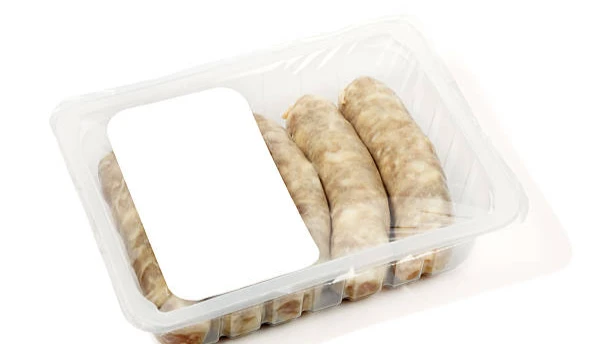
Find the Right MAP Packaging Solution for Your Products
MAP Gas Mixtures by Food Type: Carne, Producir, and Bakery
Different foods require different modified atmosphere packaging (MAPA) gas mixtures to maintain quality and extend shelf life. Oxígeno (O₂), dióxido de carbono (CO₂), and nitrogen (N₂) each serve a specific purpose, while the ideal ratio depends on the food type, temperatura de almacenamiento, material de embalaje, and desired shelf life.
The table below outlines typical MAP gas mixtures used as starting points for different food categories. Actual ratios should be validated for each product and its storage conditions.
| Categoría de alimentos | Typical MAP Gas Mix | Main Purpose | Equipment Considerations |
|---|---|---|---|
| Fresh red meat | High O₂ (often 70–80%) + CO₂ (often 20–30%) for selected retail applications | Maintain a bright red colour and help control spoilage bacteria | Accurate gas mixing, suitable barrier materials, and reliable seals |
| Cooked meat | Typically CO₂ and N₂, with oxygen kept low | Limit oxidation and help slow spoilage | Consistent gas flushing, low residual oxygen, and leak-resistant seals |
| Fresh poultry | Often CO₂ and N₂, with the ratio determined by the product and storage requirements | Help control microbial spoilage while limiting oxidation | Accurate gas dosing and packaging formats suited to chilled distribution |
| Fresh produce and salad | Reduced O₂ and controlled CO₂, with target levels varying by produce type | Manage respiration and delay quality deterioration | Film permeability and package design must match the produce’s respiration rate |
| Productos de panadería | CO₂ and N₂, with proportions adjusted to the product | Help inhibit mould growth and reduce oxygen exposure | Effective gas flushing, moisture-appropriate packaging materials, and reliable seals |
Fresh Meat, Aves de corral, and Seafood
Meat and seafood require different gas mixtures because colour, fat content, and susceptibility to microbial spoilage vary by product.
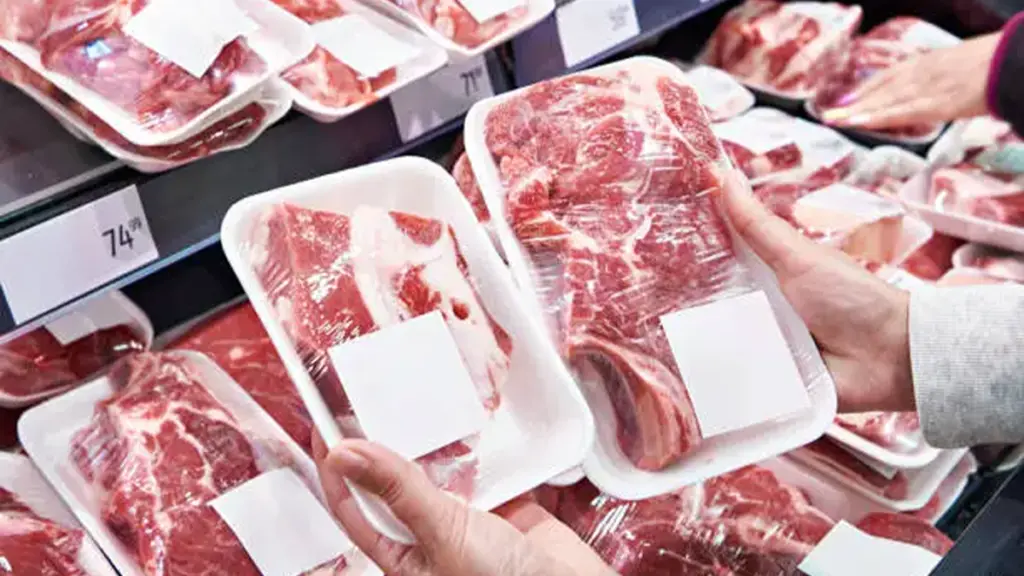
- Fresh red meat: A mixture of 70–80% O₂ and 20–30% CO₂ is commonly used when maintaining bright red colour is a priority. Oxygen supports oxymyoglobin formation, while CO₂ helps inhibit many spoilage bacteria. Sin embargo, high oxygen can accelerate fat oxidation, so this mixture is not suitable for every meat product.
- Fresh poultry: CO₂ and N₂ are commonly used to control spoilage while limiting oxidation. A 30% CO₂ and 70% N₂ mixture is one starting reference, but the appropriate ratio depends on the product and storage conditions.
- Fresh white fish: A mixture such as 30% O₂, 40% CO₂, y 30% N₂ is one documented starting reference. Fish species, fat content, and storage temperature affect the final formulation. CO₂ absorption can also cause package collapse if the gas mixture and package design are not properly matched.
- Cooked and processed meat: CO₂ and N₂ can help control spoilage and reduce oxidation. Low residual oxygen and reliable seals are important for maintaining the intended atmosphere.
For equipment buyers, the main considerations are accurate gas mixing, consistent flushing, sellado confiable, and compatibility with the intended tray or flexible-pack format. Chilled storage and appropriate food safety controls remain essential.
Productos frescos
Fresh produce continues to respire after harvesting, consuming oxygen and releasing carbon dioxide. MAP can slow respiration by adjusting the atmosphere inside the package, but the target must suit the specific fruit or vegetable.
Some fresh-cut produce studies use target atmospheres around 1–5% O₂ and 3–10% CO₂. These figures apply to specific products and packaging systems, not all fruits and vegetables. Excessively low oxygen can trigger anaerobic respiration, causing fermentation and off-flavours.
Three factors are particularly important:
- Respiration rate: Different fruits and vegetables consume oxygen at different rates.
- Film permeability: Packaging film must allow sufficient gas exchange to balance respiration.
- Storage temperature: Temperature changes affect respiration and the atmosphere that develops inside the package.
For equipment buyers, the key is compatibility between the packaging machine, película, package dimensions, and produce characteristics. Gas flushing alone cannot maintain the desired atmosphere if the film and package design are unsuitable.
Productos de panadería
Bakery products commonly use CO₂ and N₂ to delay mould growth and maintain package quality. CO₂ helps inhibit many moulds, while N₂ displaces oxygen and fills the package headspace.
A 50% CO₂ and 50% N₂ mixture is one commonly cited starting reference, although the ideal ratio varies with moisture content, formulation, y condiciones de almacenamiento. Crisp products also require moisture protection because gas composition alone cannot preserve their texture.
When evaluating MAP equipment for bakery products, consider:
- Product format: Flow-wrap machines may suit individually wrapped bread, buns, and similar products.
- Gas flushing: The system should deliver a consistent gas mixture at the required production speed.
- Material de embalaje: Suitable barrier properties help retain the intended atmosphere and protect against moisture.
- Integridad del sello: Leaks can allow oxygen to enter and undermine the packaging process.
MAP can delay mould growth, but it does not replace hygienic production, appropriate storage, or validated shelf-life testing.
Queso, Lácteos, and Ready Meals
Queso, productos lácteos, and ready meals have different moisture levels, ingredientes, and spoilage risks. Their gas mixtures should therefore be selected according to the specific product rather than a single category-wide formula.
Cheese and dairy products
- CO₂-rich mixtures are used for some cheeses to help control spoilage.
- Nitrogen may be added to provide package volume and reduce the proportion of oxygen.
- Gas composition must be matched to the product’s moisture content and texture because excessive CO₂ absorption can affect package appearance or product structure.
Platos preparados refrigerados
- CO₂ and N₂ are commonly used to help slow microbial spoilage and oxidative changes.
- A 30% CO₂ and 70% N₂ mixture is one starting reference for some prepared meals, but ingredients, temperatura de almacenamiento, and target shelf life affect the final ratio.
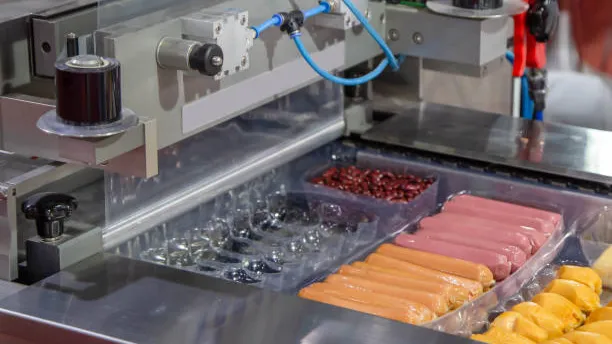
- Rigid trays may require tray-sealing or thermoforming equipment, while suitable flexible packs may use other gas-flushing systems.
Before choosing equipment, buyers should evaluate package dimensions, headspace, gas-flushing accuracy, film compatibility, and seal integrity. The final gas mixture and shelf life must be validated under the intended storage conditions, with appropriate hygiene and temperature controls maintained throughout distribution.
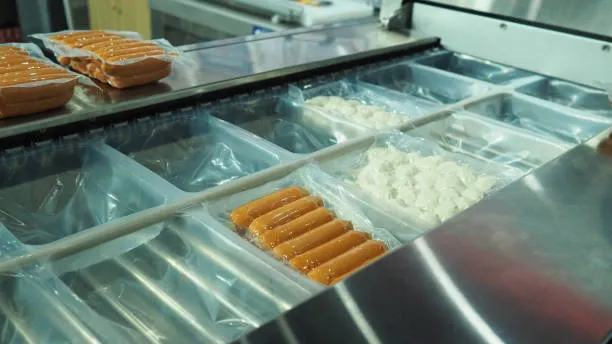
How to Choose the Right MAP Packaging Machine for Your Product
The right MAP packaging machine depends on the food format, requisitos de embalaje, velocidad de producción, and target gas mixture. Each machine type suits different applications.
- Tray Sealing Machines: Suitable for fresh meat, mariscos, and ready meals packed in preformed trays. Key factors include tray size, lavado de gas, and seal quality.
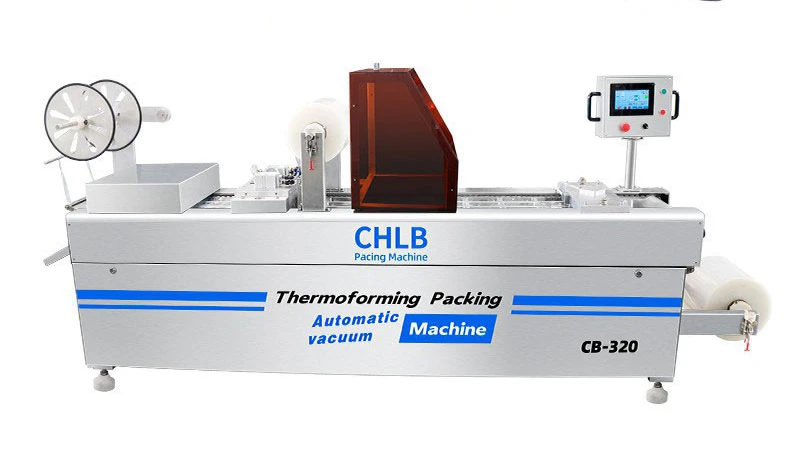
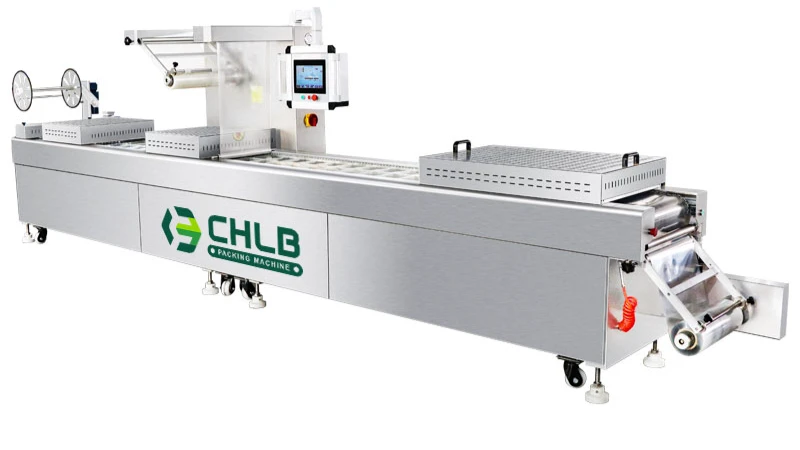
- Thermoforming Packaging Machines: Ideal for high-volume production using film rolls to form and seal packages. Consider forming depth, film compatibility, and production speed.
- Flow-Wrap Machines: Commonly used for bakery products, bocadillos, and individually wrapped foods. Confirm that the machine supports MAP gas flushing and provides reliable seals.
- Vacuum Chamber Machines: Suitable for batch packaging in pouches, including meat and cheese. Consider chamber capacity, cycle time, and gas-injection requirements.
Regardless of machine type, consistent gas replacement, compatible barrier materials, and reliable seals are essential for maintaining the target atmosphere. The final choice should match the product, formato de embalaje, and production needs.
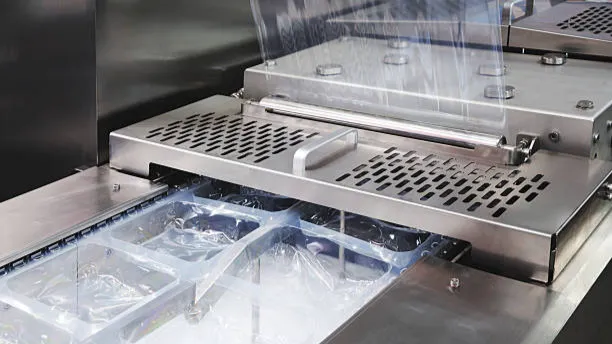
Key Factors That Affect MAP Packaging Performance
Even with the right MAP packaging machine, packaging performance depends on several factors that affect gas stability, calidad del producto, and shelf life.
- Gas Mixture: The ratio of oxygen (O₂), dióxido de carbono (CO₂), and nitrogen (N₂) must suit the food type and storage conditions.
- Headspace Ratio: The amount of gas relative to the product volume affects how effectively the atmosphere protects the food.
- Packaging Material: Film barrier properties determine how well the package retains the gas mixture and limits gas exchange with the surrounding environment.
- Residual Oxygen: Excess oxygen can accelerate oxidation and mould growth in sensitive products. The acceptable level depends on the food and packaging requirements.
- Seal Integrity: Leaks or weak seals allow gas to escape and outside air to enter, reducing the effectiveness of MAP.
- Cold Chain Management: Maintaining the recommended storage temperature helps control microbial growth and preserve product quality. MAP cannot replace proper refrigeration or food safety practices.
Pensamientos finales
Effective modified atmosphere packaging (MAPA) depends on matching the gas mixture, material de embalaje, and machine configuration to the food product. Each factor affects gas stability, calidad del producto, and shelf life, so the complete packaging system should be tested under actual storage conditions to verify its performance.
For food manufacturers planning to adopt MAP, requisitos del producto, formato de paquete, and production capacity are key considerations. Grupo CHLB provides food packaging machinery solutions to support different packaging needs. Contact CHLB Group to discuss your product requirements and evaluate a suitable MAP packaging solution.
Preguntas frecuentes
What is a MAP packaging machine?
A MAP (modified atmosphere packaging) machine flushes the air out of a pack and replaces it with a controlled mix of gases before sealing. It can be a tray sealer, a thermoforming line or a flow wrapper, and it is used to extend the shelf life of meat, produce, bakery and prepared food.
What gas mixture is used for meat MAP?
Fresh red meat typically uses a high-oxygen mix of roughly 70 a 80 percent oxygen with 20 a 30 percent carbon dioxide. The oxygen keeps the surface red while the carbon dioxide suppresses bacterial growth. Cooked meat and poultry take the opposite — low oxygen with higher carbon dioxide and nitrogen.
How is produce MAP different from meat MAP?
Meat MAP uses high oxygen to hold the red colour, while produce MAP keeps oxygen low — around 3 a 10 percent — with controlled carbon dioxide, because fresh produce is still respiring and too little or too much oxygen both accelerate decay. The respiration rate of the specific product sets the balance.
Is MAP better than vacuum packaging?
Neither is universally better. Vacuum maximises shelf life but collapses soft product and leaves red meat looking dark, so it suits wholesale and primals. MAP holds a controlled atmosphere to keep colour and protect delicate product, at the cost of gas and flushing equipment, so it suits retail display and prepared food.
What is the shelf life of MAP packaged food?
It depends on the food, the gas mix and the cold chain. High-oxygen MAP on fresh red meat is commonly quoted at around 5 a 8 días, while produce and bakery results vary with the product’s respiration rate and storage temperature. The gas mix extends life only as far as temperature and hygiene already allow.