A flow wrapping machine for bakery and snack products must protect product quality while meeting production targets. Biscuits can lose their crispness, soft bread can deform under excessive pressure, and irregular feeding can reduce output. For food manufacturers and packaging buyers, the challenge is finding a machine that handles the full product range without compromising seal quality or production efficiency.
This guide provides a practical framework for comparing horizontal flow wrappers and vertical VFFS systems, matching packaging films to product requirements, and evaluating speed, alimentazione, sigillatura, and changeover capabilities. You will also learn what to verify during product trials and supplier discussions before committing to equipment.
What a Flow Wrapping Machine Needs to Handle
Dimensioni, handling requirements, and production targets help determine which flow wrapping machine configuration fits your bakery or snack products.
Product Shape, Misurare, and Fragility
Physical characteristics affect how items move through the machine and enter the wrapping area. Biscuits and crackers can break during transfer, while soft bread and croissants may deform under excessive pressure. Snack bars and other uniform items may be easier to handle but still require consistent spacing.
Before requesting a quote, prepare the following details for each SKU:
- Dimensions and weight: Length, larghezza, altezza, e peso.
- Shape and fragility: Firmness, delicate coatings, and risk of breakage or deformation.
- Size range: The smallest and largest items the machine needs to handle.
Check that the machine accommodates your current range and planned SKU expansion.
Feeding Method and Product Orientation
The infeed system must deliver products at a consistent rate and in the required position. The appropriate setup depends on product type, obiettivi di output, and whether products need to be grouped into multipacks.
| Feeding Method | Suitable Applications | Considerazione chiave |
|---|---|---|
| Manual feeding | Small batches and varied products | Operator speed and consistency |
| Automatic feeding | Repeated, produzione ad alto volume | Stable transfer and product alignment |
| Grouping and spacing systems | Multipacks and grouped products | Consistent count, spacing, and orientation |
For fragile items, ask suppliers to demonstrate how the proposed infeed limits collisions and damage. If the machine will handle multiple SKUs, confirm how easily feeding settings can be adjusted between runs.
Packaging Format and Production Requirements
The required pack format and production targets also affect machine configuration. Before comparing equipment, define:
- Pack dimensions: Required bag length, larghezza, and product orientation.
- Target output: Required packs per minute for each item and pack size.
- Packaging requirements: Durata di conservazione prevista, pack appearance, and whether gas flushing is needed.
These specifications give suppliers a consistent basis for recommending a machine and estimating its production capacity. They also help buyers compare horizontal flow wrappers with vertical VFFS systems before evaluating film requirements and detailed machine specifications.
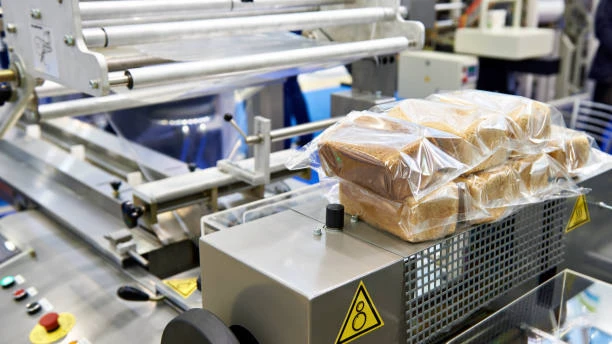
Horizontal Flow Wrapping Machine vs. Vertical VFFS: Which Is Better for Bakery and Snacks?
The product’s shape and feeding requirements help determine which packaging system fits your production line. Horizontal flow wrappers handle individual items, while vertical form fill seal (Vff) machines suit products that can be measured and fed into a bag from above.
| Comparison Factor | Horizontal Flow Wrapper | Vertical VFFS |
|---|---|---|
| Typical Products | Individual biscuits, bread rolls, croissants, and snack bars | Snack mixes, loose crackers, cereali, and other products suitable for vertical feeding |
| Alimentazione del prodotto | Products travel horizontally on a conveyor or through an infeed system. | Products typically pass through a forming tube into the bag, often using gravity and a metering system. |
| Product Control | Supports controlled orientation and spacing for individual items. | Controls the quantity filled into each bag; suitability depends on how the product moves and responds to falling. |
| Key Selection Factors | Infeed stability, product integrity, pack dimensions, and sealing performance | Dosing accuracy, flusso del prodotto, bag format, and sealing requirements |
When a Horizontal Flow Wrapper Makes More Sense
A horizontal flow wrapper is generally suitable for products that need controlled positioning during packaging.
- Individual bakery and snack items: Biscotti, crackers, croissants, bread rolls, and snack bars that can be fed horizontally.
- Consistent pack presentation: Products that require controlled orientation, spacing, or grouping within each pack.
- Fragile or soft products: Items that benefit from carefully controlled transfer to reduce collisions, rottura, or deformation.
- Multiple SKUs: Production lines that need adjustable feeding and pack settings for different product sizes.
Before choosing a machine, confirm that its infeed system can handle your products without compromising product integrity or output.
For bakery products such as croissants, bread, and doughnuts, UN automatic flow wrapping line for bakery products can integrate automatic feeding with packaging to support consistent output.
When Vertical VFFS Is Worth Considering
A vertical VFFS machine may be more suitable for loose or portioned products that can be measured and fed into a bag from above.
- Loose products: Snack mixes, cereali, and other products that can flow through a feeding system.
- Measured portions: Applications that require a dosing system to control the quantity in each bag.
- Reduced individual positioning: Products that do not need to be aligned one by one before packaging.
- Feeding challenges: Fragile pieces may break during transfer, while irregular products may block the feed path.
Check the product’s flow characteristics, precisione del dosaggio, and bag size requirements before confirming suitability.
Neither system is automatically faster or cheaper. Compare both options using the same product, target pack size, required output, and labor requirements. Once the machine type is established, evaluate the film structure and sealing performance needed for reliable packaging.
Advanced Bakery & Soluzioni per il confezionamento di snack
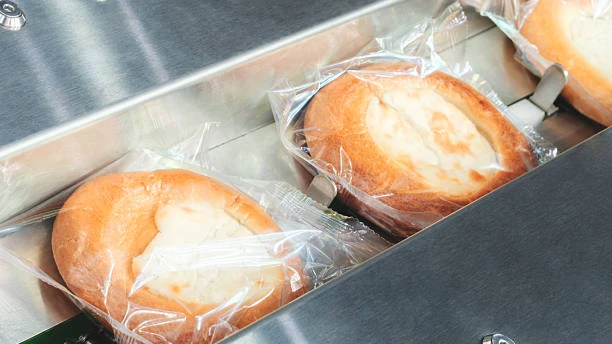
Film Requirements for Bakery and Snack Packaging
Packaging film must protect product quality, meet shelf-life requirements, and run reliably on the flow wrapping machine. Buyers should evaluate barrier performance, sealing compatibility, and other packaging requirements before confirming the film specification.
Moisture and Oxygen Barrier
The film’s barrier properties should match the product’s sensitivity to moisture and oxygen. The required level depends on the product formulation, target shelf life, e condizioni di conservazione.
- Barriera contro l'umidità: Helps prevent biscuits and crackers from absorbing moisture and losing their crispness.
- Barriera all'ossigeno: Helps limit oxidation in products containing fats or oils, depending on their formulation and shelf-life requirements.
- Material structure: BOPP and metallized film structures are common packaging options, but the suitable choice depends on the required barrier performance.
Confirm the required protection level before selecting a film structure. A material name alone does not guarantee sufficient barrier performance for a specific product.
Sealability and Film Compatibility
The film must run smoothly on the flow wrapping machine and form consistent seals at the required production speed. Poor compatibility can cause weak seals, wrinkles, film breaks, or other packaging defects.
Check the following requirements:
- Heat-sealing layer: The sealing layer must be compatible with the machine’s sealing system.
- Sealing conditions: The film must seal reliably within suitable temperature and sealing-time ranges.
- Film handling: Thickness, rigidità, and surface properties must support stable feeding and forming.
- Integrità della tenuta: Finished packs must have complete, consistent seals that meet packaging requirements.
BOPP, CPP, and PE can be used in different film structures, a seconda dell'applicazione. Their sealing and barrier properties vary by grade and construction, so confirm the complete film specification rather than choosing by material name alone.
Additional Film Requirements
Some products have packaging requirements beyond barrier performance and sealability. These should be confirmed before finalizing the film structure.
- Bread and soft rolls: Consider moisture retention, condensation risk, and the desired crust or texture. Perforated film may suit certain applications, but it is not a universal requirement.
- Printed packaging: Check transparency, print quality, surface finish, and appearance requirements for branded products.
- Conformità al contatto alimentare: Ensure the film meets applicable food-contact requirements in the target market.
Before ordering film in bulk, test the proposed structure with the actual product and machine. Verify seal quality, pack appearance, and stable operation at the target speed. Final approval should account for the product formulation, durata di conservazione richiesta, storage and distribution conditions, and applicable food-contact requirements.nd applicable food-contact requirements.
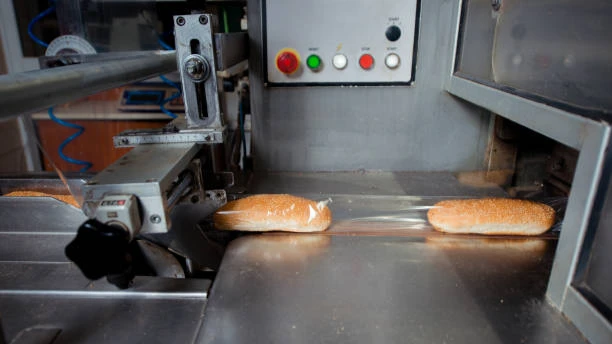
Key Specifications to Compare Before Buying
Compare supplier quotations using the same product, pack dimensions, film specification, and target output. The following specifications help you evaluate machine performance, configuration, and additional costs.
| Specifica | What to Compare |
|---|---|
| Packaging Speed | Rated speed and tested packs per minute for the same product and pack size; stable output during continuous operation. |
| Product and Pack Size Range | Supported product dimensions, finished pack sizes, and compatibility with current and planned SKUs. |
| Feeding and Infeed System | Manual or automatic feeding, product alignment, grouping, spacing control, and handling of fragile products. |
| Sealing System and Film Compatibility | Back-seal configuration, end-sealing method, compatible film structures, and seal quality at the target speed. |
| Changeover and Production Efficiency | Changeover time, required replacement parts, adjustment procedures, cleaning, and routine maintenance. |
Before comparing prices, confirm whether automatic feeding systems, forming boxes, guides, and other required components are included in each quotation. Additional parts or configurations may increase the total investment.
Where possible, request a machine trial using your actual products and intended packaging film. Check packaging speed, product damage, qualità della tenuta, and feeding stability under the same conditions used to evaluate other machines.
Questions to Ask Before Requesting a Quote
Before requesting a quotation, prepare your product dimensions, target output in packs per minute, packaging film specifications, and SKU list. Confirm the following points with each supplier:
- What is the tested packaging speed for each product size and pack format?
- Which film structures can the machine run reliably?
- How does the infeed handle fragile biscuits, soft bread, and other delicate products?
- Which parts or settings need to change between SKUs, and what additional costs apply?
- What installation, formazione degli operatori, pezzi di ricambio, and after-sales support are included?
These details help suppliers assess your production needs and recommend a suitable flow wrapping machine configuration for your bakery or snack packaging line.d recommend a suitable flow wrapping machine configuration for your bakery or snack packaging line.
Considerazioni finali
A flow wrapping machine for bakery and snack products needs to match the products being packed, the required packaging format, and the target production speed. Feeding stability, film compatibility, and sealing performance are equally important for maintaining pack quality and reducing production interruptions. Testing the machine with actual products and packaging film helps confirm whether it meets your requirements.
If you are planning a new packaging line or upgrading existing equipment, Gruppo CHLB can help you assess your bakery and snack packaging needs. Contact the team to discuss your bakery and snack packaging project.
Domande frequenti
How do I choose a flow wrapping machine?
Start from your product’s shape and firmness, then compare speed, product size range and sealing type on your own product. Choose horizontal flow wrapping for discrete items that keep their shape, and confirm the film seals cleanly on your product with a test pack.
What is the difference between horizontal and vertical flow wrapping?
Horizontal flow wrapping moves the product along the line on its side while film wraps around it, which suits solid, individually handled items like biscuits and bread. Vertical machines (Vff) drop free-flowing product down into a forming tube, which suits measured quantities of small pieces.
Which film is used for biscuit flow wrapping?
Biscuits and crackers take a moisture-barrier film — often metallised or coated — to stop them going soft, while bread and soft rolls take a more permeable or micro-perforated film so condensation does not form inside. Confirm the film’s seal layer works on your product with a test pack.
What is a flow wrap vs a back seal pack?
A flow wrap seals film around a discrete, handled item — a biscuit, bar or loaf — with a fin or lap seal underneath and end seals. A back seal pack has a single seal along the back of a formed bag and suits loose or granular product that is measured and dropped in.
How fast is a flow wrapping machine?
Speed depends on the product size and firmness, so there is no single number. A wrapper is faster on a small, firm biscuit than on a large, soft bread loaf. Ask the supplier for the pack speed on your own largest and softest product, not a sample item.