Liquid food products require more than simply filling a container. Their viscosity, температура, flow behavior, формат пакета, and hygiene requirements all affect how the product should be handled and packed. Для производителей продуктов питания, the right liquid food packaging system must balance filling accuracy, скорость производства, защита продукта, и долгосрочная операционная эффективность.
This guide explains the main liquid food packaging formats, key technologies used in automated packaging lines, and the factors manufacturers should consider when selecting a packaging solution.
What Is Liquid Food Packaging?
Liquid food packaging is the process of filling and sealing liquid or semi-liquid food products into suitable containers. Common products include milk, сок, йогурт, соусы, ketchup, honey, and other food liquids.
The packaging format can vary based on the product and its intended use. Common options include мешочки, пакетики, and spout pouches, which can be designed for different filling volumes and consumer needs.
Для производителей продуктов питания, a suitable liquid food packaging system should provide consistent filling, надежная герметизация, and efficient production while keeping the product properly protected throughout the packaging process.
Common Types of Liquid Food Packaging Formats
Liquid food products can use different packaging formats based on portion size, тип продукта, удобство, и потребности в распространении. The right format also affects filling, уплотнение, and final package performance.
Pouches and Sachets
Pouches and sachets are flexible packaging formats commonly used for liquid and semi-liquid foods. They support different filling volumes and package sizes, making them suitable for both single-use products and larger portions.
Пакетики usually work well for smaller servings of sauces, приправы, напитки, and other products designed for one-time use. Their compact format makes them practical for portion-controlled products and foodservice applications.
Мешочки offer more space and flexibility for products that require larger volumes. They can be used for beverages, молочные продукты, соусы, and other liquid foods where a lightweight and flexible package is preferred.
When selecting a pouch or sachet, производители должны учитывать:
- Объем заполнения: The package should provide enough capacity for the required serving size.
- Характеристики продукта: The material and package structure should suit the liquid or semi-liquid product.
- Handling requirements: The package needs to remain secure during filling, транспорт, and storage.
Spout Pouches
Spout pouches add a convenient opening to flexible packaging, making them suitable for products that consumers need to pour, squeeze, or reseal. They are commonly used for beverages, йогурт, соусы, honey, and other liquid or semi-liquid foods.
The spout provides more controlled dispensing than a standard pouch and can make the package easier to use. For products that are consumed over several occasions, a resealable cap can also help improve convenience after opening.
Для производителей, the main factors include the pouch size, spout design, cap type, and filling volume. These elements should work together to create a package that is practical for production and convenient for the end user.
| Packaging Format | Общие приложения | Main Characteristics |
|---|---|---|
| Пакетики | Соусы, приправы, напитки, single-use products | Компакт, portion-controlled, suitable for smaller fills |
| Мешочки | Beverages, молочные продукты, соусы, liquid foods | Flexible, lightweight, available in different sizes |
| Spout Pouches | Yogurt, honey, соусы, напитки | Easy pouring or squeezing, with resealable options |
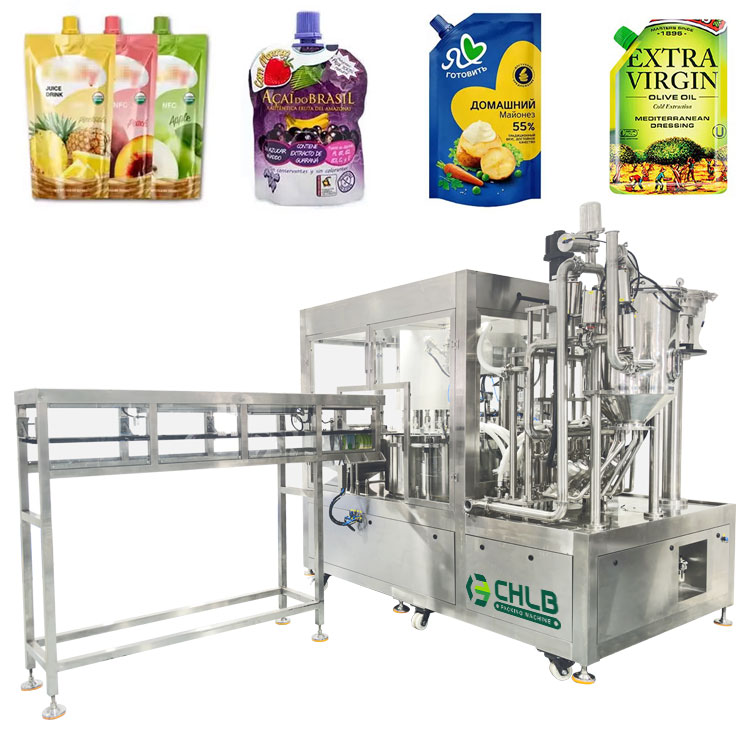
For manufacturers looking for a compact solution for spout pouch production, CHLB’s Desktop Single-Head Spout Pouch Filling and Capping Machine provides a single-head filling and capping configuration for liquid and medium-viscosity products. Its desktop design can be considered for production setups where a more compact equipment configuration is required.
Automate Liquid & Paste Packaging for Profit
Key Technologies in Liquid Food Packaging Lines
A reliable packaging line combines accurate filling, stable product handling, and automated control to maintain consistent production across different liquid food products and package formats.
Filling and Product Handling
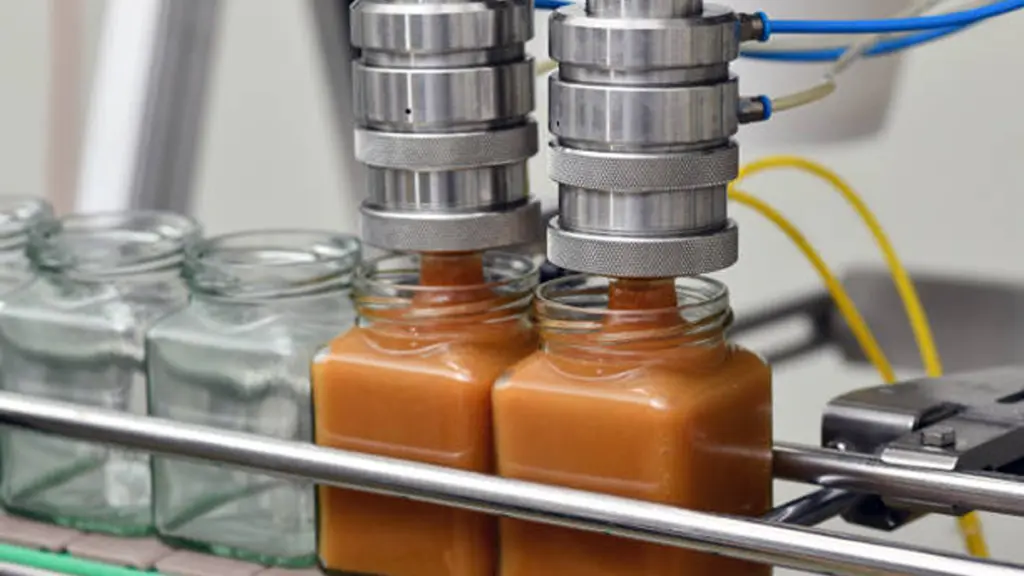
Filling accuracy directly affects product consistency, материальные отходы, and package quality. Different foods also behave differently during filling. Milk and juice usually flow easily, while ketchup, honey, and other thicker products require more controlled product movement.
Pump fillers can provide controlled flow and accurate dosing for many liquid and semi-liquid products. The filling method should match the product and production requirements, particularly:
- Product viscosity: Thicker products may need a different pumping method from low-viscosity liquids.
- Объем заполнения: The system should maintain consistent dosing across required package sizes.
- Поток продукта: Stable flow helps reduce dripping, foaming, and uneven filling.
Good product handling also supports the sealing process. Keeping the filling area clean helps reduce the risk of liquid reaching the seal and affecting package integrity.
Temperature and Control Systems
Temperature can affect product flow and filling performance, especially when a product’s viscosity changes with temperature. A suitable temperature control system can help maintain stable operating conditions during production.
PLC control systems coordinate key machine functions such as filling, pouch handling, и герметизация. Instead of operating as separate steps, these processes can work together through a controlled production sequence.
Для производителей, this coordination makes the line easier to monitor and adjust. It can also support consistent production when output increases or the same line handles different package specifications.
The right technology should always match the actual product, package, и производственные требования. A well-configured liquid food packaging line should provide stable filling performance while supporting efficient and flexible operation.
Benefits of Automated Liquid Food Packaging Systems
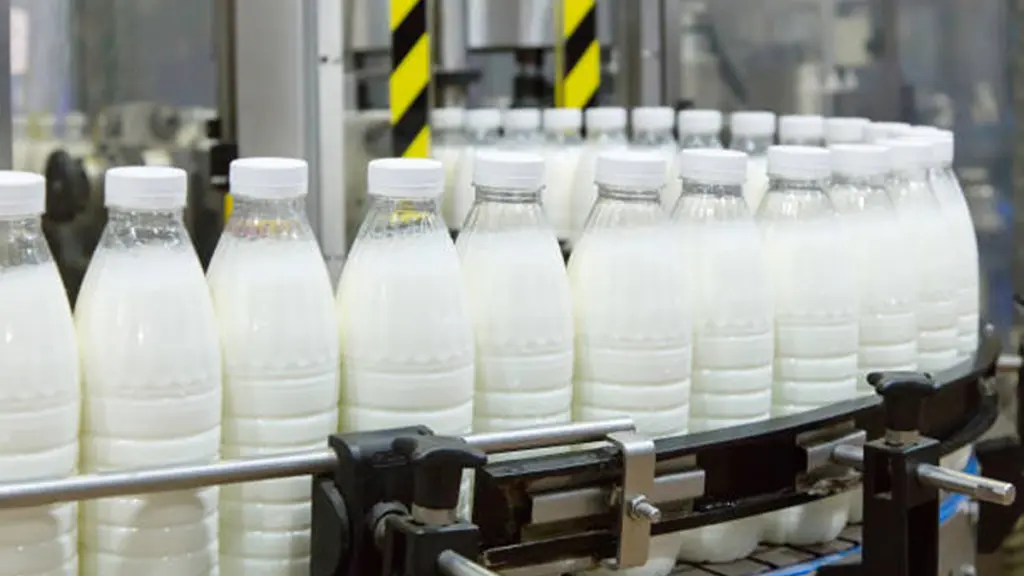
Automated liquid food packaging systems connect filling, уплотнение, and downstream processes into a coordinated workflow, helping manufacturers maintain consistent output while reducing unnecessary manual handling.
More Consistent Filling and Packaging
Automated equipment can control filling volume, уплотнение, and packaging speed more consistently than manual operations. This is especially important for liquid foods, where small variations in filling or sealing can affect product weight, package appearance, and leakage risk.
A coordinated system also reduces the number of manual transfers between production steps, helping maintain a more stable packaging process.
Higher Production Efficiency
Automation reduces repetitive manual work and allows operators to focus more on production monitoring and quality control. When filling, pouch handling, and sealing work together, manufacturers can maintain a smoother production flow and reduce delays caused by disconnected processes.
This becomes more valuable as production volume increases, when manual handling can become a bottleneck.
Easier Integration and Expansion
For manufacturers planning a complete production line, an integrated system can connect material handling, первичная упаковка, вторичная упаковка, and palletizing according to the required workflow.
This makes it easier to plan the line around current production needs while leaving room for additional equipment or higher output in the future. Instead of treating each machine as a separate purchase, manufacturers can build the packaging process as one connected system.
А Готовое решение для упаковки пищевых продуктов can further simplify system integration by coordinating equipment, line design, and project implementation within one approach. This can reduce integration work and provide a clearer path from equipment installation to production.
Liquid Food Packaging Solutions for Different Food Industries
Different food products behave differently during filling, so packaging lines need to match product flow, вязкость, filling volume, and package requirements.
| Food Product | Key Packaging Considerations | Suitable Packaging Direction |
|---|---|---|
| Молоко & Я Милк | Stable flow, гигиена, consistent filling | Pouch or sachet filling |
| Fruit Juice | Filling speed, liquid flow, целостность уплотнения | Pouch or spout pouch |
| Yogurt | Higher viscosity, controlled product handling | Controlled filling and sealing |
| Кетчуп & Соусы | High viscosity, clean and consistent filling | Pump filling with suitable pouch formats |
| Honey | High viscosity, accurate dosing | Pump-based filling with suitable package formats |
| Energy Drinks | Fast filling, уплотнение, and package handling | High-speed pouch or spout pouch systems |
The same packaging format can serve different food products, but the filling method, dosing system, and line configuration may need to change with the product. This makes product characteristics an important starting point when planning a liquid food packaging line.
The next step is to evaluate these requirements together with production volume, характеристики упаковки, and line integration needs before deciding on the final equipment configuration.
For higher-volume applications, CHLB’s Автоматический 8 Машина для наполнения и укупорки носика для фруктового сока Heads Honey Energy Drink is designed for products such as honey, energy drinks, and fruit juice. Its eight-head configuration supports continuous spout pouch filling and capping for manufacturers looking for a more automated packaging setup.
How to Choose the Right Liquid Food Packaging Solution
A suitable packaging solution should balance product characteristics, package requirements, производственная мощность, and the way equipment fits into the complete production line.
1. Define the Product and Filling Requirements
The product itself provides the starting point for equipment selection. Before comparing machines, manufacturers should define the conditions the filling system needs to handle.
- Product type and viscosity: Identify whether the product is thin, thick, or semi-liquid, as flow behavior affects the filling method.
- Filling temperature: Record the required temperature range, especially when temperature can affect product flow.
- Filling volume or weight: Define the target fill and the acceptable filling tolerance.
- Характеристики продукта: Note factors such as density, particles, or foam that may affect filling performance.
- Производственная мощность: Set the required output based on current demand and expected production volume.
- Package size range: Confirm the sizes the line needs to handle and whether multiple formats will be used.
These details provide a practical basis for determining the filling method, dosing system, конфигурация машины, and required production speed.
2. Match the Package Format to the Market
The package should meet both production requirements and the way the product will be sold and used. Manufacturers should define the формат пакета, размеры, material structure, sealing method, and spout requirements before finalizing the equipment.
If a line needs to handle several package sizes, check the changeover requirements carefully. Different sizes may require adjustments, additional tooling, or compatible machine configurations. The more package formats a manufacturer plans to run, the more important flexibility becomes.
Package material also matters because the film or premade pouch needs to work with the selected filling and sealing process. Testing the actual packaging material can help confirm sealing performance and reduce problems during production.
3. Evaluate the Complete Production Line
A filling machine is only one part of a complete packaging process. Manufacturers should evaluate how each stage connects, from product handling to finished goods.
A typical liquid food packaging line may include:
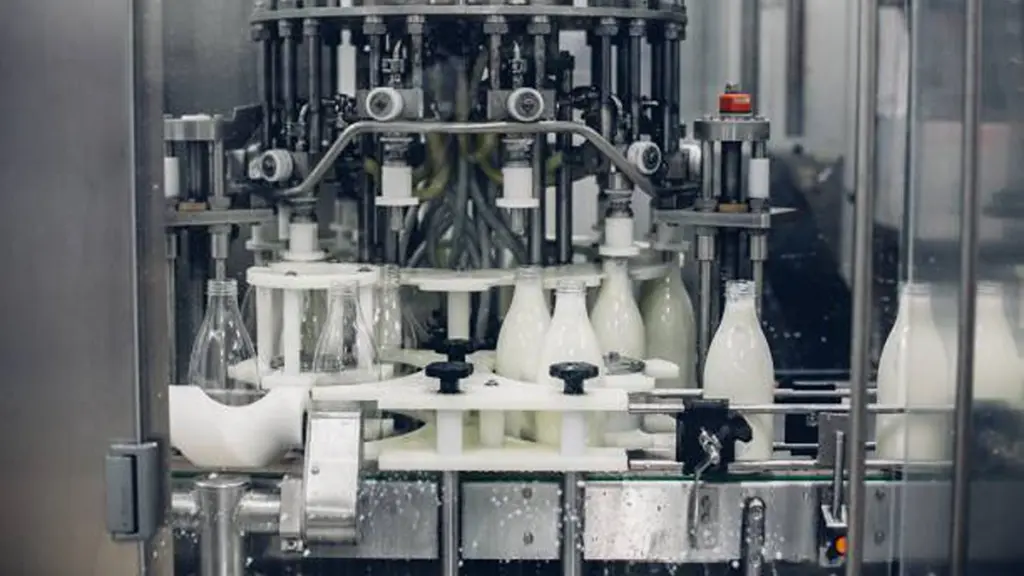
Material handling → Filling and dosing → Sealing or capping → Inspection → Secondary packaging → Palletizing
This wider view can reveal requirements that are easy to miss when comparing a single machine. Заводское помещение, коммунальные услуги, operator requirements, product changeovers, and the required level of automation can all affect the final line configuration.
For manufacturers planning higher output or additional products, future capacity should also be considered. A modular line can provide more room for additional equipment or automation as production requirements change.
The goal is not simply to find a machine that can fill the product. The better approach is to define the complete production requirements first, then configure the liquid food packaging system around them.
Заключительные мысли
Подходящий liquid food packaging solution needs to balance product characteristics, filling requirements, формат пакета, производственная мощность, and line integration. Rather than evaluating a filling machine alone, manufacturers should consider how filling, уплотнение, material handling, and downstream processes work together to create a stable and efficient workflow.
CHLB provides automated packaging solutions for liquid and paste products, включая pouch filling and spout pouch filling and capping. If you are planning a new packaging line or upgrading an existing one, share your product, package, емкость, and facility requirements to explore a solution suited to your production needs.
Часто задаваемые вопросы
What factors affect liquid food packaging machine selection?
Ключевые факторы включают в себя product viscosity, filling volume, формат пакета, производственная мощность, упаковочный материал, and automation level. Manufacturers should also consider package size changes, factory space, and how the machine will connect with other production stages. Evaluating these requirements first helps determine the right filling method and equipment configuration.
Can one liquid food packaging machine handle different products?
It depends on the machine configuration and the products being processed. Different liquids may require different filling or pumping methods because вязкость, flow behavior, и характеристики продукта can vary significantly. Product testing can help confirm whether one machine configuration can handle the required products and filling conditions.
How fast can a liquid food packaging machine run?
Production speed depends on the продукт, filling volume, формат пакета, and machine configuration. Например, CHLB’s eight-head spout pouch filling and capping machine lists speeds of up to 60–70 bags per minute for fills within 500 мл, with different speeds available for smaller filling volumes. Actual output should be confirmed through product and package testing.
Should a food manufacturer buy a filling machine or a complete packaging line?
The choice depends on the existing production workflow. A standalone filling machine may work when other packaging processes are already available, в то время как complete liquid food packaging line can connect material handling, наполнение, sealing or capping, инспекция, вторичная упаковка, and palletizing. An integrated line can also provide a clearer foundation for future automation and capacity expansion.
What information should I provide when requesting a liquid food packaging solution?
Provide the тип продукта, характеристики продукта, filling volume, формат пакета, упаковочный материал, required output, and available factory space. Product and package samples can also help evaluate filling and sealing performance. These details give the equipment supplier a clearer understanding of the production requirements and help determine a suitable machine or complete packaging line.