En la competitiva industria del embalaje actual, Elegir el estilo de bolsa y la tecnología de embalaje adecuados puede marcar una gran diferencia en la presentación del producto., eficiencia de producción, y control general de costos. Ya sea que esté empaquetando bocadillos, café, polvos, salsas, o productos monodosis, El tipo de bolsa y método de sellado afecta directamente el rendimiento de su línea de envasado..
Entre los muchos formatos de envases flexibles disponibles en la actualidad, embalaje con sello posterior sigue siendo una de las soluciones más utilizadas gracias a su estructura simple, uso eficiente de materiales, y compatibilidad con máquinas automatizadas. Sin embargo, Los fabricantes suelen compararlo con otros formatos comunes como sello de tres lados y sobres sellados en los cuatro lados al seleccionar el equipo.
Esta guía completa explora cómo una Línea de empaque del sello trasero obras, cómo se compara con otros estilos de bolsas, y cuándo elegir alternativas como 4 Línea de envasado de bolsitas con sello lateral. Si está evaluando proveedores de equipos de envasado o comparando las soluciones ofrecidas por fabricantes de equipos de envasado de alimentos y fabricantes de máquinas de envasado en Alemania, Esta guía le ayudará a comprender las diferencias clave y a tomar la decisión de inversión correcta..
¿Qué es una línea de envasado con sello trasero??
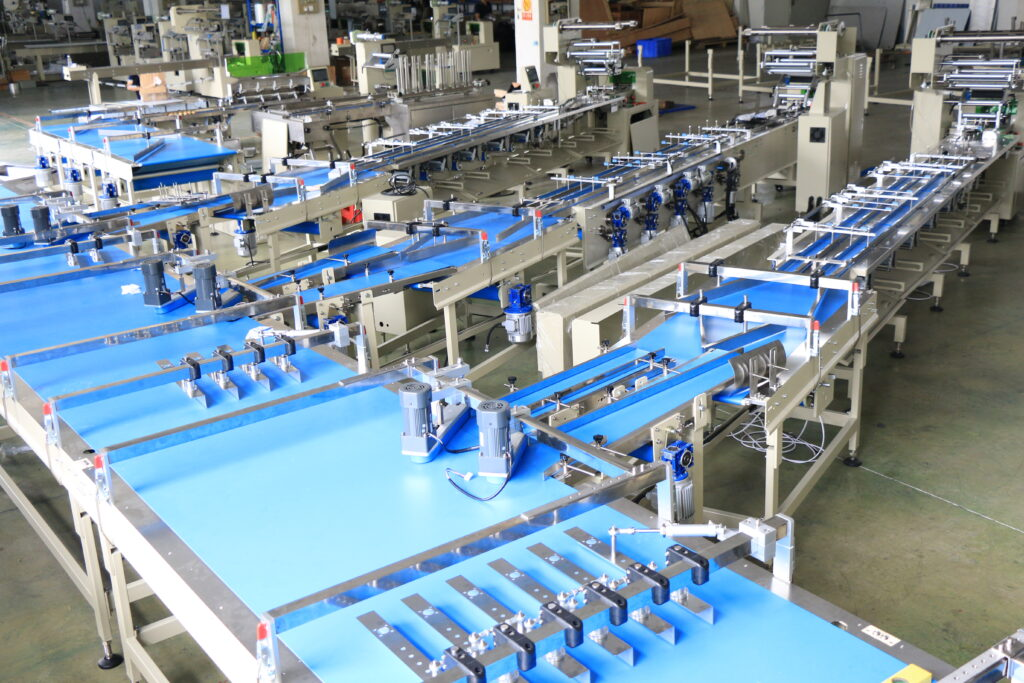
A Línea de empaque del sello trasero es un sistema automatizado que se utiliza para producir bolsas estilo almohada donde el sello vertical primario corre a lo largo de la parte posterior del paquete. La película de embalaje se forma en un tubo., lleno de producto, y sellado continuamente para crear paquetes individuales.
Este formato se produce comúnmente utilizando Sello de llenado de formulario vertical (VFFS) máquinas de embalaje, que se utilizan ampliamente en entornos de embalaje de gran volumen.
Cómo se forma el embalaje con sello trasero
Proceso de formación de película
El proceso comienza con un rollo de película de embalaje laminada que se introduce en la máquina..
- La película se coloca sobre un tubo formador., que le da forma de estructura cilíndrica.
- Los dos bordes de la película se superponen y están termosellados para crear la sello central trasero.
- Esta costura vertical forma la columna vertebral estructural de la funda de la almohada..
Porque la película se forma a partir de un solo rollo., Este proceso permite una producción de envases continua y eficiente..
Llenado y Dispensación de Producto
Después de que se forma el tubo de la bolsa, el producto se dispensa en la bolsa.
- Los productos granulados como el arroz o los frutos secos se rellenan utilizando pesadoras multicabezal.
- Productos en polvo como leche en polvo o uso de condimentos. sistemas de llenado de barrena.
- Uso de líquidos como salsas o champú. sistemas de llenado de bombas.
Estos sistemas de llenado garantizan una dosificación precisa manteniendo altas velocidades de envasado..
Sellado y Corte Horizontal
Una vez que el producto esté dentro de la bolsa, La máquina completa el proceso de embalaje..
- Mordazas de sellado horizontales crear los sellos superior e inferior.
- La bolsa se separa del rollo de película mediante un sistema de corte..
- Funciones adicionales como muescas de desgarro, impresión de fecha, o se pueden integrar cortes de fácil apertura.
El resultado es el clásico. bolsa de almohada comúnmente visto en envases de bocadillos y bolsitas pequeñas.
Ventajas clave del embalaje con sellado posterior
El embalaje con sellado posterior ha seguido siendo popular durante décadas porque combina una producción eficiente con un rendimiento de embalaje fiable..
Uso eficiente de materiales de embalaje
Una de las principales ventajas de este formato es el uso eficiente de los materiales cinematográficos..
- Las bolsas con cierre posterior están hechas de rollo de película continuo único, Reducir el desperdicio de material durante la producción..
- La estructura simple requiere menos áreas de sellado en comparación con diseños de bolsas más complejos..
- Los fabricantes pueden ejecutar grandes lotes de producción con un desperdicio mínimo de cambios..
Esta eficiencia hace que el embalaje con sellado posterior sea una de las soluciones de embalaje más económicas en la industria del embalaje flexible..
Gran superficie imprimible para marca
El embalaje con cierre posterior ofrece un excelente potencial de marketing.
- Porque el sello está ubicado en la parte posterior., el todo el panel frontal permanece ininterrumpido.
- Esta gran área de impresión permite a las marcas exhibir logotipos., información del producto, y gráficos claramente.
- El diseño del embalaje se puede optimizar para lograr una buena visibilidad en los estantes..
Para bienes de consumo como snacks, café, o muestras de cosméticos, Esta ventaja de diseño es extremadamente valiosa..
Alta velocidad de producción
Las máquinas de sellado posterior están diseñadas para una producción automatizada continua..
- Los sistemas VFFS pueden alcanzar altas velocidades de envasado adecuadas para la producción en masa.
- Integración con pesadoras, transportadores, y los sistemas de control de peso permiten líneas totalmente automatizadas.
- Muchas instalaciones de producción operan estas líneas. 24 horas al día con un tiempo de inactividad mínimo.
Esta ventaja de velocidad hace que el embalaje con sellado posterior sea la solución preferida para los fabricantes de alimentos y bienes de consumo a gran escala..
Embalaje con sellado posterior, sellado de tres lados y sellado de cuatro lados
| Característica | Sello trasero | Sello de tres lados | Sello de cuatro lados |
| Forma de bolsa | Bolsa de almohada | Bolsa plana | Bolsita rectangular |
| Estructura de sellado | Atrás + arriba & abajo | tres aristas | Cuatro bordes |
| Velocidad de producción | muy alto | Medio | Medio |
| Costo de embalaje | Bajo | Moderado | Más alto |
| Equipo típico | Línea de empaque del sello trasero | máquina de bolsitas | 4 Línea de envasado de bolsitas con sello lateral |
Para una producción a gran escala y rentabilidad, El embalaje con cierre posterior suele ser la solución preferida.

Al elegir una línea de envasado, Los fabricantes suelen comparar varios estilos de bolsas.. Cada estructura ofrece ventajas únicas según el producto y los objetivos de marketing..
Comprender estas diferencias ayuda a las empresas a elegir el equipo de embalaje más adecuado.
Embalaje de foca posterior
El embalaje con cierre trasero es el clásico bolso estilo almohada, Ampliamente utilizado para alimentos y bienes de consumo..
Las bolsas con cierre trasero tienen una estructura distinta.
- Un sello vertical ubicado en el panel posterior.
- Dos sellos horizontales en la parte superior e inferior.
- Una bolsa con forma de almohada que se expande ligeramente cuando se llena.
Esta construcción proporciona una superficie frontal limpia y una resistencia de sellado confiable..
Productos ideales para envases con sellado posterior
El empaque con sello posterior funciona mejor para productos que fluyen fácilmente durante el llenado.
Los productos típicos incluyen:
- Patatas fritas y snacks
- Café en grano y café molido
- Azúcar, sal, y condimento
- fideos instantáneos
- alimentos congelados
- Ingredientes granulados o en polvo
Estos productos se benefician de la capacidad de llenado de alta velocidad de máquinas VFFS.
Ventajas para la producción a gran escala
Las líneas de envasado con sellado posterior se utilizan a menudo en plantas de envasado industriales..
- Las máquinas funcionan a velocidades muy altas, ideal para grandes volúmenes de producción.
- La estructura simple de la bolsa mantiene bajos los costos de embalaje..
- El diseño permite apilar y transportar eficientemente los paquetes terminados..
Para empresas enfocadas en la eficiencia y la producción en volumen., este formato sigue siendo una de las opciones más prácticas.
Embalaje con sello de tres lados
Las bolsas con cierre de tres lados son bolsitas planas selladas a lo largo de tres bordes., dejando un lado abierto para llenar.
El diseño de una bolsa con cierre de tres lados es relativamente simple..
- Tres bordes termosellados..
- El cuarto lado se utiliza como abertura de llenado..
- La bolsa permanece plano en lugar de en forma de almohada.
Este formato es ideal para envases monodosis o de muestra..
Aplicaciones comunes
El empaque con sello de tres lados se usa ampliamente en industrias que requieren control de porciones..
Las aplicaciones típicas incluyen:
- Sobres de muestra de cosméticos
- Bebidas en polvo instantáneas
- Polvos farmaceuticos
- paquetes de salsa
- Suplementos nutricionales
El diseño plano permite un fácil apilamiento y un almacenamiento cómodo..
Ventajas del embalaje con sello de tres lados
Los fabricantes suelen elegir este formato para productos más pequeños..
- Diseño de envase compacto adecuado para porciones individuales.
- Sellos fuertes a lo largo de los bordes de la bolsa.
- Aspecto simple ideal para distribución de muestras.
Sin embargo, La velocidad de producción puede ser ligeramente menor en comparación con las bolsas tipo almohada con sellado posterior..
Embalaje con sello de cuatro lados
Las bolsas con sello en los cuatro lados brindan la apariencia más simétrica y premium entre las tres opciones..
El empaque con sello de cuatro lados tiene un diseño equilibrado.
- Los cuatro bordes de la bolsa están sellados.
- El producto se llena desde el centro antes del sellado final.
- La bolsa mantiene una estructura rectangular y rígida.
Esta estructura proporciona un sellado fuerte y una mejor protección del producto..
4 Línea de envasado de bolsitas con sello lateral
A 4 Línea de envasado de bolsitas con sello lateral está diseñado específicamente para producir estos sobres simétricos con alta precisión.
Estas máquinas son ampliamente utilizadas para:
- Bolsitas de azucar
- Paquetes de café en polvo
- Polvos farmaceuticos
- Bolsitas de crema cosmética
- Mezclas de bebidas instantáneas
El formato de embalaje se utiliza comúnmente para envases monodosis premium.
Ventajas del embalaje con sello de cuatro lados
Los sobres sellados en los cuatro lados ofrecen varios beneficios.
- Fuerte rendimiento de sellado con cuatro bordes reforzados
- Aspecto premium adecuado para exhibición minorista
- Excelente protección del producto y estabilidad en almacenamiento.
- Envasado de porciones preciso para la industria farmacéutica y cosmética
Aunque el equipo puede ser más complejo, muchas marcas prefieren este formato para productos de alto valor.
Elegir el proveedor de equipos de embalaje adecuado
Seleccionar el proveedor de equipos adecuado es fundamental para el éxito de la producción a largo plazo.
Evaluar la experiencia técnica
Los proveedores de equipos confiables ofrecen más que solo máquinas.
Busque fabricantes que proporcionen:
- Consulta de ingeniería
- Configuraciones de máquina personalizadas
- Soporte técnico postventa
- Disponibilidad de repuestos
Estos servicios ayudan a garantizar un funcionamiento fluido durante la vida útil de la máquina..
Comparar fabricantes globales
Muchas empresas evalúan proveedores de diferentes regiones..
Algunos compradores consideran fabricantes de máquinas de embalaje en Alemania, que son conocidos por su ingeniería de precisión y tecnología de automatización avanzada.
Al mismo tiempo, Los fabricantes asiáticos suelen ofrecer precios competitivos y personalización flexible..
Considere la escalabilidad de la producción
Antes de invertir en equipos, Las empresas deberían evaluar el crecimiento futuro de la producción..
Las consideraciones importantes incluyen:
- Capacidad y velocidad de la máquina
- Compatibilidad con sistemas de automatización.
- Posibilidad de integrar pesadoras., transportadores, y sistemas de inspección
La elección de equipos escalables ayuda a evitar costosas actualizaciones posteriores.
Conclusión
La tecnología de envases flexibles continúa evolucionando, Pero el embalaje con cierre posterior sigue siendo una de las soluciones más eficientes y ampliamente utilizadas en la fabricación moderna.. Su estructura simple, alta velocidad de producción, y el uso rentable de materiales lo hacen ideal para industrias que van desde el procesamiento de alimentos hasta la farmacéutica..
Mientras que los envases en bolsitas con sello de tres lados y de cuatro lados brindan ventajas en la presentación y el control de las porciones., La línea de envasado Back Seal sigue siendo la columna vertebral de las operaciones de envasado de gran volumen..
Al comprender las diferencias estructurales entre estos estilos de empaque y evaluar cuidadosamente los requisitos de producción., las empresas pueden elegir el equipo adecuado, ya sea que eso signifique instalar un sistema de sellado posterior, a 4 Línea de envasado de bolsitas con sello lateral, o trabajar con expertos fabricantes de equipos de envasado de alimentos para diseñar una solución de embalaje totalmente personalizada.