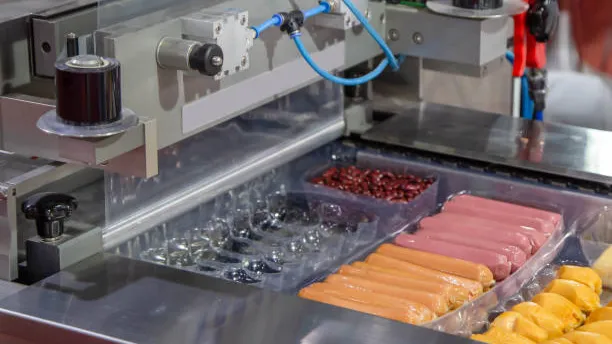
A high-speed food packaging line means a different number on every machine type. A flow wrapper running 150 packs a minute is fast, while a tray sealing line running 30 is equally fast in its category. Speed only means something when it is tied to a machine type, a product and a film.
This guide gives speed benchmarks by machine type, then walks the real bottlenecks: alimentación, film and changeover. It shows how to check a supplier’s speed claim against your own product.
What High Speed Means by Machine Type
Speed benchmarks vary by machine type, product size and packaging material. The ranges below provide a starting point for comparing equipment, not a guarantee of production output. Confirm the actual speed with your product, film and packaging format before making a purchase decision.
VFFS and Flow Wrap Speed Ranges
Un sello de llenado de formulario vertical (VFFS) machine forms bags from roll film, fills them and seals them in a continuous production process. Typical speeds range from 40 a 120 bolsas por minuto, with small sachet formats potentially running faster and larger bags running slower.
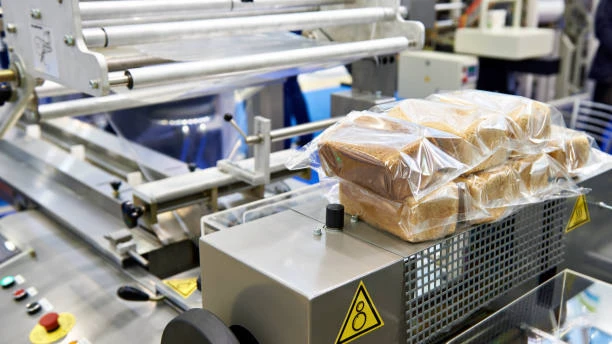
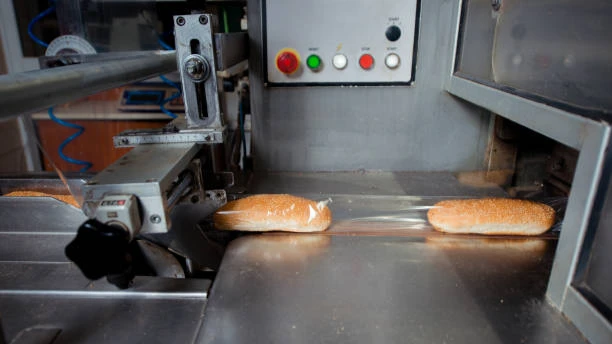
Horizontal flow wrappers package individual products in film, typically at 60 a 200 packs per minute for small, firm items such as biscuits. Longer or softer products may require slower speeds because of product spacing, film handling and sealing requirements.
Premade Pouch Packaging and Liquid Filling Speeds
Rotary premade pouch packaging machines pick up preformed pouches, open them, fill them and seal them. Typical speeds range from 30 a 90 bolsas por minuto, depending on pouch size, fill weight and the number of operating stations. Larger pouches may require more time for opening, llenado y sellado, reducing the overall output.
Liquid and paste filling lines typically run at 20 a 60 bolsas por minuto, although the actual rate depends on viscosity, fill volume and the filling and sealing configuration. Capping or cap inspection may add further cycle time where applicable. These ranges should be compared within the same machine category and under equivalent test conditions, rather than used to rank different packaging technologies directly.
Tray Sealing and Thermoforming Cycles
Tray sealing machines load trays, seal them and, where required, flush the packs with modified atmosphere packaging (MAPA) gas before unloading. Indicative output ranges from 10 a 40 bandejas por minuto, depending on tray size, sealing requirements and the number of lanes. Ask suppliers to specify output in trays per minute, rather than relying on cycle rate alone.
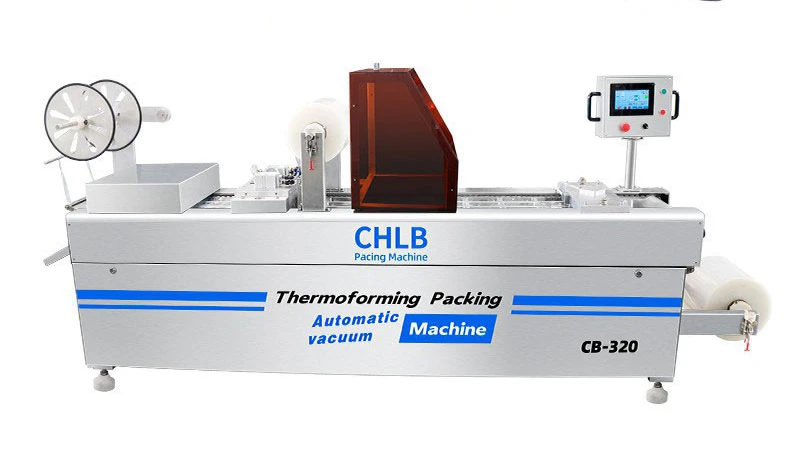
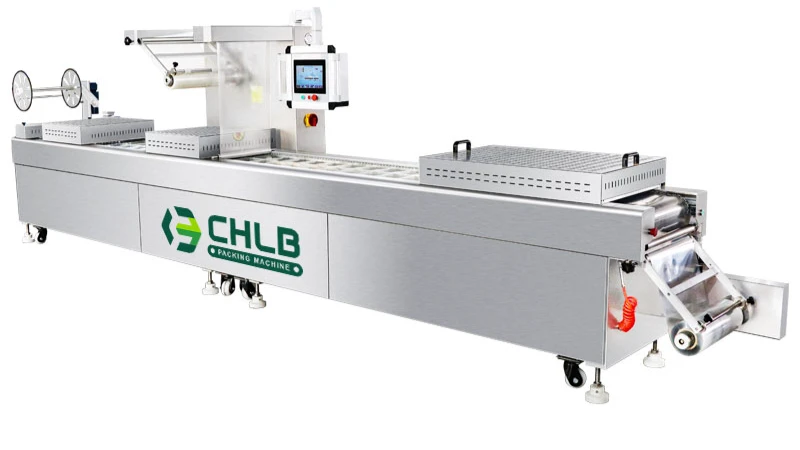
Thermoforming lines form packages from roll film and typically run at 8 a 20 ciclos por minuto. Actual pack output depends on the number of cavities produced in each cycle, so a slower cycle can still deliver high throughput with a multi-cavity tool. MAP applications may also require additional gas-flushing time, depending on the machine configuration.
| Tipo de máquina | Indicative Speed Range | What Limits the Top End |
|---|---|---|
| VFFS Baggers | 40–120 bags per minute | Bag length, seal time, product drop height |
| Horizontal Flow Wrappers | 60–200 packs per minute | Product length, film thickness, seal dwell time |
| Rotary Premade Pouch Packaging Machines | 30–90 bags per minute | Tamaño de la bolsa, fill weight, pouch opening and handling |
| Pouch Filling Lines | 20–60 pouches per minute | Viscosity, fill volume, capping checks |
| Tray Sealing Machines | 10–40 trays per minute | Tray depth, MAP flush time, sealing film |
| Thermoforming Lines | 8–20 cycles per minute | Film thickness, forming depth, cooling time |
These ranges are general industry figures, not machine specifications. Real output shifts with product size, film material and station count, so every quote must state speed for your product on your film. Treat any number without those conditions as a sales figure, not an engineering figure.

The Real Bottlenecks in High-Speed Lines
The rated speed on a machine plate is not the speed your line will run. On a high-speed food packaging line, alimentación, film and changeover cap the real output far more often than the machine itself does. Find the bottleneck first, and the speed decision usually makes itself.
Feeding Rate Limits
A packer runs only as fast as the infeed supplies it. Biscuit lines depend on the sorting and feeding system that places each biscuit in position, and a multihead weigher can only drop the next portion when the previous one clears. Uneven spacing feeds the packer badly, and the line jams.
Test the feeding side at the same time as the packer. A machine that hits its rated speed on hand-placed product proves little if your feeder tops out twenty percent lower. Buyers should ask the supplier to run the feeder and the packer together, not separately.
Film Properties and Seal Dwell Time
A seal needs temperature plus contact time, and the contact time is what speed competes against. Thin films and heat-sensitive structures force slower runs, because the jaws must stay closed long enough to bond without burning through. Seal cooling before the cutter adds another fixed step.
Film choice changes the speed ceiling, which is why a film change is not free. A cheaper film that seals slower can cost more in lost output than it saves in film price. Lock the film specification with the machine specification in one decision.
Changeover Time Between SKUs
A line running many stock keeping units (SKUs) spends part of every day switching instead of packing. Each changeover touches the feeding, the former, the sealing and the settings, and ten minutes per switch across a busy schedule is a real share of the week. Multiply that share by your SKU count before you accept any headline speed.
Servo-driven machines shorten that share. Servo indexing divides the cycle without mechanical cams: the divider returns to zero automatically and the indexing angle changes from the panel. A size change then takes minutes instead of a tool swap. Ask for a changeover time for your SKU mix, not for one friendly demo product.
Speed and Cost Move Together
Speed and cost move together, in both directions. A faster machine costs more, but buying on headline speed alone can cost more in the other direction: a cheaper film that seals slowly, frequent changeovers or an underfed line lose more in output than they save. When comparing quotes, ask for the cost per thousand packs at the confirmed speed for your product, not the machine price alone. El turnkey packaging ROI guide shows how to model the payback of a full line.
How Servo and Mechanical Drives Shape Speed
The drive system affects how a packaging machine controls movement and timing. Servo drives allow motion profiles to be adjusted through control settings, while mechanical cam systems use cam geometry to define specific movements. These differences can affect product handling, operating flexibility and changeover requirements.
How Servo Control Changes Motion Profiles
Servo motors allow acceleration, deceleration and positioning to be adjusted through programmed motion profiles. This can help balance operating speed with product handling requirements, such as reducing sudden movements when packaging fragile biscuits. A programmable logic controller (SOCIEDAD ANÓNIMA) coordinates machine movements to keep different stations synchronized.
Mechanical cam systems produce repeatable movements based on their cam profiles. They can suit dedicated lines with consistent products and established production requirements. Servo-driven systems can offer greater flexibility when motion parameters need to change between products, although actual changeover time also depends on the machine’s mechanical design and the adjustments required.
The better option depends on the production schedule, product range and required flexibility. Compare available adjustments, changeover procedures and demonstrated output rather than assuming one drive type is always faster.
Operating Speed and Reliability
Higher operating speeds can increase wear on components such as sealing jaws, cinturones, heaters and cutters. Maintenance requirements should reflect the actual operating rate, production hours and working environment.
Servo-driven systems can reduce reliance on certain mechanical transmission components, depending on the machine design. Sin embargo, their electronic components, drives and cables must also suit the installation environment, including washdown conditions where applicable. Both servo-driven and mechanical cam systems require maintenance appropriate to their design.
A machine that maintains stable output with minimal unplanned downtime can deliver more over a shift than one that frequently stops while running at its maximum rated speed. Ask suppliers for recommended maintenance intervals, wear-part replacement schedules and demonstrated output under your planned operating conditions.
Comparing quotes for a high-speed food packaging line? Bring your product samples, dimensiones, packaging format and target output to each supplier discussion. Ask suppliers to confirm the expected speed using your product and specified film, including performance on your largest pack.
What 24/7 Operation Demands of a Line
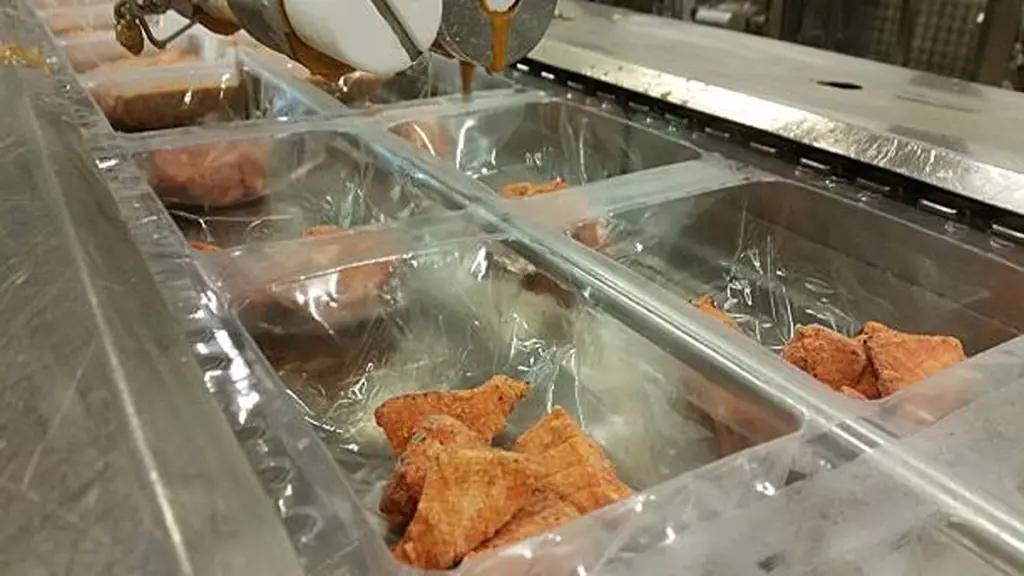
Continuous operation places different demands on a packaging line than a single-shift schedule. A machine running eight hours a day in a controlled environment faces different operating conditions from one running three shifts, seven days a week. Acceso de mantenimiento, cleaning requirements and buffering all affect whether a high-speed food packaging line can maintain consistent output.
Duty Cycle and Maintenance Windows
Continuous production still requires planned time for cleaning, inspection and maintenance. These activities should be included in the production schedule to reduce unplanned downtime. Wear parts such as sealing jaws, belts and cutters may need periodic replacement, while heaters and other components require maintenance according to their design and operating conditions. Keeping critical spare parts on site can also reduce delays when replacements are needed.
Maintenance intervals vary by machine model, operating hours, product conditions and the production environment. When requesting a quotation, provide your planned shift pattern and ask suppliers to specify recommended maintenance intervals, expected wear-part replacement schedules and the time required for routine servicing. This information helps you estimate the line’s practical availability beyond its rated speed.
Buffering and Accumulation
A high-speed packaging line consists of connected stations, so a stop at one station can affect equipment further along the line. Buffer conveyors and accumulation tables provide temporary space for products between stages, allowing some equipment to continue running during short interruptions elsewhere.
Por ejemplo, an accumulation table before a flow wrapper can hold products briefly if the upstream feeder pauses. This helps reduce the impact of short interruptions, provided the buffer has enough capacity and the downstream machine can continue operating safely.
Buffering can also accommodate differences in the operating speeds of connected machines. When planning the line layout, identify where short stops are likely to occur and assess whether buffers are needed between key stations. The required capacity depends on product flow, machine speeds, available floor space and the expected duration of interruptions. Including these requirements in the initial layout can be more practical than adding buffer equipment after installation.
Matching Speed Claims to Your Product and Film
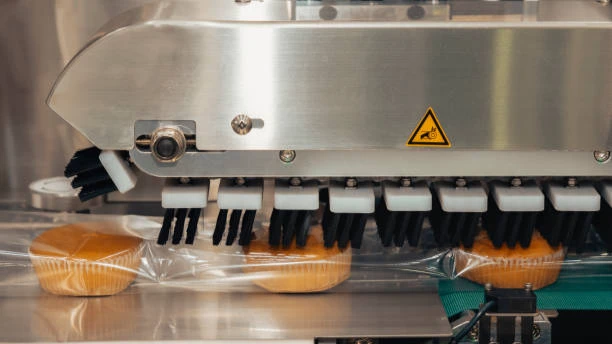
Supplier speed specifications depend on the product, packaging format and film used during testing. A machine’s rated speed may not reflect the output achievable with your actual production requirements. Verify the quoted speed against your product dimensions, packaging materials and operating conditions.
How to Read Supplier Speed Specs
When reviewing a supplier’s speed specifications, ask three questions: What product, film and packaging format were used to establish the stated speed? What output can the machine maintain with your largest or most difficult-to-handle product? How does performance change with longer bags or deeper trays?
Request a demonstration under conditions close to your planned production setup. Check the number of acceptable packs produced per minute, rather than relying solely on the machine’s displayed speed. Also consider startup time, interruptions, changeovers and rejected packs. A sustained production test provides a more useful indication of practical output than a short demonstration at peak speed.
Testing with Your Own Product
Product samples allow suppliers to assess machine performance under conditions closer to your actual production needs. Before finalizing a purchase, arrange a test run using your product, specified packaging format and film wherever possible. Ask the supplier to document the test conditions, running speed, acceptable output and rejection rate.
Pre-shipment testing can provide an additional check that the machine meets the agreed requirements before dispatch. Confirm the acceptance criteria in advance, including how speed and product quality will be measured.
Prepare the following information before requesting a speed quotation:
- Product photos and dimensions: Length, ancho, height and weight.
- Formato de embalaje: Por ejemplo, back-seal, quad-seal, three-side-seal or four-side-seal pouches, where applicable.
- Product samples: Samples for machine testing, including variations in size or consistency if relevant.
- Target output and film specifications: Required packs per minute, film material, thickness and other relevant packaging requirements.
- Target weight per pack: The weight range affects the weighing and filling configuration.
- Factory space and layout: Available floor space, ceiling height and the intended line layout.
- Future production: Expected volume growth and whether the line should leave room for added capacity.
How to Match Packaging Line Capacity
A high-speed food packaging line depends on how well each station works with the next. The packaging machine may have a high rated speed, but inconsistent feeding or slower downstream equipment can limit total output.
Snack and Bakery Lines
For biscuit production, the flow wrapper must match the output of the sorting and feeding system. If the feeder cannot supply biscuits consistently, the wrapper may stop or run below its rated speed. If upstream production exceeds the wrapper’s capacity, a second wrapper may help increase throughput. Bakery and snack packaging machines can be configured around the product and target output.
Frozen and Prepared Food Lines
For tray sealing lines, output depends on both cycle rate and the number of trays processed per cycle. Por ejemplo, a four-cavity machine running at 20 cycles per minute has a theoretical output of 80 bandejas por minuto, provided every cavity completes one tray per cycle.
The practical output may be lower if loading, sealing or product handling takes longer than expected. Confirm the expected output with the supplier using your actual tray dimensions, product and packaging requirements.
Meat and Seafood Lines
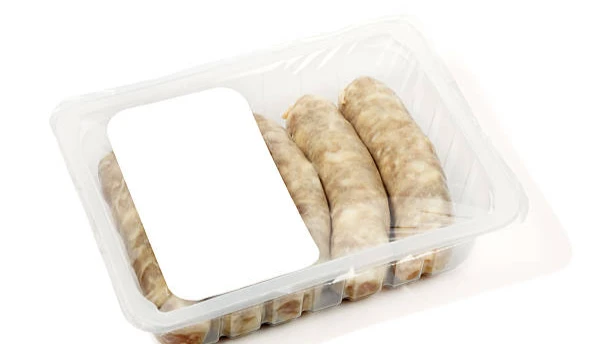
For meat, poultry and seafood, the two common high-speed paths are thermoforming vacuum packaging and MAP tray sealing. A thermoforming line running 12 cycles per minute with a six-cavity tool delivers up to 72 paquetes por minuto, but the cycle rate drops as forming depth, film thickness or gas-flushing time increases. Meat and sausage packaging combines these machines into one line, and the meat packaging machine guide explains the selection factors.
Pensamientos finales
Compare packaging speeds by machine type, product and film rather than relying on rated speed alone. Feeding consistency, sealing time and changeovers all affect actual output. Identify the main bottleneck first, then determine the speed your line needs. A speed figure verified with your own product provides a more reliable basis for equipment decisions.
Chlb provides complete food packaging lines, including flow wrapping and VFFS systems for bakery and snack products. Request a quote with your product details, packaging format and target output to discuss a suitable line configuration.
Preguntas frecuentes
What counts as high speed in food packaging?
Speed is relative to machine type. A flow wrapper is fast at 150 paquetes por minuto, while a tray sealing line is fast at 30 bandejas por minuto. Compare machines only within the same class.
Why does a flow wrapper slow down on larger products?
A longer product needs a longer film draw and more seal time per cycle, so the machine makes fewer packs per minute. A speed spec only holds for the product size it was measured on.
What limits a VFFS machine’s speed?
Bag length, seal dwell time and the product’s drop height set the ceiling. The feeding and weighing system must keep up as well, or the machine waits between bags.
How do I verify a supplier’s speed claim?
Send your own samples and ask for speed on your largest pack with your film. Request a test video and state the pack type and dimensions in the quotation.
Do high-speed lines need more maintenance?
They need more scheduled stops, not more breakdowns. Seals, belts and heaters wear faster, so spares and daily checks keep a line running at its rated speed.