真空スキンパッケージ (VSP) uses a heated film that conforms closely to food and seals to a board or tray, helping hold products in place while maintaining clear visibility. For premium steaks, salmon fillets, and other foods where presentation matters, VSP can reduce product movement and help contain purge within the pack.
食品メーカー様向け, choosing VSP equipment involves more than comparing machine speed. Film and tray compatibility, シールの品質, package dimensions, and production capacity all affect the finished pack and operating efficiency. This guide covers how VSP works, how it compares with conventional vacuum packaging and modified atmosphere packaging (地図), and what to evaluate when selecting equipment. VSP is available on compatible thermoforming systems and dedicated tray-sealing machines. For a broader overview of thermoforming equipment, see our thermoforming packaging guide.
What Is Vacuum Skin Packaging (VSP) in Food Packaging?
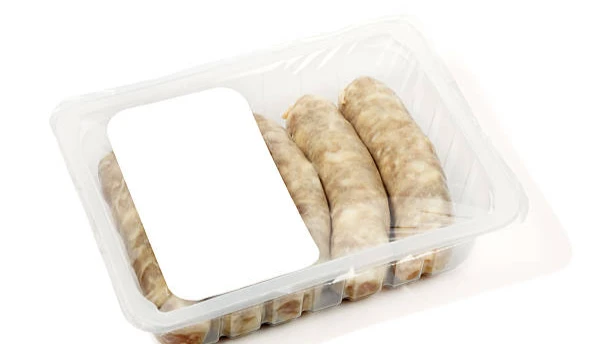
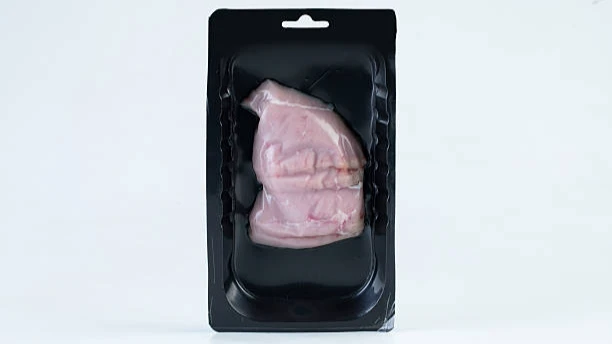
真空スキンパッケージ (VSP) is a food packaging method that uses a heated top film to conform closely to a product and seal it to a compatible tray or board. Unlike standard vacuum packaging, which uses a flexible bag around the food, VSP creates a close-fitting film layer that follows the product’s contours. This structure helps secure individual portions, maintain product visibility, and improve the presentation of fresh meat, シーフード, and other suitable foods.
How Vacuum Skin Packaging Works
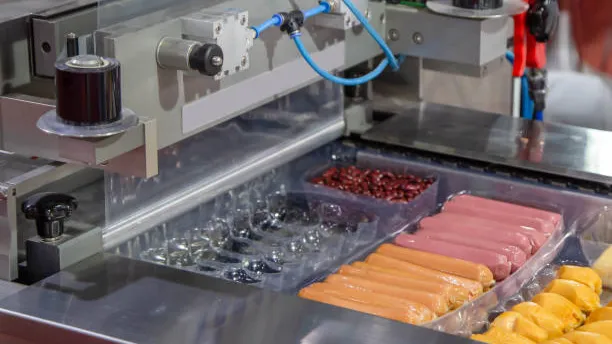
VSP combines controlled heating, 空の, and sealing to create a close-fitting package. The process generally involves the following steps:
- Product placement: Food is placed on a compatible tray or board that serves as the bottom packaging material.
- Top film heating: A suitable skin film is heated until it becomes flexible enough to conform to the product.
- 製膜: Vacuum draws the heated film down around the food, allowing it to follow the product’s contours.
- Sealing: The film seals to the surrounding tray or board, creating a secure package.
The exact process depends on the machine design, フィルムの特性, bottom packaging material, そして製品の特徴. VSP can be performed using compatible thermoforming systems or dedicated tray-sealing machines.
Key Features and Benefits of Vacuum Skin Packaging
VSP combines a close-fitting film structure with a presentation format designed to keep food visible and stable within the package.
- Close-fitting film: The top film follows the contours of the food, helping hold individual portions in position.
- Clear product visibility: Transparent film allows buyers to inspect the product’s appearance through the package.
- Reduced product movement: Close film contact helps limit shifting during handling and distribution.
- Controlled purge presentation: The film’s close contact with the food can reduce the visible movement of released liquid within the package.
- Flexible packaging formats: Depending on the equipment and materials, VSP can be used with different tray and board configurations.
These features make VSP useful for food products where presentation, portion stability, and visibility are important. Packaging performance depends on the food, 膜, bottom packaging material, シール条件, and distribution environment.
VSP Packaging Materials: Top Film, Board, and Sealing
The performance of vacuum skin packaging (VSP) depends on the compatibility of the top film, bottom packaging material, and sealing system. These components determine how well the film conforms to the food, how securely the package seals, and how effectively the packaging protects the product.
Top Film: Conformability and Oxygen Barrier
VSP uses a flexible top film that conforms closely to the food’s contours. The film must stretch over the product without excessive thinning or tearing while providing the barrier properties required for the intended application.
Key film properties include:
- Forming performance: The film must conform to the product’s shape, including irregular surfaces and sharp edges.
- 酸素バリア: Multilayer films may incorporate EVOH (エチレンビニルアルコール) to limit oxygen transmission.
- Sealability: The film’s sealant layer must bond reliably to the selected tray or board.
- Transparency: Clear films allow buyers to inspect the food through the package.
Board and Tray: Support and Seal Compatibility
The bottom packaging material supports the food and provides the surface to which the top film seals. Depending on the packaging system, VSP can use rigid trays or suitable board-based materials.
When evaluating the bottom material, consider:
- 構造的サポート: The tray or board must support the food during handling and distribution.
- Seal surface: The surface or coating must be compatible with the top film’s sealant layer.
- Product suitability: The material must meet the requirements of the food and its intended storage conditions.
- 包装形態: Tray dimensions, depth, and surface geometry must suit the product and equipment.
Sealing: Creating a Secure Package
The sealing system joins the top film to the tray or board around the product. Reliable sealing depends on the compatibility of the materials and the conditions used during sealing.
Three factors are particularly important:
- Temperature: The sealing temperature must suit the film’s sealant layer and the bottom material.
- Pressure and dwell time: The applied pressure and sealing duration must support a consistent seal without damaging the packaging.
- シールの完全性: The finished package should be checked for incomplete seals, 漏れ, and other defects that could compromise package performance.
膜, board or tray, and sealing conditions must be evaluated as a complete system. A film that conforms well to the food will not produce a reliable package if the seal is incompatible or inconsistent.
Find the Right Vacuum Skin Packaging Machine for Your Production Needs
VSP vs. Vacuum Packaging vs. 地図: Key Differences for Food Packaging
Compare VSP, standard vacuum packaging, and MAP by packaging method, product presentation, 保存期間の要件, and suitability for different food products.
| Format | 梱包方法 | Product Presentation | Shelf-Life Considerations | 代表的な用途 |
|---|---|---|---|---|
| Standard vacuum packaging | Air is removed from a sealed bag before closing. | Flexible film surrounds the product; released liquid may collect inside the bag. | Reduced oxygen exposure can slow certain spoilage and oxidation processes. Shelf life depends on the food, package integrity, および保管条件. | Wholesale meat cuts, primal cuts, frozen portions, and other suitable foods. |
| 真空スキンパッケージ (VSP) | A heated top film conforms to the product and seals to a compatible tray or board. | Close-fitting, transparent film highlights the product’s shape and helps hold it in place. | Suitable barrier films and reliable seals help control oxygen exposure. Shelf life must be validated for the specific food and packaging system. | Premium retail meat, seafood fillets, sliced deli products, and selected prepared foods. |
| Modified atmosphere packaging (地図) | Air is replaced with a selected gas mixture before sealing. | Product visibility and headspace depend on the tray, 膜, and gas configuration. | Gas composition, film barrier properties, residual oxygen, and storage conditions affect shelf life. | Retail fresh meat, 家禽, シーフード, そして調理済み食品, depending on the gas mixture and packaging design. |
VSP suits premium retail products that benefit from close-fitting film, while MAP supports products requiring controlled gas atmospheres. Standard vacuum packaging is commonly used for bulk meat and wholesale portions.
For a detailed comparison of vacuum packaging and MAP gas systems, see our MAP vs. vacuum packaging guide.
Food Applications: Premium Steak, シーフード, Ready Meals, and Bacon
Vacuum skin packaging suits food products that benefit from close-fitting film, clear product visibility, and stable positioning during handling. Its suitability depends on the product’s shape, moisture release, 梱包要件, and intended retail format.
Premium Steak and Beef Cuts
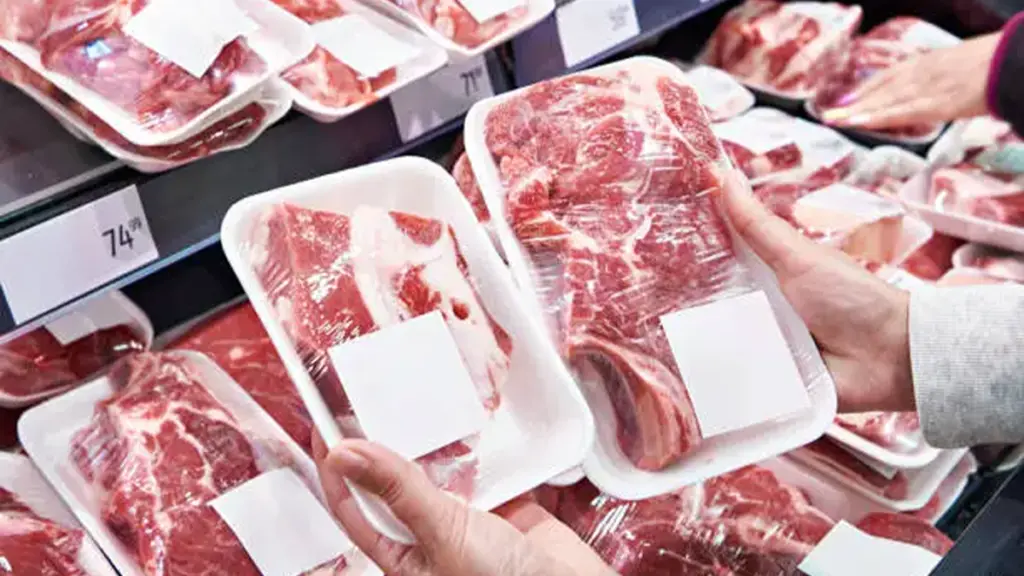
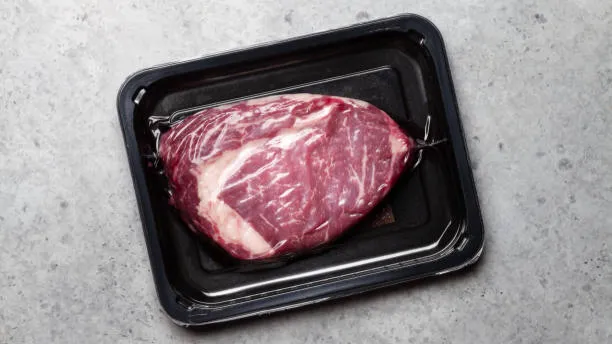
Premium steak and beef cuts benefit from packaging that keeps each portion in position and displays its shape clearly. The close-fitting film helps reduce product movement inside the pack, while the transparent surface allows buyers to inspect the meat before purchase. For retail products where appearance influences purchasing decisions, this presentation can support a consistent display.
シーフード
魚の切り身, including salmon, require careful handling because their flesh can be delicate and easily damaged. VSP can hold fillets in position while maintaining visibility through the film. Machine settings must suit the product’s thickness and structure to avoid excessive pressure or damage during packaging. Film selection and seal quality also affect how well the pack performs during chilled storage and distribution.
Bacon, Sliced Deli Products, and Ready Meals
VSP can help keep bacon strips and sliced deli products in position, preserving their layered arrangement inside the package. For suitable prepared meals, a skin film can secure individual portions to a tray or board and provide a clear view of the food. The appropriate format depends on the product structure, ストレージ要件, and presentation goals.
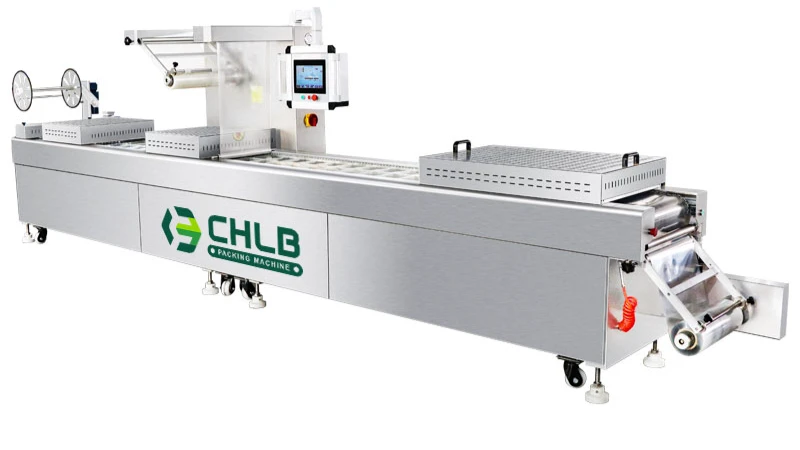
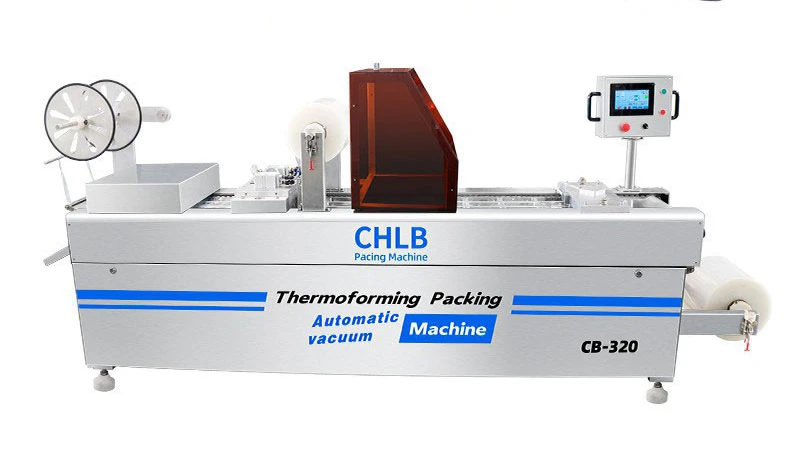
CHLB offers a vacuum skin packaging machine for food designed for applications including bacon, 牛肉, and pork. The machine features a mainly 304 stainless steel construction and supports vacuum skin packaging and modified atmosphere packaging (地図). Contact CHLB to confirm the available configurations for your product and production requirements.
Key Considerations for Food Vacuum Skin Packaging Machines
When evaluating VSP equipment, focus on actual packaging results and production capacity. Supplier specifications are most useful when they reflect your product dimensions, 包装形態, and expected operating conditions.
Vacuum Performance and Seal Quality
A VSP machine must draw the film closely around the product and create a reliable seal. The required settings depend on the food’s shape, 厚さ, and sensitivity. Delicate fish fillets may require different settings from thick cuts of beef to maintain product appearance.
Ask the supplier to test the machine using your actual products and packaging materials. Check whether the film follows the product’s contours, whether the seal remains intact around the tray or board, and whether the finished packs withstand normal handling. These tests provide more useful evidence than a demonstration using a different product.
| Test Item | What to Check | なぜそれが重要なのか |
|---|---|---|
| Film Forming Performance | Check whether the film conforms to the product’s shape without excessive stretching, 引き裂く, or visible defects. | Proper forming helps maintain package appearance and film integrity. |
| Seal Integrity | Inspect the seal for gaps, wrinkles, weak areas, and bonding issues with the selected tray or board. | A reliable seal helps prevent package failure during handling and distribution. |
| Vacuum Settings | Test vacuum levels and cycle settings with the actual food, considering its thickness, 形, and sensitivity. | Suitable settings help achieve close film contact without compromising product appearance. |
| Pack Size and Changeover | Confirm maximum pack dimensions, supported film width, 工具要件, and format changeover time. | These factors affect production flexibility, ダウンタイム, and usable output. |
| Material and Storage Suitability | Verify film and tray compatibility, barrier requirements, food-contact compliance, and suitability for intended chilled or frozen storage. | Compatible materials help maintain package performance under the intended storage conditions. |
Cycle Speed and Pack Size
Production speed determines whether a machine can meet your output requirements. Ask suppliers to confirm expected cycle times and output using your actual products, pack formats, and operating conditions. Results from small, simple packs may not reflect performance with larger portions or irregularly shaped foods.
If your production involves frequent product changes, also confirm the expected downtime and tooling costs. These factors affect usable production time and the machine’s flexibility as your product range expands.
Matching VSP Equipment to Your Production Volume
生産量, 製品の種類, and automation requirements help determine which machine configuration is suitable for your operation.
- Small production volumes: Compact skin-pack tray sealers may suit smaller batches, limited product ranges, or operations that do not require a fully automated line. Check how much manual loading the machine requires and whether it can accommodate your main pack sizes.
- Large production volumes: Automated VSP systems may suit operations that need higher output and more consistent production. Depending on the design, a line may integrate several packaging steps, reducing manual handling between operations.
Before requesting a quote, consider how often you change products or pack sizes. Frequent changeovers can increase downtime and require additional tooling. Ask suppliers to specify changeover time, tooling costs, and expected output using your actual products. If you plan to expand production, check whether the proposed configuration can support higher output or additional pack formats.
Explore CHLB’s vacuum packaging range to review available equipment options. Before placing an order, request a production test with your own products and packaging materials to confirm that the machine meets your output and packaging requirements.
最終的な考え
Vacuum skin packaging helps food producers secure suitable products in close-fitting packs while keeping them visible to buyers. Choosing suitable equipment requires matching machine capacity, pack formats, and operating conditions to your production needs.
CHLB supplies vacuum skin packaging, 真空包装, and MAP equipment for food packaging applications. Read our thermoforming packaging machine guide for more information, or contact CHLB to discuss equipment for your products and production requirements.
よくある質問
What is the difference between vacuum skin packaging and vacuum packing?
Standard vacuum packing removes air from a bag, leaving loose film and visible purge. Vacuum skin packaging draws a heated film down onto the product on a board or tray so it fits like a second skin, holding the product in place and giving a tighter, premium shelf appearance.
What foods are best for vacuum skin packaging?
Products where the pack is part of the price: premium steak and beef cuts, seafood fillets, bacon and sliced deli, そして出来上がった食事. The tight, drip-free pack holds the product in place and reads as high-end, so VSP concentrates on high-value items rather than low-margin bulk packs.
Is VSP better than MAP for steak?
It depends on the shelf you sell to. MAP keeps oxygen in the pack so the steak displays red, which shoppers read as fresh. VSP removes oxygen, which holds the cut firmly with no purge and a premium look but leaves the meat darker until it is opened. Many high-end ranges prefer skin packs for presentation; red-meat retail display usually stays with high-oxygen MAP.
What film do I need for VSP?
A top film that softens and drapes over the product when heated, plus a sealant layer that bonds reliably to your board or tray. The exact structure depends on the barrier you need and whether you use a gas flush, so confirm the film-tray pair with your supplier and insist on test packing your own product.
What is the cost of a vacuum skin packaging machine?
Cost depends on machine type, pack size range, film width and output, so a supplier cannot quote a useful price without your product and tray specifications. Request a quote against your own product, film and tray, and compare on food-grade construction (304/316 stainless), cycle speed and seal integrity rather than on price alone.