Les solutions d’emballage de produits de la mer surgelés doivent empêcher bien plus que les fuites. Coquilles tranchantes, os, palmes, et les bords gelés peuvent perforer les films, tandis que l'exposition à l'humidité et à l'oxygène peut provoquer des brûlures de congélation, déshydratation, oxydation, et durée de conservation plus courte. Ces échecs augmentent le gaspillage de produits, retours, et frais d'emballage, en particulier lors de la livraison de fruits de mer surgelés sur de longues distances.
Ce guide explique comment améliorer la résistance à la perforation, intégrité du joint, barrières contre l'humidité et l'oxygène, et durabilité à basse température. Il couvre également les matériaux d'emballage, technologies du vide et MAP, et des systèmes d'emballage automatisés qui aident les transformateurs de produits de la mer à maintenir une qualité constante tout en augmentant l'efficacité de la production.
Pourquoi les emballages de fruits de mer surgelés nécessitent des solutions spécialisées
Les fruits de mer surgelés créent des risques d'emballage que les emballages alimentaires surgelés standard peuvent ne pas gérer correctement.. Pour les processeurs, emballage de fruits de mer doit protéger les produits contre le gel, stockage, manutention, et transport.
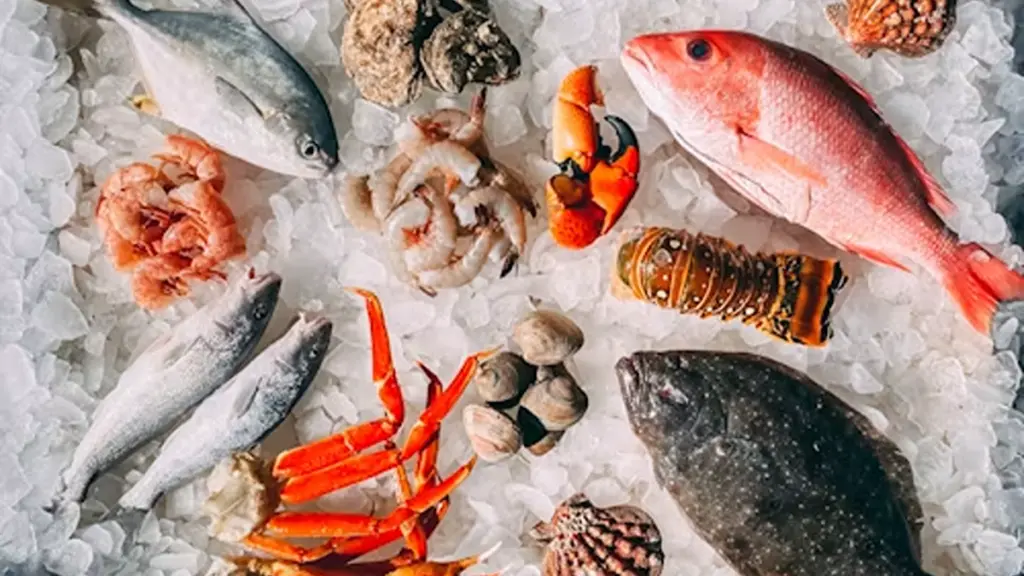
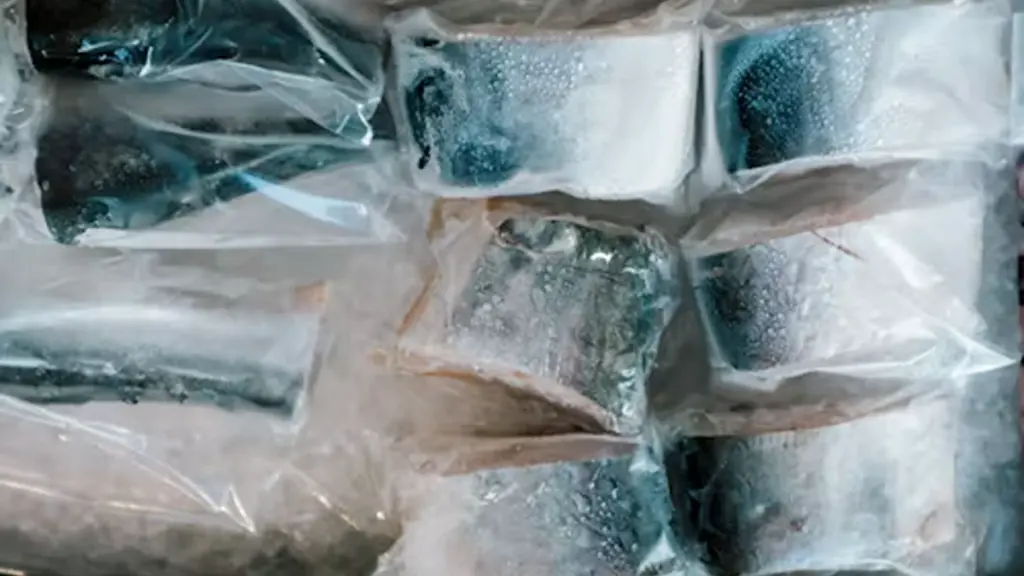
- Surfaces coupantes et irrégulières: Coquilles de crevettes, morceaux de crabe, os, palmes, et les bords gelés peuvent exercer une pression supplémentaire sur les films et augmenter le risque de perforations et de déchirures..
- Stress à basse température: Le stockage à environ -18°C ou moins peut réduire la flexibilité de certains matériaux d'emballage., les rendant plus vulnérables à la fissuration, fuites, et rupture du joint.
- Longue exposition à la chaîne du froid: Les fruits de mer surgelés pourraient être empilés, vibration, manipulations répétées, condensation, et les changements de température pendant le stockage et le transport, augmentation du stress lié à l'emballage.
- Perte de qualité et de valeur: Les dommages causés à l'emballage peuvent exposer les fruits de mer à l'air et à l'humidité., contribuant aux brûlures de congélation, déshydratation, oxydation, et changements de texture, couleur, saveur, et l'apparence.
Ces conditions font produits de la mer surgelés plus exigeant à emballer que de nombreux aliments surgelés standards. Le système d’emballage doit donc être conçu autour des caractéristiques physiques du produit et des exigences de la chaîne du froid..
Technologies d'emballage pour les produits de la mer surgelés
Différent produits de la mer surgelés besoin de différents formats d'emballage en fonction de la forme du produit, objectifs de durée de conservation, et conditions de distribution. Commun emballage de fruits de mer les technologies incluent l’emballage sous vide, CARTE, emballage skin sous vide, et l'ensachage, chaque format offrant des avantages différents en matière de protection et de production.
Emballage sous vide
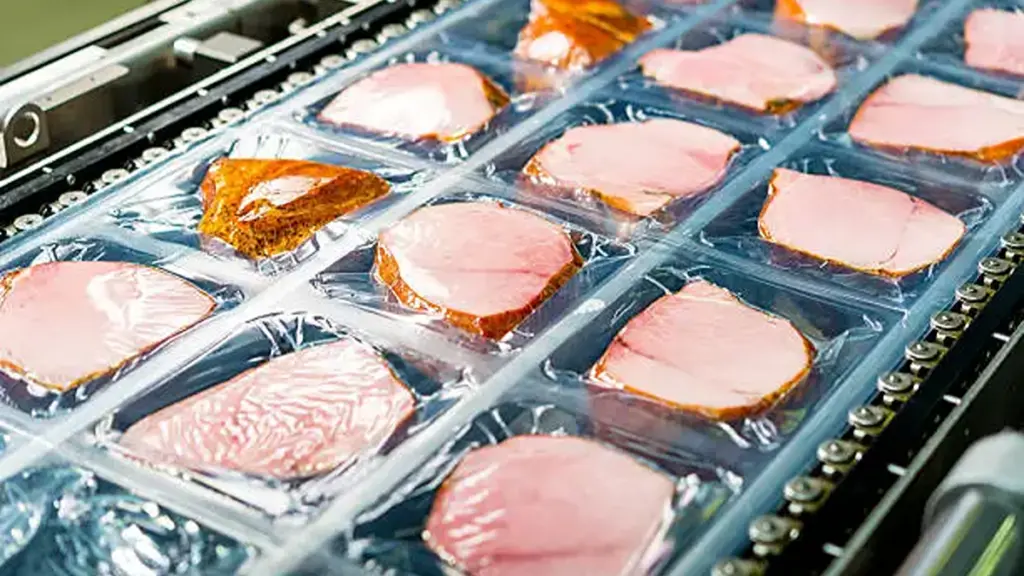
L'emballage sous vide élimine l'air avant de sceller, aidant à réduire l'exposition à l'oxygène et à limiter le mouvement de l'humidité à l'intérieur de l'emballage. Il est couramment utilisé pour les filets de poisson, portions de fruits de mer, crevette, et d'autres produits bénéficiant d'un emballage compact.
- Réduit l’exposition à l’air et à l’oxygène
- Aide à limiter les brûlures de congélation et l'oxydation
- Convient aux portions, filets, et des fruits de mer de plus grande valeur
- Nécessite des films avec une bonne flexibilité et résistance à la perforation
Emballage sous atmosphère modifiée (CARTE)
MAP remplace l'air à l'intérieur d'un emballage par un mélange gazeux contrôlé avant de le sceller. Il peut aider à gérer l'exposition à l'oxygène tout en fournissant un format d'emballage stable pour la vente au détail. emballage de fruits de mer surgelés.
- Contrôle l’atmosphère à l’intérieur du colis
- Aide à réduire l’oxydation et à maintenir la qualité du produit
- Convient à certains produits de la mer au détail
- Nécessite un remplissage de gaz précis et des joints fiables
Emballage sous vide
L'emballage skin sous vide utilise un film supérieur flexible qui suit de près la surface des fruits de mer et du plateau.. Il offre une présentation au détail propre tout en maintenant l'excès d'air autour du produit à un faible niveau..
- Offre une forte visibilité du produit
- Réduit l'espace aérien autour des fruits de mer
- Convient aux filets et portions de fruits de mer haut de gamme
- Nécessite des plateaux compatibles, films, et équipement skin-pack
Ensachage et thermoscellage
Les sacs fabriqués à partir de matériaux préformés ou de rouleaux restent largement utilisés pour emballage pour fruits de mer, spécialement pour les produits en vrac et au détail. Le format prend en charge différentes tailles d'emballage et peut être intégré à des systèmes automatisés de remplissage et de scellage..
- Convient au vrac et au détail produits de la mer surgelés
- Prend en charge différents poids et tailles de sacs
- Fonctionne bien avec les lignes d'emballage automatisées
- Nécessite des conditions d’étanchéité propres et constantes
Comparaison des technologies d'emballage de fruits de mer surgelés
| Technologie d'emballage | Application typique | Principal avantage | Considération clé |
|---|---|---|---|
| Emballage sous vide | Filets de poisson, crevette, portions de fruits de mer | Réduit l’exposition à l’air et à l’oxygène | Le film nécessite une bonne flexibilité et une bonne résistance à la perforation |
| CARTE | Produits de la mer au détail | Contrôle l’atmosphère du colis | Nécessite un remplissage et une étanchéité précis du gaz |
| Emballage skin sous vide | Filets et portions de fruits de mer haut de gamme | Présentation solide avec un faible espace aérien | Nécessite des plateaux compatibles, films, et équipement |
| Ensachage + thermoscellage | Fruits de mer en vrac et au détail | Flexible pour différents poids et formats | La zone du joint doit rester propre et cohérente |
| Pochette haute barrière | Fruits de mer surgelés de longue conservation | Forte protection contre l'humidité et l'oxygène | La structure du matériau doit correspondre au produit |
Le meilleur emballage de produits surgelés le format dépend du produit de la mer, durée de conservation requise, taille du paquet, et conditions de distribution. Pour les processeurs gérant plusieurs produits de la mer surgelés, la ligne d'emballage doit également permettre un remplissage cohérent, scellage, et contrôle qualité sur différents formats.
Optimiser les fruits de mer & Automatisation du conditionnement de la volaille
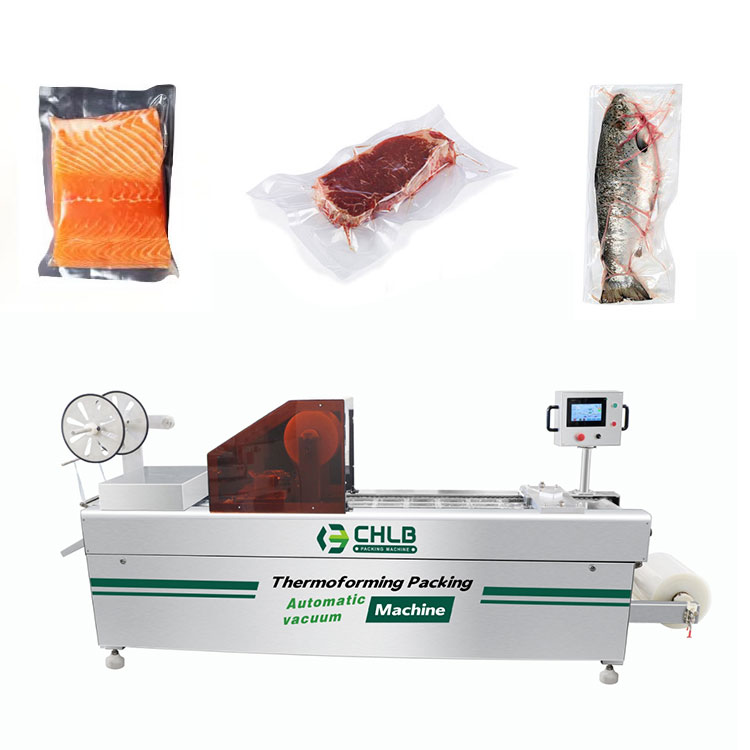
Matériaux d'emballage de fruits de mer et leur impact sur la durée de conservation
Les matériaux d'emballage affectent directement la protection et la durée de conservation des fruits de mer congelés. La structure matérielle doit équilibrer les performances de la barrière, durabilité, fiabilité de l'étanchéité, et compatibilité avec les équipements d'emballage.
Matériaux courants utilisés dans les emballages de fruits de mer surgelés
La plupart des emballages de fruits de mer surgelés utilisent des structures multicouches car différentes couches remplissent différentes fonctions.. Une couche améliore la résistance, un autre contrôle l’humidité et l’oxygène, tandis que la couche interne permet une étanchéité fiable.
| Fonction matérielle | But |
|---|---|
| Résistance mécanique | Protège contre les crevaisons, larmes, et gérer les dommages |
| Barrière contre l'humidité | Aide à réduire la déshydratation et les brûlures de congélation |
| Barrière d'oxygène | Aide à conserver la saveur, couleur, et la qualité des produits |
| Compatibilité des joints | Prend en charge une étanchéité stable pendant la production |
Commun emballage de fruits de mer les matériaux incluent du polyéthylène, polyester, polypropylène, et autres films barrières. La structure finale dépend du type de fruit de mer, format du paquet, temps de stockage, et les exigences de production.
Comment les matériaux d’emballage affectent la durée de conservation des fruits de mer
Le rôle principal de emballage de fruits de mer surgelés est de contrôler l’exposition à l’humidité et à l’oxygène pendant le stockage et le transport. Une structure matérielle appropriée aide à réduire les brûlures de congélation, oxydation lente, et conserver la texture et l'apparence des fruits de mer.
Pour les produits nécessitant une logistique longue distance, tel que emballage de produits surgelés pour l'expédition, les matériaux d'emballage doivent également supporter les changements de température, vibration, et conditions de stockage prolongées.
Cependant, la durée de conservation ne dépend pas uniquement de l’emballage. Méthodes de congélation, température de stockage, gestion de la chaîne du froid, et la manipulation du produit influencent tous la qualité finale. Le meilleur emballage pour aliments surgelés offre une protection fiable tout en maintenant l’efficacité de la production et le contrôle des coûts.
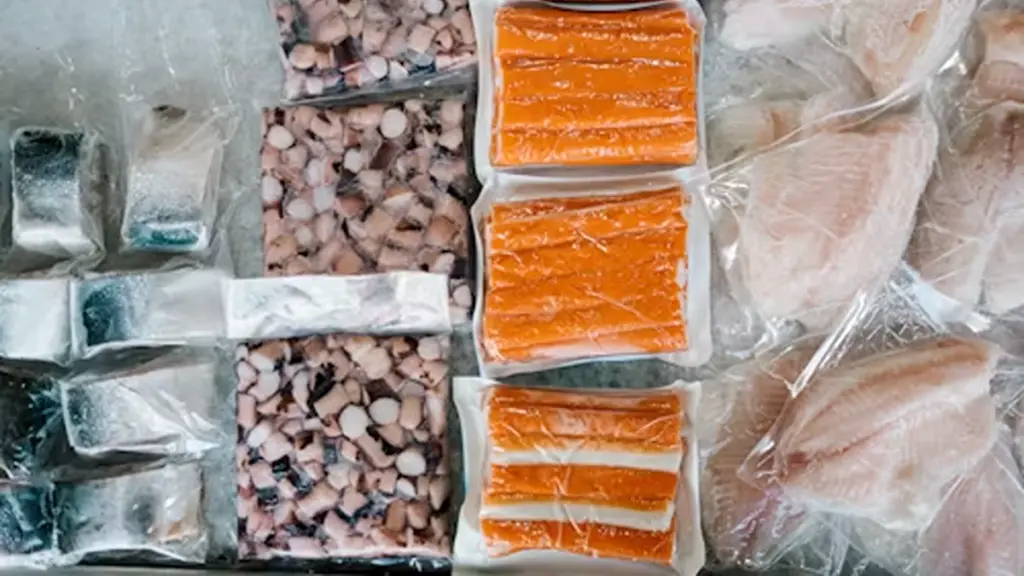
Solutions automatisées d'emballage de fruits de mer surgelés
L'automatisation aide les transformateurs de fruits de mer à améliorer la cohérence des emballages, efficacité de production, et contrôle qualité en connectant plusieurs opérations en un seul système coordonné.
Comment fonctionne une ligne automatisée de conditionnement de fruits de mer
Un automatisé emballage de fruits de mer surgelés doubler intègre l'alimentation des produits, pesée, remplissage, scellage, inspection, et le traitement des dossiers dans un flux de travail continu. Au lieu de compter sur des étapes manuelles distinctes, le système maintient chaque processus cohérent et réduit les variations de poids des colis, positionnement, et qualité de sortie.
La configuration dépend du produit de la mer et du format de l'emballage. Crevette, filets, mélanges de fruits de mer, et d'autres produits de la mer surgelés peut nécessiter différents systèmes d'alimentation, solutions de pesage, ou formats d'emballage.
| Étape de production | Fonction | Avantage de l'automatisation |
|---|---|---|
| Alimentation et pesée | Contrôle le débit de fruits de mer et la taille des portions | Améliore la précision du poids et la stabilité de la production |
| Remplissage et scellage | Emballe les fruits de mer dans des sacs, pochettes, ou plateaux | Crée une qualité de colis constante |
| Inspection | Vérifie le poids, scellés, et conditions du colis | Réduit les produits défectueux avant expédition |
| Emballage des caisses | Prépare les colis finis pour la logistique | Réduit les manipulations manuelles répétitives |
Faire correspondre l'automatisation aux besoins de production
Une ligne de conditionnement doit correspondre au type de produit, exigences de sortie, et conditions d'usine. Différents produits de la mer peuvent nécessiter différents niveaux d'automatisation et de configurations d'équipement.
Les facteurs clés comprennent:
- Caractéristiques du produit: Taille, forme, et le poids affecte les méthodes d'alimentation et de pesée.
- Format du colis: Sacs, pochettes, et les plateaux nécessitent un équipement d'emballage différent.
- Volume de production: Un rendement plus élevé nécessite des systèmes plus rapides et plus intégrés.
- Gamme de produits: Plusieurs produits de la mer peuvent nécessiter des changements flexibles.
Pour emballage alimentaire surgelé sur mesure projets, faire correspondre le système d'emballage aux exigences de production réelles aide les transformateurs à éviter une complexité inutile tout en maintenant une production fiable.
Améliorer l'efficacité de la production grâce à l'automatisation
L'automatisation offre un meilleur contrôle des opérations quotidiennes en réduisant les variations manuelles et en améliorant la visibilité des données de production.. Les processeurs peuvent surveiller la précision du poids, colis rejetés, utilisation du matériel, et les performances des équipements pour identifier les opportunités d'amélioration.
Pour emballage commercial pour aliments surgelés, les systèmes intégrés peuvent prendre en charge des volumes de production plus élevés et une préparation logistique plus fluide. Combiné avec la mise en caisse et la palettisation, automatisé solutions d'emballage de fruits de mer aider les entreprises à maintenir une qualité constante de la production à livraison de fruits de mer surgelés.
Avantages des solutions automatisées d’emballage de fruits de mer surgelés
Les systèmes d'emballage automatisés aident les transformateurs de produits de la mer à améliorer leur stabilité opérationnelle, réduire les pertes inutiles, et maintenir une production constante à mesure que les demandes de production augmentent.
Un bien conçu solutions d'emballage de fruits de mer le système fait plus qu’augmenter la vitesse. En contrôlant la pesée, remplissage, scellage, inspection, et processus de manipulation, l'automatisation aide les fabricants à améliorer la qualité des emballages tout en créant un environnement de production plus prévisible.
Les principaux avantages comprennent:
- Qualité constante du colis: Les systèmes automatisés maintiennent une précision de remplissage stable, conditions d'étanchéité, et l'apparence du colis, réduire les variations entre les individus forfaits de fruits de mer.
- Efficacité de production plus élevée: Pesée intégrée, remplissage, scellage, et les processus d'inspection réduisent le travail manuel répétitif et améliorent le flux de production, en particulier pour les opérations de fruits de mer surgelés en grand volume.
- Moins de déchets de matériaux et de produits: Un contrôle précis des portions réduit les pertes de produit, tandis que des systèmes précis de manipulation et d'inspection des films aident à minimiser les déchets d'emballage et les produits défectueux..
- Amélioration de l’hygiène et du contrôle des processus: La manipulation automatisée des produits réduit les contacts humains inutiles et crée des procédures opérationnelles plus cohérentes pour la gestion de la sécurité alimentaire..
- Expansion plus facile de la production: Les systèmes d'automatisation modulaires permettent aux processeurs d'augmenter leur capacité, ajouter de nouveaux formats d'emballage, et s'adapter à l'évolution de la demande du marché.
Pour les entreprises fournissant produits de la mer surgelés vendre au détail, restauration, ou marchés internationaux, l'automatisation permet un contrôle plus fort sur la qualité et les coûts de production. Cela aide également les entreprises à construire des emballage commercial pour aliments surgelés des opérations qui peuvent soutenir la croissance à long terme.
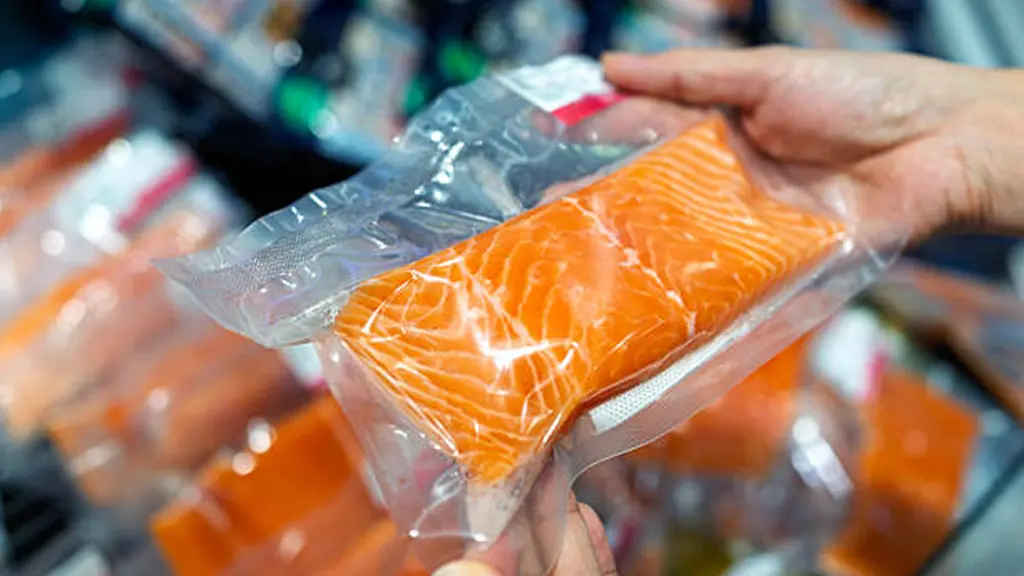
Comment choisir les bonnes solutions d'emballage de fruits de mer surgelés
Un système d'emballage fiable doit correspondre aux caractéristiques des produits de la mer, objectifs de production, et les besoins commerciaux à long terme au lieu de se concentrer uniquement sur des équipements individuels.
Évaluer les exigences relatives aux produits et à l'emballage
Différent produits de la mer surgelés créer différentes demandes d'emballage. La solution doit correspondre à la forme du produit, format du paquet, et les conditions de stockage prévues.
Les facteurs importants comprennent:
- Caractéristiques du produit: Poisson entier, filets, crevette, fruits de mer, et les mélanges de fruits de mer nécessitent des approches de manipulation et d'emballage différentes.
- Exigences du forfait: Packs de vente au détail, sacs en vrac, et les emballages de restauration peuvent nécessiter des tailles différentes, formats, et les vitesses de production.
- Conditions de stockage: Durée de conservation cible, température de congélation, distance de transport, et la stabilité de la chaîne du froid affecte les performances de l'emballage.
- Exigences du marché: Marchés d'exportation, canaux de vente au détail, et les clients du secteur de la restauration peuvent avoir des exigences différentes en matière de présentation, durabilité, et conformité.
Un adapté emballage pour fruits de mer la solution doit protéger le produit tout en s'adaptant à l'environnement de production réel.
Faites correspondre le système d'emballage avec les objectifs de production
Après avoir défini les exigences du produit, les transformateurs doivent évaluer la manière dont le système d’emballage s’adapte à leurs opérations. L'équipement devrait soutenir les objectifs de production actuels tout en permettant la croissance future.
Les principales considérations comprennent:
- Capacité de production: Confirmez la sortie requise, heures de travail, et les changements saisonniers de la demande.
- Niveau d'automatisation: Déterminer quels processus doivent être automatisés, y compris la pesée, remplissage, scellage, inspection, et traitement des dossiers.
- Capacité d'intégration: Assurez-vous que la ligne d'emballage peut se connecter aux équipements de traitement existants et aux flux de travail de l'usine..
- Expansion future: Déterminez si le système peut prendre en charge de nouveaux produits, capacité supplémentaire, ou différents formats de colis.
Pour les entreprises en développement emballage alimentaire surgelé sur mesure programmes, ce processus d'appariement permet d'éviter des investissements inutiles et crée une solution plus efficace à long terme.
Vérifier les performances avant la mise en œuvre complète
Avant d'investir dans un système complet, il est important de tester le produit de la mer et le matériel d'emballage réels.. Des essais de production réels peuvent révéler des problèmes que les spécifications du laboratoire peuvent ne pas révéler, comme le mouvement des produits, stabilité de l'étanchéité, ou performances de manutention.
Travailler avec des expérimentés entreprises d'emballage de produits surgelés peut également simplifier la conception du système, installation, et support technique. Un fournisseur de solutions complètes peut aider à coordonner la sélection des équipements, exigences d'emballage, et les objectifs de production au lieu de traiter chaque machine comme une unité indépendante.
Le meilleur solutions d'emballage de fruits de mer surgelés assurer un équilibre entre la protection du produit, efficacité de production, coût d'exploitation, et évolutivité future.
Pensées finales
L'emballage des produits de la mer surgelés nécessite un système complet qui relie la protection du produit, matériaux d'emballage, et l'efficacité de la production. Une solution fiable devrait aider à prévenir les pannes de packages, maintenir la qualité des fruits de mer pendant le stockage sous la chaîne du froid, et soutenir une production stable à mesure que la demande du marché augmente.
Groupe CHLB fournit intégré solutions d'emballage de fruits de mer surgelés conçu autour des caractéristiques du produit, formats d'emballage, objectifs de production, et exigences d'usine. De la conception de la ligne de conditionnement à l'intégration de l'automatisation, nous aidons les transformateurs de fruits de mer à construire des systèmes efficaces qui améliorent la cohérence et soutiennent la croissance à long terme.
Foire aux questions
Quels facteurs les transformateurs de fruits de mer devraient-ils prendre en compte lors du choix de solutions d'emballage de fruits de mer surgelés ??
Les transformateurs de fruits de mer devraient tenir compte des caractéristiques des produits, conditions de stockage, format du paquet, volume de production, et les exigences de distribution. Crevette, filets de poisson, fruits de mer, et les fruits de mer mélangés peuvent nécessiter des structures d'emballage différentes en raison des différences de forme, teneur en humidité, et gérer les risques. Un adapté emballage de fruits de mer surgelés la solution doit équilibrer la protection du produit, efficacité de production, et le coût d'exploitation.
Quels types d'emballages sont couramment utilisés pour les produits de la mer surgelés?
Formats d'emballage courants pour produits de la mer surgelés inclure des pochettes sous vide, Plateaux MAP, emballages skin sous vide, et sacs scellés. Le meilleur format dépend du type de produit, objectif de durée de conservation, exigences de vente au détail, et conditions de transport. Les fruits de mer de grande valeur sont souvent emballés sous vide ou sous peau., tandis que les produits en vrac peuvent utiliser des solutions d'ensachage efficaces pour des volumes de production plus importants.
Comment les solutions automatisées d’emballage de produits de la mer peuvent-elles améliorer l’efficacité de la production?
Automatisé solutions d'emballage de fruits de mer peut améliorer l'efficacité en connectant le pesage, remplissage, scellage, inspection, et traitement des dossiers dans un flux de travail contrôlé. Cela réduit la variation manuelle, améliore la cohérence du paquet, et aide les transformateurs à gérer des volumes de production plus élevés avec une qualité plus stable. CHLB fournit des systèmes d'automatisation d'emballage alimentaire personnalisés en fonction du type de produit et des exigences de l'usine.. :contenuRéférence[mouton:1]{indice=1}
Les solutions d'emballage de produits surgelés peuvent-elles être personnalisées pour différents produits de la mer?
Oui. Emballage alimentaire surgelé sur mesure les solutions peuvent être conçues en fonction de la taille des fruits de mer, forme, poids du colis, vitesse de production, et aménagement d'usine. Un système personnalisé peut inclure différentes méthodes d'alimentation, équipement de pesage, technologie d'étanchéité, et formats d'emballage pour répondre aux exigences de traitement spécifiques.
Quelles informations sont nécessaires avant de concevoir une ligne de conditionnement de fruits de mer?
Avant de concevoir une ligne de conditionnement, les fournisseurs ont généralement besoin d'informations sur le produit de la mer, style de paquet, sortie cible, taille du paquet, environnement de production, et exigences en matière d'automatisation. Les échantillons de produits et les détails du matériel d'emballage peuvent également aider à vérifier l'alimentation, scellage, et performances de manipulation avant la conception finale du système.