>

冷凍魚介類の包装ソリューション: Prevent Puncture & Extend Shelf Life

冷凍魚介類の包装ソリューション: パンクを防ぐ & 賞味期限を延長する

共有:

目次

Frozen seafood packaging solutions must prevent more than leaks. Sharp shells, bones, fins, and frozen edges can puncture films, while moisture and oxygen exposure can cause freezer burn, dehydration, 酸化, and shorter shelf life. These failures increase product waste, returns, and packaging costs, especially during long-distance frozen seafood delivery.

This guide explains how to improve puncture resistance, シールの完全性, moisture and oxygen barriers, and low-temperature durability. It also covers packaging materials, vacuum and MAP technologies, and automated packaging systems that help seafood processors maintain consistent quality while increasing production efficiency.

Why Frozen Seafood Packaging Requires Specialized Solutions

Frozen seafood creates packaging risks that standard frozen food packaging may not handle well. For processors, seafood packaging must protect products through freezing, ストレージ, handling, と交通.

  • Sharp and irregular surfaces: Shrimp shells, crab pieces, bones, fins, and frozen edges can put extra pressure on films and increase the risk of punctures and tears.
  • Low-temperature stress: Storage at around -18°C or below can reduce the flexibility of some packaging materials, making them more vulnerable to cracking, leaks, and seal failure.
  • Long cold-chain exposure: Frozen seafood may face stacking, vibration, repeated handling, condensation, and temperature changes during storage and transportation, increasing packaging stress.
  • Quality and value loss: Packaging damage can expose seafood to air and moisture, contributing to freezer burn, dehydration, 酸化, and changes in texture, 色, 風味, and appearance.

These conditions make frozen seafood products more demanding to package than many standard frozen foods. The packaging system must therefore be designed around the product’s physical characteristics and cold-chain requirements.

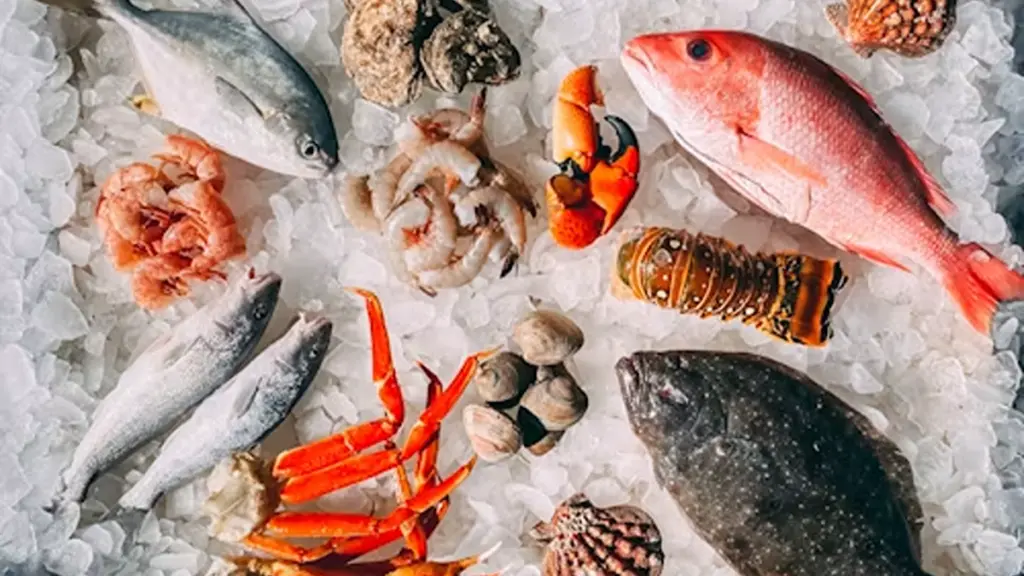
orange and white fish on white and black pebbles need to be packaged

Packaging Technologies for Frozen Seafood Products

Different frozen seafood products need different packaging formats based on product shape, 保存期間の目標, and distribution conditions. Common seafood packaging technologies include vacuum packaging, 地図, vacuum skin packaging, and bagging, with each format offering different protection and production benefits.

真空包装

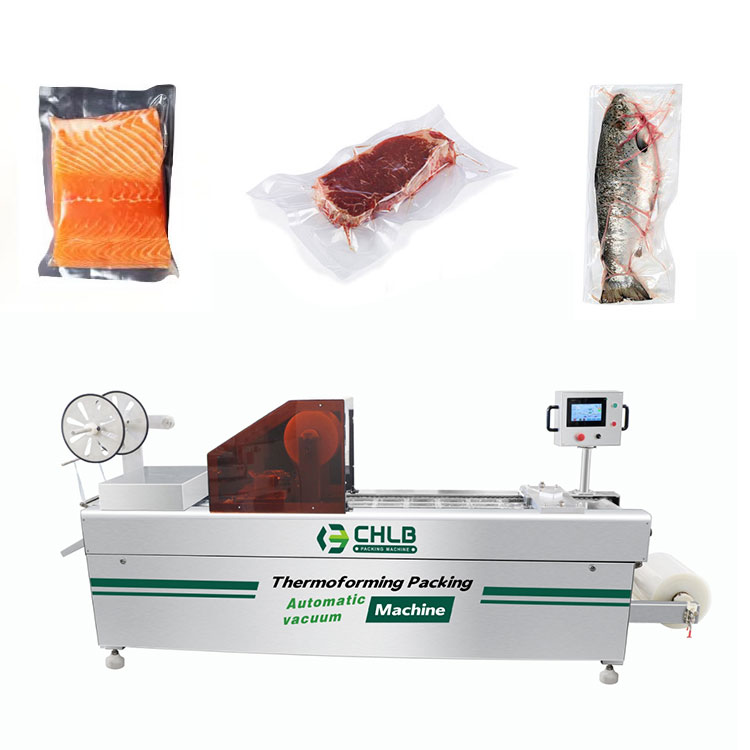
Vacuum packaging removes air before sealing, helping reduce oxygen exposure and limit moisture movement inside the package. It is commonly used for fish fillets, seafood portions, shrimp, and other products that benefit from a compact package.

  • Reduces air and oxygen exposure
  • Helps limit freezer burn and oxidation
  • Suitable for portions, fillets, and higher-value seafood
  • Requires films with good flexibility and puncture resistance

調整された雰囲気のパッケージング (地図)

MAP replaces the air inside a package with a controlled gas mixture before sealing. It can help manage oxygen exposure while providing a stable package format for retail frozen seafood packaging.

  • Controls the atmosphere inside the package
  • Helps reduce oxidation and maintain product quality
  • Suitable for selected retail seafood products
  • Requires accurate gas filling and reliable seals

真空スキンパッケージング

Vacuum skin packaging uses a flexible top film that closely follows the seafood and tray surface. It provides a clean retail presentation while keeping excess air around the product low.

  • Provides strong product visibility
  • Reduces air space around the seafood
  • Suitable for premium fillets and seafood portions
  • Requires compatible trays, 映画, and skin-pack equipment

Bagging and Heat Sealing

Bags made from preformed materials or rollstock remain widely used for packaging for seafood, especially for bulk and retail products. The format supports different package sizes and can be integrated with automated filling and sealing systems.

  • Suitable for bulk and retail frozen seafood products
  • Supports different weights and bag sizes
  • Works well with automated packaging lines
  • Requires clean and consistent sealing conditions

Comparing Frozen Seafood Packaging Technologies

Packaging Technology Typical Application Main Advantage 主な考慮事項
真空包装 Fish fillets, shrimp, seafood portions Reduces air and oxygen exposure Film needs good flexibility and puncture resistance
地図 Retail seafood products Controls the package atmosphere Requires accurate gas filling and sealing
Vacuum skin packaging Premium fillets and seafood portions Strong presentation with low air space Needs compatible trays, 映画, and equipment
Bagging + heat sealing Bulk and retail seafood Flexible for different weights and formats Seal area must remain clean and consistent
High-barrier pouch Long-storage frozen seafood Strong moisture and oxygen protection Material structure must match the product

The best 冷凍食品の包装 format depends on the seafood product, required shelf life, package size, and distribution conditions. For processors handling multiple frozen seafood products, the packaging line should also support consistent filling, 封印, and quality control across different formats.

Optimize Seafood & Poultry Packaging Automation

Gain unmatched production efficiency and hygiene control with CHLB’s customized seafood and poultry packaging automation. Our solutions reduce contamination risks and protect product quality for large-scale operations.

View Seafood & 家禽用ソリューション →

CTA画像

Seafood Packaging Materials and Their Impact on Shelf Life

Packaging materials directly affect the protection and shelf life of frozen seafood. The material structure needs to balance barrier performance, 耐久性, シールの信頼性, and compatibility with packaging equipment.

Common Materials Used in Frozen Seafood Packaging

Most frozen seafood packages use multi-layer structures because different layers provide different functions. One layer improves strength, another controls moisture and oxygen, while the inner layer supports reliable sealing.

Material Function 目的
Mechanical strength Protects against punctures, 涙, and handling damage
Moisture barrier Helps reduce dehydration and freezer burn
Oxygen barrier Helps maintain flavor, 色, and product quality
Seal compatibility Supports stable sealing during production

Common seafood packaging materials include polyethylene, polyester, ポリプロピレン, and other barrier films. The final structure depends on the seafood type, パッケージ形式, storage time, および生産要件.

How Packaging Materials Affect Seafood Shelf Life

The main role of frozen seafood packaging is to control moisture and oxygen exposure during storage and transportation. A suitable material structure helps reduce freezer burn, slow oxidation, and maintain seafood texture and appearance.

For products requiring long-distance logistics, such as frozen food packaging for shipping, packaging materials must also handle temperature changes, vibration, and extended storage conditions.

しかし, shelf life depends on more than packaging alone. Freezing methods, 保管温度, cold-chain management, and product handling all influence the final quality. The best packaging for frozen food provides reliable protection while maintaining production efficiency and cost control.

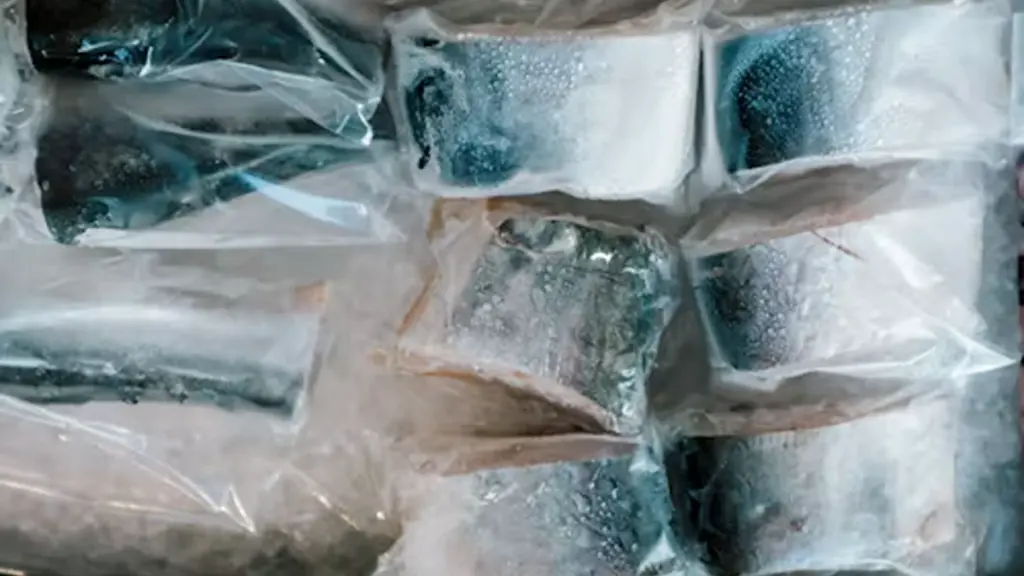
ラップに包まれた冷凍魚の部分

Automated Frozen Seafood Packaging Solutions

Automation helps seafood processors improve packaging consistency, 生産効率, and quality control by connecting multiple operations into one coordinated system.

How an Automated Seafood Packaging Line Works

An 自動化された frozen seafood packaging line integrates product feeding, 重さを量る, 充填, 封印, 検査, and case handling into a continuous workflow. Instead of relying on separate manual steps, the system keeps each process consistent and reduces variations in package weight, positioning, and output quality.

The configuration depends on the seafood product and package format. Shrimp, fillets, seafood mixes, and other frozen seafood products may require different feeding systems, weighing solutions, or packaging formats.

Production Stage 関数 Automation Benefit
Feeding and weighing Controls seafood flow and portion size Improves weight accuracy and production stability
Filling and sealing Packages seafood into bags, ポーチ, or trays Creates consistent package quality
検査 Checks weight, seals, and package conditions Reduces defective products before shipment
Case packing Prepares finished packages for logistics Reduces repetitive manual handling

Matching Automation with Production Needs

A packaging line should match the product type, output requirements, and factory conditions. Different seafood products may require different levels of automation and equipment configurations.

主な要因には以下が含まれます::

  • Product characteristics: Size, 形, and weight affect feeding and weighing methods.
  • Package format: バッグ, ポーチ, and trays require different packaging equipment.
  • 生産量: Higher output requires faster and more integrated systems.
  • Product range: Multiple seafood products may need flexible changeovers.

のために custom frozen food packaging projects, matching the packaging system with actual production requirements helps processors avoid unnecessary complexity while maintaining reliable output.

Improving Production Efficiency Through Automation

Automation provides better control over daily operations by reducing manual variation and improving production data visibility. Processors can monitor weight accuracy, rejected packages, material usage, and equipment performance to identify improvement opportunities.

のために commercial frozen food packaging, integrated systems can support higher production volumes and smoother logistics preparation. Combined with case packing and palletizing, 自動化された seafood packaging solutions help companies maintain consistent quality from production to frozen seafood delivery.

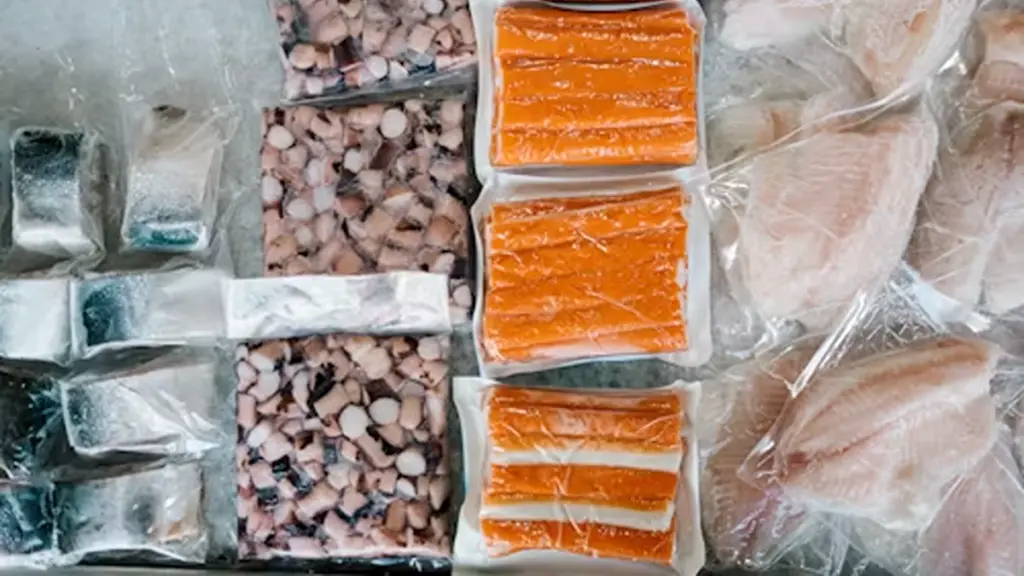
frozen seafood products in plastic packaging

Benefits of Automated Frozen Seafood Packaging Solutions

Automated packaging systems help seafood processors improve operational stability, reduce unnecessary losses, and maintain consistent output as production demands increase.

うまく設計された seafood packaging solutions system does more than increase speed. By controlling weighing, 充填, 封印, 検査, and handling processes, automation helps manufacturers improve package quality while creating a more predictable production environment.

Key benefits include:

  • Consistent package quality: Automated systems maintain stable filling accuracy, sealing conditions, そしてパッケージの外観, reducing variation between individual seafood packages.
  • Higher production efficiency: Integrated weighing, 充填, 封印, and inspection processes reduce repetitive manual work and improve production flow, especially for high-volume frozen seafood operations.
  • Lower material and product waste: Precise portion control reduces product giveaway, while accurate film handling and inspection systems help minimize packaging waste and defective products.
  • Improved hygiene and process control: Automated product handling reduces unnecessary human contact and creates more consistent operating procedures for food safety management.
  • Easier production expansion: Modular automation systems allow processors to increase capacity, add new packaging formats, and adapt to changing market demand.

For companies supplying frozen seafood products to retail, フードサービス, or international markets, automation provides stronger control over quality and production costs. It also helps businesses build more reliable commercial frozen food packaging operations that can support long-term growth.

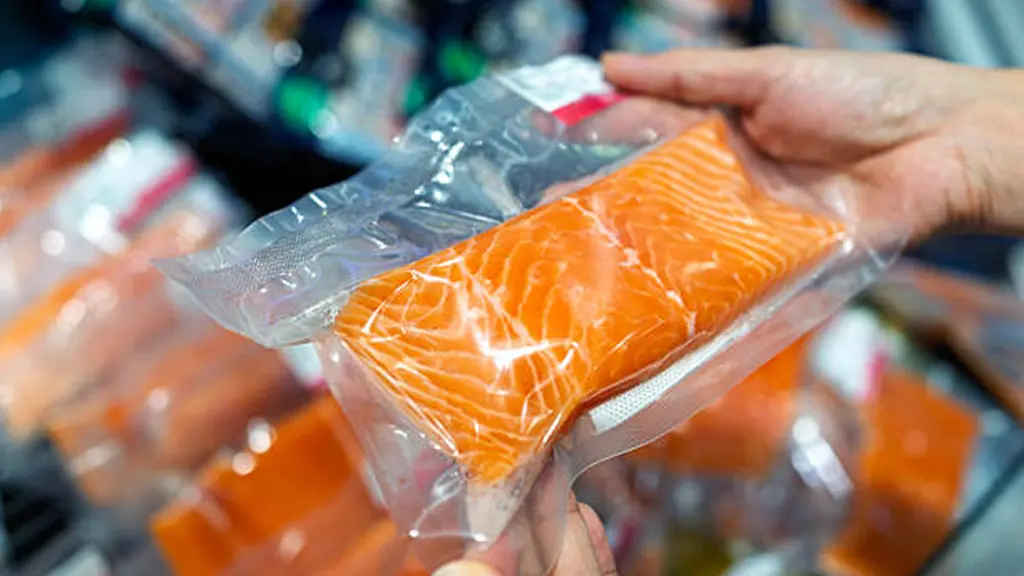
スーパーマーケットで包装された新鮮な生のサケの切り身を持っている人の手

How to Choose the Right Frozen Seafood Packaging Solutions

A reliable packaging system should match seafood characteristics, 生産目標, and long-term business needs instead of focusing only on individual equipment.

Evaluate Product and Packaging Requirements

Different frozen seafood products create different packaging demands. The solution should match the product form, パッケージ形式, and expected storage conditions.

Important factors include:

  • Product characteristics: Whole fish, fillets, shrimp, shellfish, and seafood mixes require different handling and packaging approaches.
  • Package requirements: Retail packs, bulk bags, and foodservice packages may need different sizes, フォーマット, 生産速度.
  • Storage conditions: Target shelf life, freezing temperature, transportation distance, and cold-chain stability affect packaging performance.
  • Market requirements: Export markets, retail channels, and foodservice customers may have different requirements for presentation, 耐久性, and compliance.

適切な packaging for seafood solution should protect the product while also fitting the actual production environment.

Match the Packaging System with Production Goals

After defining the product requirements, processors need to evaluate how the packaging system fits their operation. The equipment should support current production targets while allowing future growth.

主な考慮事項は次のとおりです。:

  • 生産能力: Confirm the required output, working hours, and seasonal demand changes.
  • Automation level: Determine which processes should be automated, including weighing, 充填, 封印, 検査, and case handling.
  • Integration capability: Ensure the packaging line can connect with existing processing equipment and factory workflows.
  • Future expansion: Consider whether the system can support new products, additional capacity, or different package formats.

For businesses developing custom frozen food packaging プログラム, this matching process helps avoid unnecessary investment and creates a more efficient long-term solution.

Verify Performance Before Full Implementation

Before investing in a complete system, testing with the actual seafood product and packaging material is important. Real production trials can reveal issues that laboratory specifications may not show, such as product movement, sealing stability, or material handling performance.

経験豊富なスタッフと一緒に働く frozen food packaging companies can also simplify system design, インストール, および技術サポート. A complete solution provider can help coordinate equipment selection, packaging requirements, and production objectives instead of treating each machine as an independent unit.

The best frozen seafood packaging solutions provide a balance between product protection, 生産効率, operating cost, and future scalability.

最終的な考え

Frozen seafood packaging requires a complete system that connects product protection, 梱包材, 生産効率と. A reliable solution should help prevent package failures, maintain seafood quality during cold-chain storage, and support stable production as market demands increase.

CHLBグループ 統合されたものを提供します frozen seafood packaging solutions designed around product characteristics, 包装形式, production targets, and factory requirements. From packaging line design to automation integration, we help seafood processors build efficient systems that improve consistency and support long-term growth.

よくある質問

What factors should seafood processors consider when choosing frozen seafood packaging solutions?

Seafood processors should consider product characteristics, 保管条件, パッケージ形式, 生産量, および配布要件. Shrimp, fish fillets, shellfish, and mixed seafood may require different packaging structures because of differences in shape, moisture content, and handling risks. 適切な frozen seafood packaging solution should balance product protection, 生産効率, and operating cost.

What types of packaging are commonly used for frozen seafood products?

Common packaging formats for frozen seafood products include vacuum pouches, MAP trays, vacuum skin packs, and sealed bags. The best format depends on product type, shelf-life target, retail requirements, and transportation conditions. High-value seafood often uses vacuum or skin packaging, while bulk products may use efficient bagging solutions for larger production volumes.

How can automated seafood packaging solutions improve production efficiency?

Automated seafood packaging solutions can improve efficiency by connecting weighing, 充填, 封印, 検査, and case handling into one controlled workflow. This reduces manual variation, improves package consistency, and helps processors manage higher production volumes with more stable quality. CHLB provides customized food packaging automation systems based on product type and factory requirements. :contentReference[oaicite:1]{index=1}

Can frozen food packaging solutions be customized for different seafood products?

はい. Custom frozen food packaging solutions can be designed according to seafood size, 形, package weight, 生産速度, and factory layout. A customized system may include different feeding methods, weighing equipment, sealing technology, and packaging formats to match specific processing requirements.

What information is needed before designing a seafood packaging line?

Before designing a packaging line, suppliers usually need information about the seafood product, package style, target output, package size, production environment, and automation requirements. Product samples and packaging material details can also help verify feeding, 封印, and handling performance before final system design.

アレックス・リム

Founder of CHLB With over 23 包装機械業界での長年の経験, 食品メーカーを支援するという使命を持って CHLB Pack を設立しました, スナック生産者, ベーカリー & 製菓事業, 冷凍食品会社, ペットフードや日用化学品の製造業者だけでなく、包装プロセスも自動化しています。. 高いパフォーマンスを提供することに全力で取り組んでいます, フルサーボ自動包装機, フローラップを含む, VFFS, および完全な包装ライン. これらのソリューションは、世界中のクライアントがより高い効率を達成できるよう支援します。, より高い信頼性, 大幅なコスト削減. パッケージング ソリューションについて質問がある? お気軽にお問い合わせください. あなたのビジネスに最適なものを見つけるお手伝いをさせていただきます.

連絡する

人気のブログ

あなたが探しているものは見つからないようです.

無料カタログをダウンロード
無料カタログをダウンロード