>

냉동 해산물 포장 솔루션: Prevent Puncture & Extend Shelf Life

냉동 해산물 포장 솔루션: 펑크 방지 & 유통기한 연장

공유하다:

목차

Frozen seafood packaging solutions must prevent more than leaks. Sharp shells, bones, fins, and frozen edges can puncture films, while moisture and oxygen exposure can cause freezer burn, dehydration, 산화, and shorter shelf life. These failures increase product waste, returns, and packaging costs, especially during long-distance frozen seafood delivery.

This guide explains how to improve puncture resistance, 봉인 무결성, moisture and oxygen barriers, and low-temperature durability. It also covers packaging materials, vacuum and MAP technologies, and automated packaging systems that help seafood processors maintain consistent quality while increasing production efficiency.

Why Frozen Seafood Packaging Requires Specialized Solutions

Frozen seafood creates packaging risks that standard frozen food packaging may not handle well. For processors, seafood packaging must protect products through freezing, 저장, handling, 교통.

  • Sharp and irregular surfaces: Shrimp shells, crab pieces, bones, fins, and frozen edges can put extra pressure on films and increase the risk of punctures and tears.
  • Low-temperature stress: Storage at around -18°C or below can reduce the flexibility of some packaging materials, making them more vulnerable to cracking, leaks, and seal failure.
  • Long cold-chain exposure: Frozen seafood may face stacking, vibration, repeated handling, condensation, and temperature changes during storage and transportation, increasing packaging stress.
  • Quality and value loss: Packaging damage can expose seafood to air and moisture, contributing to freezer burn, dehydration, 산화, and changes in texture, 색상, 맛, and appearance.

These conditions make frozen seafood products more demanding to package than many standard frozen foods. The packaging system must therefore be designed around the product’s physical characteristics and cold-chain requirements.

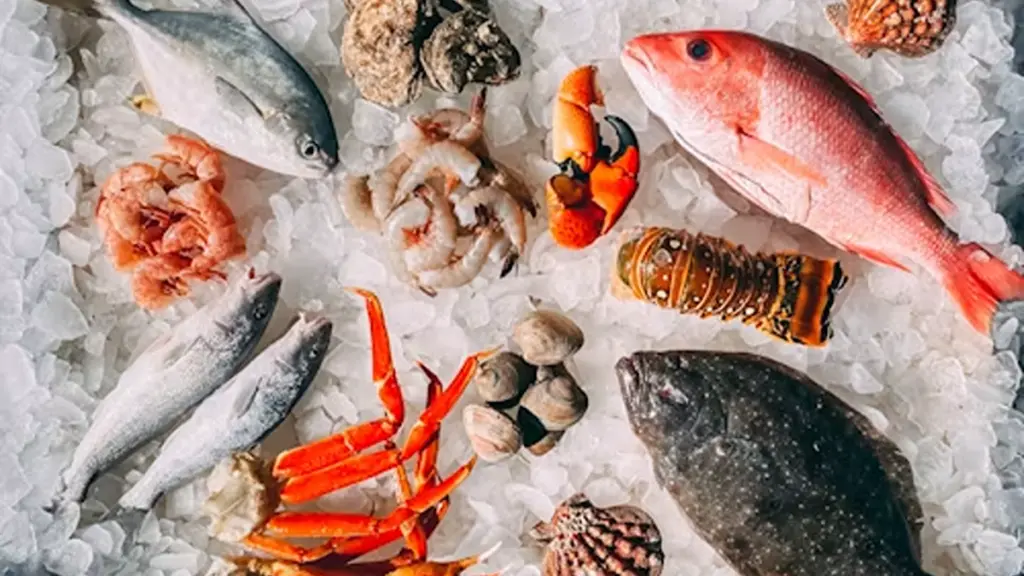
orange and white fish on white and black pebbles need to be packaged

Packaging Technologies for Frozen Seafood Products

Different frozen seafood products need different packaging formats based on product shape, 유통기한 목표, and distribution conditions. Common seafood packaging technologies include vacuum packaging, 지도, vacuum skin packaging, and bagging, with each format offering different protection and production benefits.

진공 포장

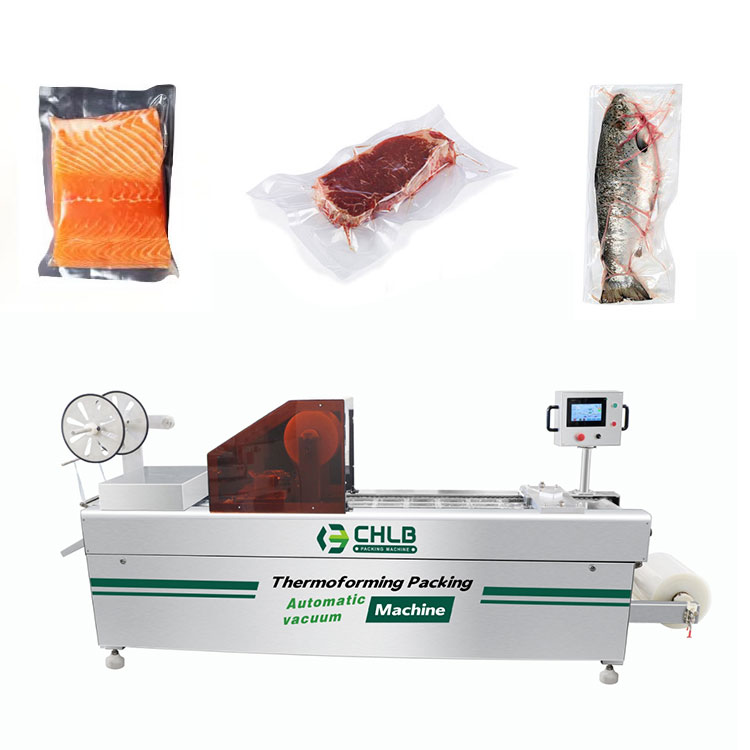
Vacuum packaging removes air before sealing, helping reduce oxygen exposure and limit moisture movement inside the package. It is commonly used for fish fillets, seafood portions, shrimp, and other products that benefit from a compact package.

  • Reduces air and oxygen exposure
  • Helps limit freezer burn and oxidation
  • Suitable for portions, fillets, and higher-value seafood
  • Requires films with good flexibility and puncture resistance

수정된 분위기 포장 (지도)

MAP replaces the air inside a package with a controlled gas mixture before sealing. It can help manage oxygen exposure while providing a stable package format for retail frozen seafood packaging.

  • Controls the atmosphere inside the package
  • Helps reduce oxidation and maintain product quality
  • Suitable for selected retail seafood products
  • Requires accurate gas filling and reliable seals

진공 피부 포장

Vacuum skin packaging uses a flexible top film that closely follows the seafood and tray surface. It provides a clean retail presentation while keeping excess air around the product low.

  • Provides strong product visibility
  • Reduces air space around the seafood
  • Suitable for premium fillets and seafood portions
  • Requires compatible trays, 영화, and skin-pack equipment

Bagging and Heat Sealing

Bags made from preformed materials or rollstock remain widely used for packaging for seafood, especially for bulk and retail products. The format supports different package sizes and can be integrated with automated filling and sealing systems.

  • Suitable for bulk and retail frozen seafood products
  • Supports different weights and bag sizes
  • Works well with automated packaging lines
  • Requires clean and consistent sealing conditions

Comparing Frozen Seafood Packaging Technologies

Packaging Technology Typical Application Main Advantage 주요 고려사항
진공 포장 Fish fillets, shrimp, seafood portions Reduces air and oxygen exposure Film needs good flexibility and puncture resistance
지도 Retail seafood products Controls the package atmosphere Requires accurate gas filling and sealing
Vacuum skin packaging Premium fillets and seafood portions Strong presentation with low air space Needs compatible trays, 영화, and equipment
Bagging + heat sealing Bulk and retail seafood Flexible for different weights and formats Seal area must remain clean and consistent
High-barrier pouch Long-storage frozen seafood Strong moisture and oxygen protection Material structure must match the product

The best 냉동식품 포장 format depends on the seafood product, required shelf life, package size, and distribution conditions. For processors handling multiple frozen seafood products, the packaging line should also support consistent filling, 밀봉, and quality control across different formats.

Optimize Seafood & Poultry Packaging Automation

Gain unmatched production efficiency and hygiene control with CHLB’s customized seafood and poultry packaging automation. Our solutions reduce contamination risks and protect product quality for large-scale operations.

View Seafood & 가금류 솔루션 →

CTA 이미지

Seafood Packaging Materials and Their Impact on Shelf Life

Packaging materials directly affect the protection and shelf life of frozen seafood. The material structure needs to balance barrier performance, 내구성, 밀봉 신뢰성, and compatibility with packaging equipment.

Common Materials Used in Frozen Seafood Packaging

Most frozen seafood packages use multi-layer structures because different layers provide different functions. One layer improves strength, another controls moisture and oxygen, while the inner layer supports reliable sealing.

Material Function 목적
Mechanical strength Protects against punctures, 눈물, and handling damage
Moisture barrier Helps reduce dehydration and freezer burn
Oxygen barrier Helps maintain flavor, 색상, and product quality
Seal compatibility Supports stable sealing during production

Common seafood packaging materials include polyethylene, polyester, 폴리프로필렌, and other barrier films. The final structure depends on the seafood type, 패키지 형식, storage time, 및 생산 요구 사항.

How Packaging Materials Affect Seafood Shelf Life

The main role of frozen seafood packaging is to control moisture and oxygen exposure during storage and transportation. A suitable material structure helps reduce freezer burn, slow oxidation, and maintain seafood texture and appearance.

For products requiring long-distance logistics, such as frozen food packaging for shipping, packaging materials must also handle temperature changes, vibration, and extended storage conditions.

하지만, shelf life depends on more than packaging alone. Freezing methods, 보관 온도, cold-chain management, and product handling all influence the final quality. The best packaging for frozen food provides reliable protection while maintaining production efficiency and cost control.

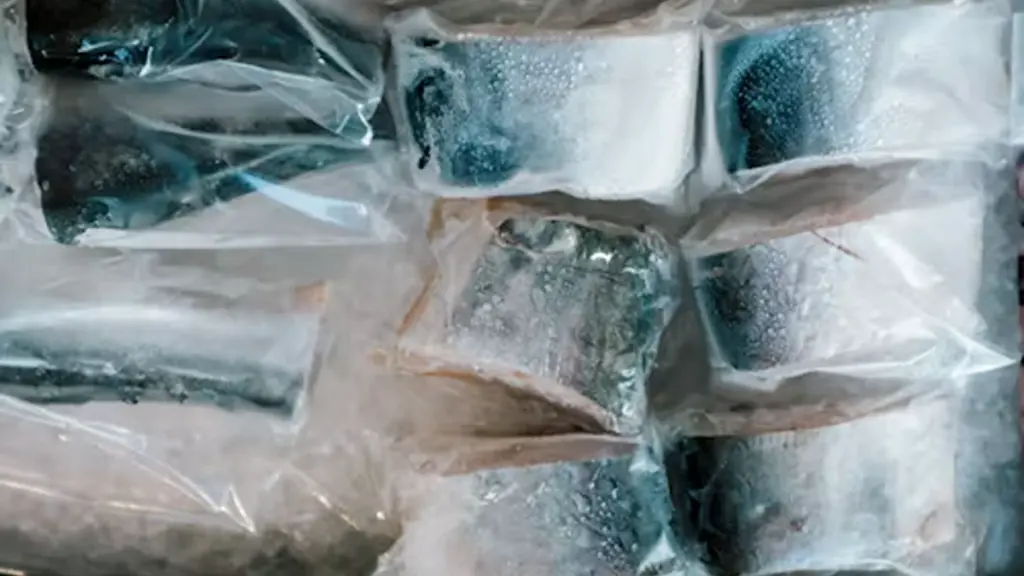
플라스틱 랩에 포장된 냉동 생선 부분

Automated Frozen Seafood Packaging Solutions

Automation helps seafood processors improve packaging consistency, 생산 효율성, and quality control by connecting multiple operations into one coordinated system.

How an Automated Seafood Packaging Line Works

An 자동화된 frozen seafood packaging line integrates product feeding, 계량, 충전재, 밀봉, 점검, and case handling into a continuous workflow. Instead of relying on separate manual steps, the system keeps each process consistent and reduces variations in package weight, positioning, 및 출력 품질.

The configuration depends on the seafood product and package format. Shrimp, fillets, seafood mixes, and other frozen seafood products may require different feeding systems, weighing solutions, or packaging formats.

Production Stage 기능 Automation Benefit
Feeding and weighing Controls seafood flow and portion size Improves weight accuracy and production stability
Filling and sealing Packages seafood into bags, 파우치, or trays Creates consistent package quality
점검 Checks weight, seals, and package conditions Reduces defective products before shipment
케이스 포장 Prepares finished packages for logistics Reduces repetitive manual handling

Matching Automation with Production Needs

A packaging line should match the product type, 출력 요구 사항, 그리고 공장 상황. Different seafood products may require different levels of automation and equipment configurations.

주요 요인은 다음과 같습니다:

  • Product characteristics: 크기, 모양, and weight affect feeding and weighing methods.
  • Package format: 바지, 파우치, and trays require different packaging equipment.
  • 생산량: Higher output requires faster and more integrated systems.
  • Product range: Multiple seafood products may need flexible changeovers.

을 위한 custom frozen food packaging projects, matching the packaging system with actual production requirements helps processors avoid unnecessary complexity while maintaining reliable output.

Improving Production Efficiency Through Automation

Automation provides better control over daily operations by reducing manual variation and improving production data visibility. Processors can monitor weight accuracy, rejected packages, material usage, and equipment performance to identify improvement opportunities.

을 위한 commercial frozen food packaging, integrated systems can support higher production volumes and smoother logistics preparation. Combined with case packing and palletizing, 자동화된 seafood packaging solutions help companies maintain consistent quality from production to frozen seafood delivery.

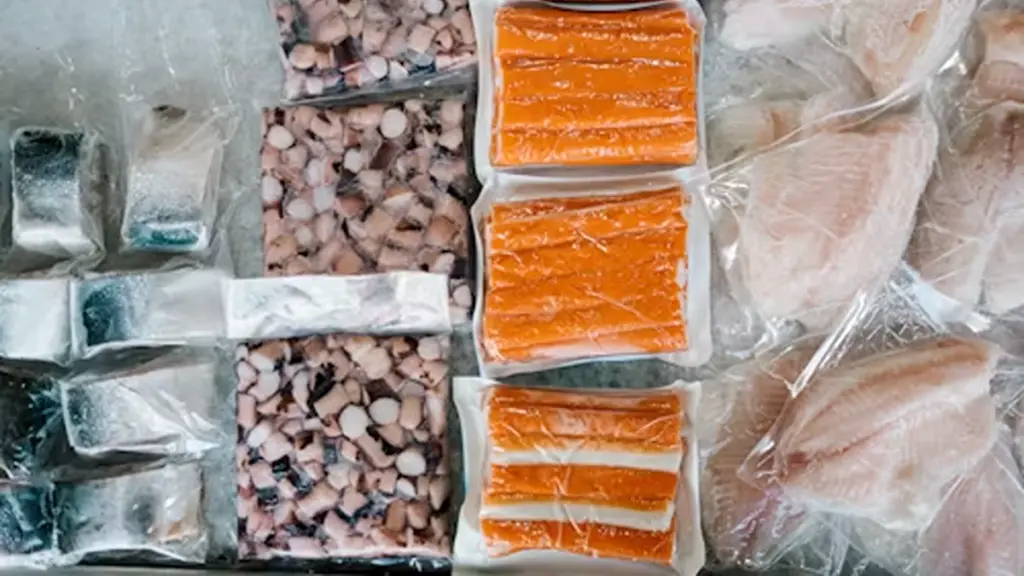
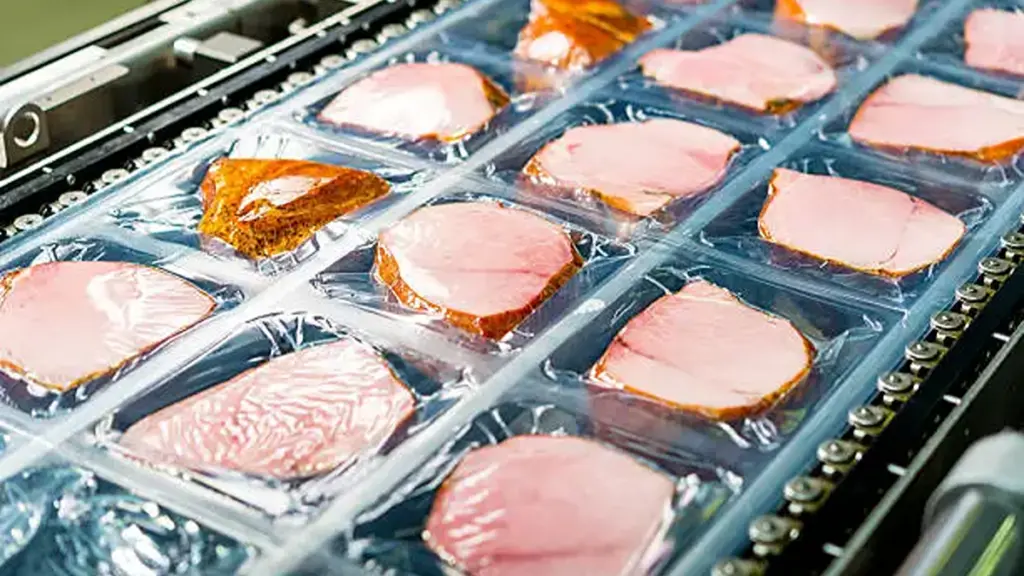
frozen seafood products in plastic packaging

Benefits of Automated Frozen Seafood Packaging Solutions

Automated packaging systems help seafood processors improve operational stability, reduce unnecessary losses, and maintain consistent output as production demands increase.

잘 디자인 된 seafood packaging solutions system does more than increase speed. By controlling weighing, 충전재, 밀봉, 점검, and handling processes, automation helps manufacturers improve package quality while creating a more predictable production environment.

Key benefits include:

  • Consistent package quality: Automated systems maintain stable filling accuracy, sealing conditions, 그리고 패키지 외관, reducing variation between individual seafood packages.
  • 생산 효율성 향상: Integrated weighing, 충전재, 밀봉, and inspection processes reduce repetitive manual work and improve production flow, especially for high-volume frozen seafood operations.
  • Lower material and product waste: Precise portion control reduces product giveaway, while accurate film handling and inspection systems help minimize packaging waste and defective products.
  • Improved hygiene and process control: Automated product handling reduces unnecessary human contact and creates more consistent operating procedures for food safety management.
  • Easier production expansion: Modular automation systems allow processors to increase capacity, add new packaging formats, and adapt to changing market demand.

For companies supplying frozen seafood products to retail, 음식 서비스, or international markets, automation provides stronger control over quality and production costs. It also helps businesses build more reliable commercial frozen food packaging operations that can support long-term growth.

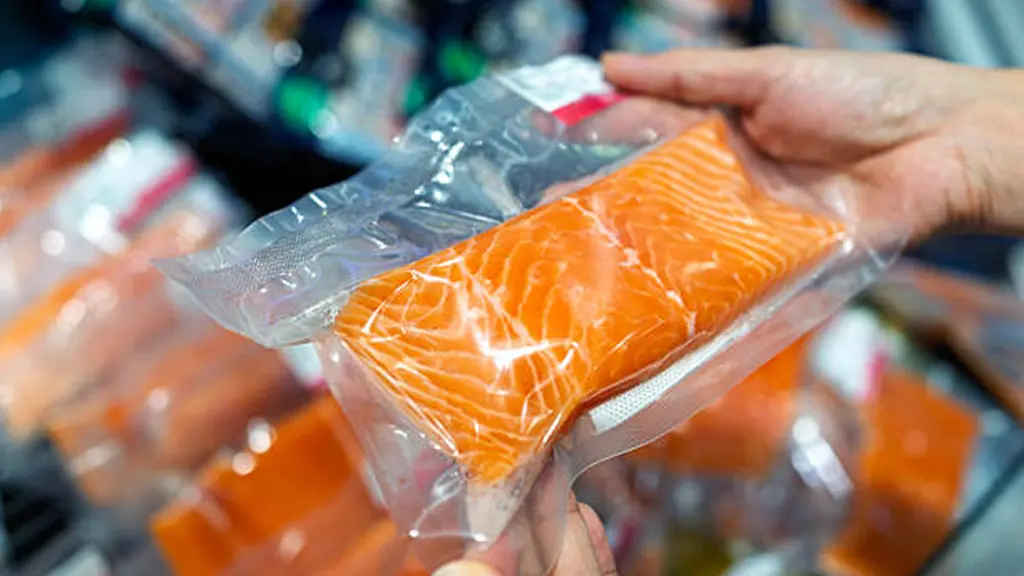
슈퍼마켓에서 포장된 신선한 생연어 필렛을 들고 있는 사람의 손

How to Choose the Right Frozen Seafood Packaging Solutions

A reliable packaging system should match seafood characteristics, 생산 목표, and long-term business needs instead of focusing only on individual equipment.

Evaluate Product and Packaging Requirements

Different frozen seafood products create different packaging demands. The solution should match the product form, 패키지 형식, and expected storage conditions.

중요한 요소는 다음과 같습니다:

  • Product characteristics: Whole fish, fillets, shrimp, shellfish, and seafood mixes require different handling and packaging approaches.
  • Package requirements: Retail packs, bulk bags, and foodservice packages may need different sizes, 형식, 및 생산 속도.
  • Storage conditions: Target shelf life, freezing temperature, transportation distance, and cold-chain stability affect packaging performance.
  • Market requirements: Export markets, retail channels, and foodservice customers may have different requirements for presentation, 내구성, and compliance.

적당한 packaging for seafood solution should protect the product while also fitting the actual production environment.

Match the Packaging System with Production Goals

After defining the product requirements, processors need to evaluate how the packaging system fits their operation. The equipment should support current production targets while allowing future growth.

주요 고려 사항은 다음과 같습니다:

  • 생산능력: Confirm the required output, working hours, and seasonal demand changes.
  • Automation level: Determine which processes should be automated, including weighing, 충전재, 밀봉, 점검, and case handling.
  • Integration capability: Ensure the packaging line can connect with existing processing equipment and factory workflows.
  • Future expansion: Consider whether the system can support new products, additional capacity, or different package formats.

For businesses developing custom frozen food packaging 프로그램, this matching process helps avoid unnecessary investment and creates a more efficient long-term solution.

Verify Performance Before Full Implementation

Before investing in a complete system, testing with the actual seafood product and packaging material is important. Real production trials can reveal issues that laboratory specifications may not show, such as product movement, sealing stability, or material handling performance.

경험이 풍부한 사람들과 함께 일함 frozen food packaging companies can also simplify system design, 설치, 및 기술 지원. A complete solution provider can help coordinate equipment selection, 포장 요구 사항, and production objectives instead of treating each machine as an independent unit.

The best frozen seafood packaging solutions provide a balance between product protection, 생산 효율성, operating cost, and future scalability.

최종 생각

Frozen seafood packaging requires a complete system that connects product protection, 포장재, 생산 효율성. A reliable solution should help prevent package failures, maintain seafood quality during cold-chain storage, and support stable production as market demands increase.

CHLB 그룹 통합 제공 frozen seafood packaging solutions designed around product characteristics, 포장 형식, production targets, and factory requirements. From packaging line design to automation integration, we help seafood processors build efficient systems that improve consistency and support long-term growth.

자주 묻는 질문

What factors should seafood processors consider when choosing frozen seafood packaging solutions?

Seafood processors should consider product characteristics, 보관 조건, 패키지 형식, 생산량, 및 배포 요구 사항. Shrimp, fish fillets, shellfish, and mixed seafood may require different packaging structures because of differences in shape, moisture content, and handling risks. 적당한 frozen seafood packaging solution should balance product protection, 생산 효율성, and operating cost.

What types of packaging are commonly used for frozen seafood products?

Common packaging formats for frozen seafood products include vacuum pouches, MAP trays, vacuum skin packs, and sealed bags. The best format depends on product type, 유통기한 목표, retail requirements, and transportation conditions. High-value seafood often uses vacuum or skin packaging, while bulk products may use efficient bagging solutions for larger production volumes.

How can automated seafood packaging solutions improve production efficiency?

Automated seafood packaging solutions can improve efficiency by connecting weighing, 충전재, 밀봉, 점검, and case handling into one controlled workflow. This reduces manual variation, improves package consistency, and helps processors manage higher production volumes with more stable quality. CHLB provides customized food packaging automation systems based on product type and factory requirements. :contentReference[oaicite:1]{index=1}

Can frozen food packaging solutions be customized for different seafood products?

예. Custom frozen food packaging solutions can be designed according to seafood size, 모양, package weight, 생산 속도, 및 공장 레이아웃. A customized system may include different feeding methods, weighing equipment, sealing technology, and packaging formats to match specific processing requirements.

What information is needed before designing a seafood packaging line?

Before designing a packaging line, suppliers usually need information about the seafood product, package style, target output, package size, production environment, and automation requirements. Product samples and packaging material details can also help verify feeding, 밀봉, and handling performance before final system design.

알렉스 림

Founder of CHLB With over 23 포장 기계 산업에서의 다년간의 경험, 식품 제조업체를 돕는다는 사명으로 CHLB Pack을 설립했습니다., 스낵 생산자, 빵집 & 제과 사업, 냉동 식품 회사, 애완동물 사료 및 일일 화학제품 생산업체는 포장 공정을 자동화합니다.. 나는 고성능을 제공하기 위해 최선을 다하고 있습니다, 풀 서보 자동 포장기, 플로우 랩 포함, VFFS, 완벽한 포장 라인. 이러한 솔루션은 글로벌 고객이 더 높은 효율성을 달성하는 데 도움이 됩니다., 더 큰 신뢰성, 상당한 비용 절감. 포장 솔루션에 대해 궁금한 점이 있으신가요?? 편하게 연락주세요. 귀하의 비즈니스에 딱 맞는 제품을 찾는 데 기꺼이 도움을 드리겠습니다..

연락하세요

인기 블로그

당신이 찾고 있는 것을 찾을 수 없는 것 같습니다.

무료 카탈로그 다운로드
무료 카탈로그 다운로드