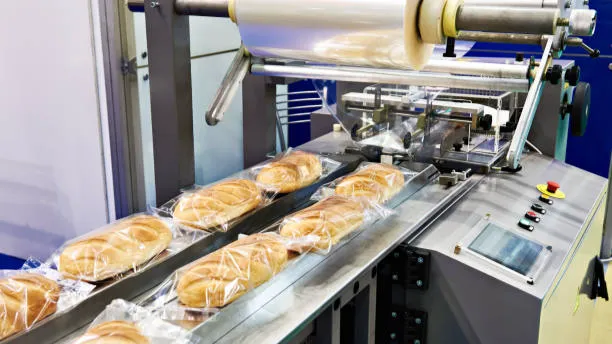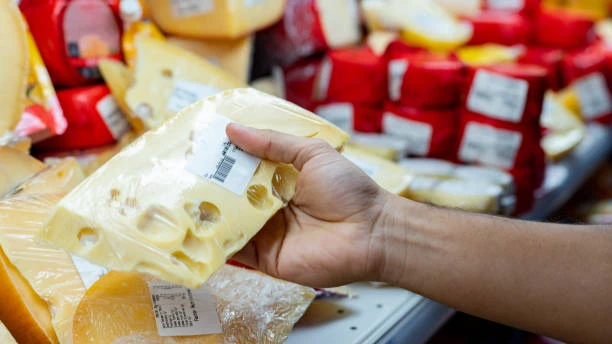
Red meat and sausage are packed on similar meat packaging machines for very different reasons. A retail steak needs oxygen to bloom into the red shoppers expect. A slice of cooked ham needs oxygen kept away, because oxygen turns it grey and rancid. Put both products on the same gas setting and one of them will fail on the shelf.
This guide covers the four packaging formats used for meat, the gas and film decisions behind each one, and how the choice changes across fresh cuts, cured and deli lines, and frozen production. The focus is red meat, sausage and frozen product. Poultry has its own handling and chilling requirements, which are covered in our poultry meat packaging guide.
Why Meat Packaging Machines Work Differently
Three characteristics drive every meat packaging decision, and none of them apply to dry goods.
- Colour chemistry. Fresh meat contains myoglobin, which turns bright red when it binds oxygen and brown-purple when it does not. Cured meat is different: the nitrite reaction stabilises a pink pigment that oxygen attacks. One product needs oxygen, the other is damaged by it.
- Purge and drip loss. Meat releases moisture under pressure. In a loose pack that liquid pools and looks like spoilage; held tight against the product by film, it stays invisible and the saleable weight is preserved.
- Short chilled life. Chilled fresh meat spoils in days without atmosphere control. Packaging is the main lever a processor has after temperature and hygiene.
The Four Formats Used for Meat
Almost every meat pack sold today uses one of four formats. They differ in where the container comes from and what happens to the air inside it.
| Format | How it works | Typical use |
|---|---|---|
| Vacuum bag or premade pouch | Air drawn out of a pre-made bag, then sealed | Primals, wholesale cuts, frozen portions |
| Rollstock thermoforming vacuum | Tray formed from film in-line, 채우는, vacuumed, sealed and cut | High-volume retail and foodservice packs |
| Modified atmosphere (지도) | Air replaced with a gas mixture before sealing | Retail cuts that must display as red |
| 진공 피부 포장 | Top film drawn down over the product with almost no headspace | Steaks, bacon, sliced deli, 해산물 |
Fresh Red Meat, Cuts and Primals
Retail and wholesale are two different problems. Retail packs sell on appearance, while primals move through a cold chain where weight retention and shelf life matter more than the colour of the surface.
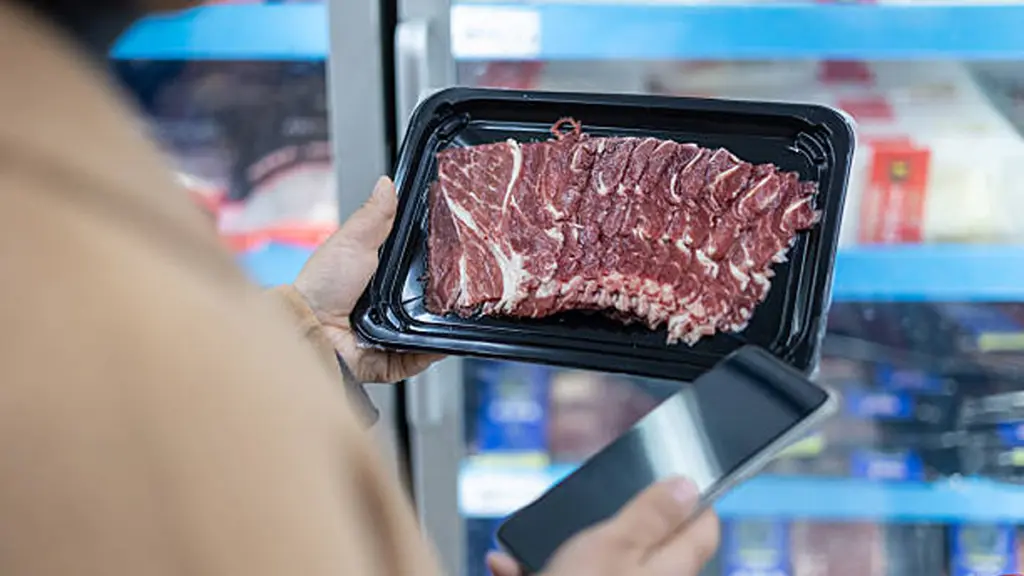
For retail cuts, published guidance for red meat puts the modified atmosphere mix at 70 에게 80 percent oxygen with 20 에게 30 percent carbon dioxide. The oxygen keeps the surface red; the carbon dioxide suppresses bacterial growth. Applied properly, that mix can stretch chilled shelf life from roughly 2 에게 4 days out to 5 에게 8 날. A common starting formulation for fresh beef is 80 percent oxygen with 20 percent carbon dioxide, adjusted to the cut and the display target.
For primals and subprimals, vacuum does the work instead. Beef primals packed under vacuum are commonly quoted at 35 에게 45 days of chilled shelf life, with longer figures reported under tightly controlled cold chains. Vacuum also reduces drip loss compared with air-packed product, because the film holds purge against the meat. The cost is colour: vacuum-packed meat looks dark purple until it contacts air again, which is acceptable in wholesale but not on a retail shelf.
High-oxygen packaging has a limit worth respecting. Oxygen accelerates fat oxidation, so heavily marbled or long-stored product can develop off-flavours before the pack reaches its use-by date. Low-oxygen retail formats exist for exactly that reason, and the trade-off between MAP and vacuum is worth testing on your own cuts rather than deciding from a specification table.
소시지, Cured and Deli Products
Cured meat reverses the logic of fresh meat. The pink pigment in ham, bacon and salami is nitrosylmyoglobin, which is stable when protected from oxygen. Exposure to oxygen drives it towards grey-brown, and light accelerates the change. Cured and cooked products take low-oxygen mixtures instead, usually carbon dioxide for antimicrobial control plus nitrogen. The nitrogen is an inert filler that stops the pack collapsing onto the product.
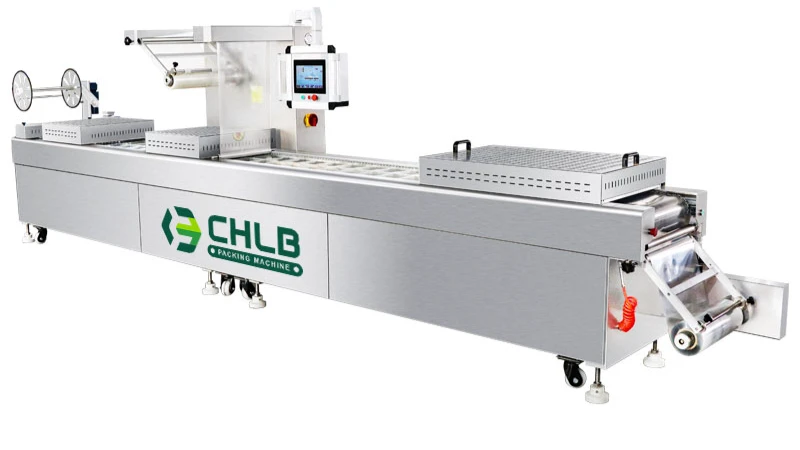
Sliced products need a third consideration: 프레젠테이션. Once sliced, the product surface is large relative to its weight, so oxidation and moisture loss show quickly. 에이 vacuum skin packaging machine holds the film against the slice and keeps purge in place. The pack also stands upright in a display, which suits bacon, sliced ham and dry-cured products.
Whole pieces behave differently again. A whole ham or a large salami holds its own shape, so vacuum in a premade bag is simpler and cheaper than skin packing. Sausages in casings present their own risk: natural, collagen and protein casings all differ in how much they compress under vacuum, and over-vacuuming collapses the link and distorts it. Test the deepest vacuum the product tolerates before you commit to a setting.
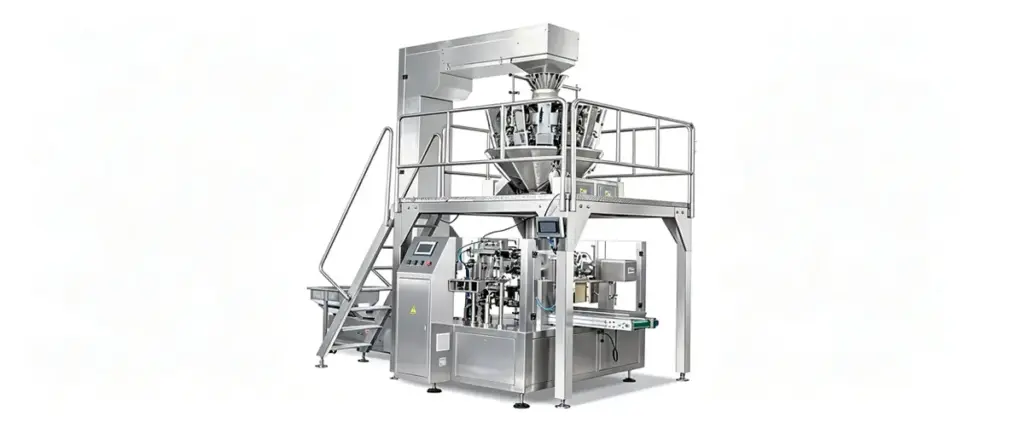
Match the Machine to the Cut
Frozen and Portioned Meat
Freezing stops microbial growth, so the packaging job changes from atmosphere control to physical protection and oxidation control. Gas flushing brings less benefit below freezing, because the protective effect of carbon dioxide depends on it dissolving into the product surface, which slows as the product freezes. Most frozen meat is vacuum packed in rollstock or premade bags, with modified atmosphere reserved for display formats that need a bright appearance.
Two failure modes dominate frozen lines. Film that flexes well at 4 °C can become brittle at -18 °C and crack along the seal. Cartons handled on a pallet put that seal under load, so specify the structure for the storage temperature rather than the packing room. Ground and portioned products also oxidise over months of frozen storage, which is why vacuum or nitrogen flushing still earns its place even though microbial risk is controlled.
How the Machine Fits the Line
A meat packer is rarely a single machine. What arrives before the packer and what happens after it usually decide whether the line runs at its rated speed.
- Infeed and indexing. Cuts arrive from a bandsaw, grinder or portioner at an uneven rate. Without a buffer or a synchronised infeed conveyor, operators wait on the machine or the machine waits on operators, and rated output falls short of the figure on the quotation.
- Inspection after sealing. Metal detection or X-ray inspection belongs after the pack is closed and before cartoning, so a contaminated pack is rejected as a finished unit rather than a loose product. Checkweighing sits alongside it for give-away control.
- Labelling and coding. Date coding and batch marking need a defined position on the pack. Skin packs and MAP trays have different usable label areas, which is easy to overlook until the artwork is printed.
- Cold room and washdown. Equipment that runs at chilled temperature needs components rated for it, and cleaning between production runs has to be planned into the schedule rather than treated as spare time.
Buyers comparing two machines should compare them inside a line. Two packers with identical cycle times can produce different daily output once infeed, inspection and cleaning are counted. Ask each supplier to state the realistic output per shift including changeover and hygiene downtime, not the theoretical peak.
Materials and Shelf Life Decisions
The film decides whether the shelf life you promise is achievable. For meat, four properties matter more than thickness alone.
- 산소 장벽. High-barrier structures with an EVOH layer hold a low-oxygen pack for longer. Low-barrier film lets oxygen back in and undoes the work of a vacuum pump.
- 펑크 저항. Bones, shells and frozen corners pierce film. Polyamide in the structure adds toughness, and the pack design should keep sharp edges away from the seal.
- Seal through contamination. Meat juice and fat in the seal area cause leakers. Sealing jaws and film structures vary in how much contamination they tolerate, so test with product, not empty packs.
- Drip management. Absorbent pads or a formed cavity that collects purge keep the pack presentable. Thermoforming gives more control here than a flat pouch, because the cavity shape can be designed around the cut.
Ask your supplier to connect each property to a test. Barrier should come with a measured oxygen transmission rate, seal quality with a leak or burst test, and puncture resistance with a documented drop or handling trial. A structure recommended without any of those measurements is a guess.
What to Prepare Before Requesting a Quote
Machine sizing goes quickly when the enquiry carries real inputs. Send product photographs, full product dimensions and weight, the packaging type you want, and physical samples for test packing. Add the target packs per minute, the shelf life you need to promise, and whether the pack goes to retail display or wholesale distribution.
Two operational details change the recommendation. Available compressed air and cooling water limit which sealing and vacuum systems a supplier can propose. Whether the line runs in a chilled room also affects the machine’s construction and cleaning regime. For a mixed meat and sausage range, describe the full product list up front. A machine sized for one cut often cannot handle the deepest or heaviest item in the range.
최종 생각
Start with the chemistry, not the machine list. Decide whether your product needs oxygen present or excluded, then choose vacuum, modified atmosphere or skin, then size the machine around your deepest pack and highest output requirement. 소시지, cured and frozen products usually need two configurations rather than one compromise.
CHLB supplies vacuum, MAP and skin packaging equipment for meat processors and can combine forming, filling and sealing with line integration downstream. For the technical background behind the atmosphere choice, start with our modified atmosphere packaging guide.
자주 묻는 질문
Why does vacuum-packed beef turn dark purple?
Without oxygen, myoglobin stays in its deoxygenated form, which looks purple-brown rather than red. The colour returns after the meat is exposed to air for a short period. Wholesale buyers accept this; retail buyers often do not, which is why retail beef usually takes a high-oxygen mix.
Do sausages need vacuum or modified atmosphere?
Both are used. Vacuum suits whole pieces and packs where appearance matters less. Cooked and cured sausages often go into low-oxygen modified atmosphere packs to protect colour and keep the links from being crushed. Casings vary in how much vacuum they tolerate.
How long does vacuum-packed meat keep?
Published figures for vacuum-packed beef primals generally sit around 35 에게 45 days under refrigeration, with longer storage reported when the cold chain holds temperature tightly. Retail cuts in high-oxygen MAP are usually quoted at 5 에게 8 날. Storage temperature drives both numbers.
Can one machine handle fresh and frozen meat?
Often yes, with different film and settings. Frozen product needs a structure that stays flexible at temperature and tolerates harder handling, while fresh product needs a barrier tuned to the gas mix you use. Plan changeover time and film inventory for both.